When the Rooftop Becomes the Stage: Experiencing Havana's Living Musical Soul at Hotel Quinta Avenida
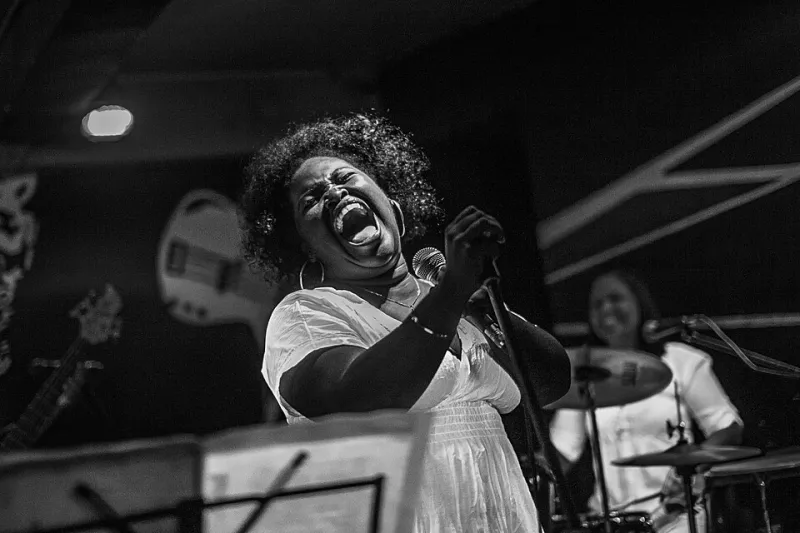
Photo: Don Azevedo, CC BY-SA 4.0, via Wikimedia Commons
There is a particular moment, somewhere between the second mojito and the first prolonged trumpet note rising above the Havana skyline, when a guest understands that what they are witnessing is not entertainment in any conventional sense. It is inheritance—centuries of rhythm, loss, resilience, and joy rendered in real time by musicians who have absorbed this tradition the way others absorb language: before they could reason about it, long before they could explain it.
At Hotel Quinta Avenida Habana, that moment is something the concierge team has spent considerable effort engineering. The property's rooftop terrace does not merely offer a pleasant view of Miramar's elegant canopy of royal palms and colonial facades. On select evenings, it transforms into what may be the most intimate and genuinely unrepeatable concert setting in all of Cuba.
The Tradition Behind the Performance
To understand what unfolds on those evenings, it helps to understand the music itself. Son cubano—the foundational genre from which salsa, mambo, and much of the American popular music of the twentieth century descended—was born in the eastern provinces of Cuba in the late nineteenth century. It arrived in Havana in the 1920s, and the capital received it with the particular enthusiasm of a city that has always known how to absorb influence and return it transformed.
The form is deceptively simple: a call-and-response vocal structure layered over a syncopated rhythmic pattern called the clave, with melodic lines woven between guitar, tres, bass, bongó, and maracas. In the hands of a skilled ensemble, however, that simplicity becomes a vessel capable of holding extraordinary complexity. The Buena Vista Social Club recordings introduced American audiences to the form in the late 1990s, but what those albums captured was already a refined, mature tradition—one that had been developing, branching, and deepening for over a century.
Havana's jazz tradition runs parallel and sometimes perpendicular to son. Cuban musicians absorbed the bebop and cool jazz movements of mid-century America, filtered them through Afro-Cuban rhythmic sensibilities, and produced something that belongs to neither tradition exclusively. The result—heard most vividly in the clubs of Centro Habana and in the rehearsal rooms of the Cuban Institute of Music—is a genre in continuous, productive conversation with itself.
The Artists Who Come to Quinta Avenida
The musicians who perform on the Hotel Quinta Avenida rooftop are not assembled from a generic roster of resort entertainers. The hotel's cultural liaison maintains relationships with several of Havana's most respected working musicians—artists who perform regularly at venues such as the Jazz Club La Zorra y El Cuervo and the Salón Rosado de la Tropical, and who bring to private engagements the same rigor and engagement they bring to professional concert settings.
Guests have had the privilege of evenings with multi-generational son ensembles whose eldest members learned directly from musicians who shaped the genre's golden era. They have sat within arm's reach of pianists trained at the prestigious Instituto Superior de Arte, whose improvisations draw equally on Chucho Valdés and Bill Evans. The intimacy of the rooftop setting—rarely more than a handful of guests on any given evening—means that these are not performances delivered at a distance. They are conversations conducted in music, and guests are participants rather than audience members.
The hotel's team is available to brief guests in advance on the musicians they will encounter: their histories, their influences, their most celebrated recordings. For those who wish to go deeper, arrangements can be made for informal pre-performance conversations with the artists themselves, conducted over dinner on the terrace before the first note is played.
Beyond the Hotel: Havana's Musical Geography
For guests whose appetite for Cuban music extends beyond the property's curated evenings, the hotel serves as a knowledgeable point of departure into the city's broader musical landscape. Havana is not a city with a single musical district. Its rhythms are distributed across neighborhoods, each with its own character and tradition.
The Callejón de Hamel, a narrow alley in Centro Habana decorated with Afro-Cuban murals, hosts rumba performances on Sunday mornings that draw serious musicians and devoted local audiences in roughly equal measure. These are not tourist productions; they are community rituals, and attendance carries a different weight than a ticketed concert. The hotel's concierge team can advise on how to approach such experiences with appropriate awareness and respect.
Farther east, the Fábrica de Arte Cubano—housed in a converted cooking-oil factory in the Vedado neighborhood—represents Havana's most sophisticated contemporary cultural venue. On weekend evenings, it operates simultaneously as a gallery, cinema, and concert space, with live performances ranging from jazz to electroacoustic experimentation. The venue draws Cuba's most adventurous artists and a young, educated Havana audience. A visit there, arranged through the hotel, offers a counterpoint to the classical son tradition—evidence that Havana's musical culture is not frozen in amber but continues to evolve with genuine urgency.
For those seeking the most exclusive access, the hotel can occasionally arrange visits to private rehearsal spaces and music schools, where students at the earliest stages of mastery practice alongside teachers of international renown. These visits are not performances but processes—a glimpse into the infrastructure of a culture that takes music with the seriousness most societies reserve for other disciplines.
The Architecture of an Unforgettable Evening
The rooftop concert experience at Hotel Quinta Avenida Habana is, by design, unhurried. Guests are received as the sun descends over the Straits of Florida, the western sky cycling through the amber and rose tones that Havana seems to produce with particular extravagance. Cocktails are prepared with Cuban rum selected from the hotel's considered collection—not as novelty, but as a genuine engagement with one of the island's most complex and underappreciated agricultural traditions.
The music begins without announcement, which is itself a statement of intent. There is no compère, no introduction, no manufactured moment of anticipation. The first notes arrive as naturally as conversation, and the evening proceeds at whatever tempo the musicians and the night collectively determine. Sets flow into one another; the distinctions between son, bolero, and jazz become permeable. Requests, when guests feel moved to make them, are received with the gracious flexibility of artists who have long since internalized their entire tradition.
What remains after such an evening—after the last guest has descended from the rooftop and the city has settled into its particular nocturnal register—is something that no itinerary can fully anticipate. It is the knowledge that the music heard that night was not a reproduction or a tribute. It was the thing itself: alive, present, and offered with the full weight of everything that made it possible.
That is, ultimately, what Hotel Quinta Avenida Habana offers its guests. Not an approximation of Cuban culture, but a point of genuine contact with it—one rooftop, one ensemble, one irreplaceable evening at a time.