Beyond the Guidebook: Immersing Yourself in Havana's Living Culture
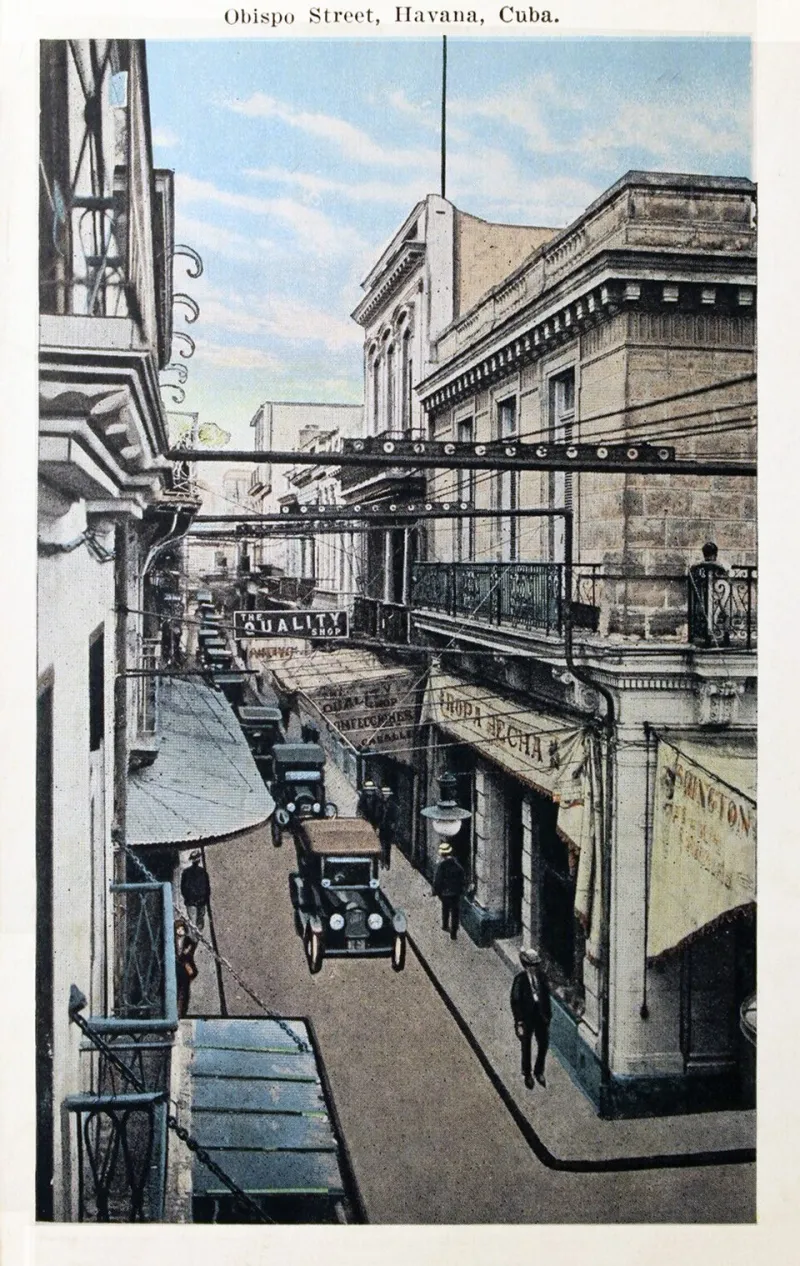
Photo: American Photo Studios, Havana, Public domain, via Wikimedia Commons
There is a version of Havana that most visitors encounter — the broad Malecón seawall at sunset, the fleet of candy-colored American automobiles navigating cobblestone streets, the mojitos served beneath the arched colonnades of Old Havana. It is, without question, a magnificent spectacle. Yet seasoned travelers who have returned to Cuba's capital more than once will tell you, almost universally, that the city's most profound offerings are found not in its monuments but in its moments: a trumpet player rehearsing in a second-floor apartment with the shutters thrown open, a retired painter selling small canvases from a folding table on a residential side street, a neighborhood gathering that transforms into an impromptu dance party before midnight.
For guests staying at Hotel Quinta Avenida Habana, the advantage is immediate. Positioned along the elegant sweep of Fifth Avenue in Miramar — historically one of Havana's most distinguished residential corridors — the property places you within reach of both the city's well-documented landmarks and the quieter, more intimate neighborhoods where authentic Cuban daily life unfolds. Consider this your invitation to move beyond the guidebook.
Following the Music to Its Source
Cuba's musical legacy is, of course, internationally celebrated. Son cubano, the foundational rhythm from which salsa, mambo, and cha-cha-chá all descended, remains very much alive in Havana — though you may need to know where to look. The most memorable performances rarely happen in venues built specifically for tourists.
Casa de la Música in Miramar, just a short distance from the hotel, draws serious musicians and devoted local audiences alike. Arrive early and stay late; the energy builds considerably past 10 p.m. For something more intimate, the Casa de las Tradiciones in the Vista Alegre area of the city offers live performances in an atmosphere closer to a neighborhood gathering than a ticketed concert. Seek out the smaller casas de la trova scattered throughout Centro Habana, where musicians in their seventies and eighties perform compositions that predate the Revolution with an authority that cannot be taught.
Your concierge at Hotel Quinta Avenida Habana can provide current performance schedules and, in many cases, facilitate introductions to local musicians who welcome conversation after a set. These exchanges — conducted through whatever combination of Spanish and improvised communication you can manage — frequently become the most cherished memories guests carry home.
Reading the Walls: Havana's Muralist Communities
Street art in Havana is not merely decoration; it is a form of civic dialogue conducted in vivid pigment across the facades of buildings that have witnessed decades of transformation. The most celebrated open-air gallery in the city is Callejón de Hamel, a narrow alley in Centro Habana that artist Salvador González Escalona began painting in the early 1990s. Today it functions as both a permanent installation and a living community space, hosting Afro-Cuban rumba performances on Sunday mornings that draw participants rather than simply observers.
Beyond Callejón de Hamel, the Fusterlandia neighborhood in Jaimanitas — reachable via a brief drive from the hotel — represents one of the most extraordinary examples of community-driven public art anywhere in the Western Hemisphere. Artist José Fuster has, over several decades, tiled virtually every surface of his neighborhood in colorful mosaic work inspired by both Cuban folklore and the aesthetic legacy of Antoni Gaudí. Walking through Jaimanitas feels less like visiting an art installation and more like entering a shared dream.
For guests with a deeper interest in contemporary Cuban visual art, the Wifredo Lam Center for Contemporary Art in Old Havana hosts rotating exhibitions featuring both established and emerging Cuban artists, and the staff there are generally receptive to questions about studio visits and artist introductions.
Neighborhood by Neighborhood: Where to Wander
Miramar, the district where Hotel Quinta Avenida Habana is situated, repays slow exploration on foot. The broad, tree-lined avenues that give Fifth Avenue its name were designed in the early twentieth century to project a sense of permanence and prosperity, and many of the grand mansions that line adjacent streets retain their architectural dignity even after decades of changing fortunes. This is a neighborhood where diplomats reside, where jazz musicians live between international tours, and where some of Havana's finest paladares — privately owned restaurants operating out of converted homes — serve meals that rival anything available in the tourist center.
Centro Habana, by contrast, is denser, louder, and more immediately chaotic. It is also, for many visitors, the most viscerally alive part of the city. The streets around Neptuno and San Rafael are perpetually animated, and the neighborhood's proximity to the Malecón means that an evening walk can transition seamlessly from market stalls to the open air of the waterfront. Vedado, meanwhile, occupies a middle ground between the colonial grandeur of Old Havana and the residential calm of Miramar — its tree-shaded streets contain excellent bookshops, independent art galleries, and the storied Necropolis Cristóbal Colón, which is as much a work of architectural history as it is a cemetery.
Connecting Meaningfully: A Few Practical Suggestions
Approaching cultural immersion in Havana requires a degree of patience and flexibility that travelers accustomed to highly structured itineraries may find unfamiliar. Schedules shift. Venues close unexpectedly. Conversations lead somewhere entirely unplanned. This is not a flaw in the experience — it is the experience.
Learning even a modest amount of Spanish before your arrival signals respect and opens doors that remain closed to visitors who rely entirely on translation. Carrying Cuban convertible currency in small denominations facilitates purchases at local markets and tips for musicians. And perhaps most importantly, resist the impulse to document every encounter through a camera lens. Some of Havana's most generous moments are offered to those who are simply present.
The team at Hotel Quinta Avenida Habana understands that the most meaningful travel is not passive. Our concierge services are designed not merely to arrange transportation and reservations but to connect guests with the city in ways that reflect their individual interests. Whether your passion lies in music, visual art, culinary tradition, or architectural history, Havana has something irreplaceable to offer — and we consider it a privilege to help you find it.