Why America's Most Discerning Travelers Are Choosing Havana's Historic Hotels Over Anywhere Else
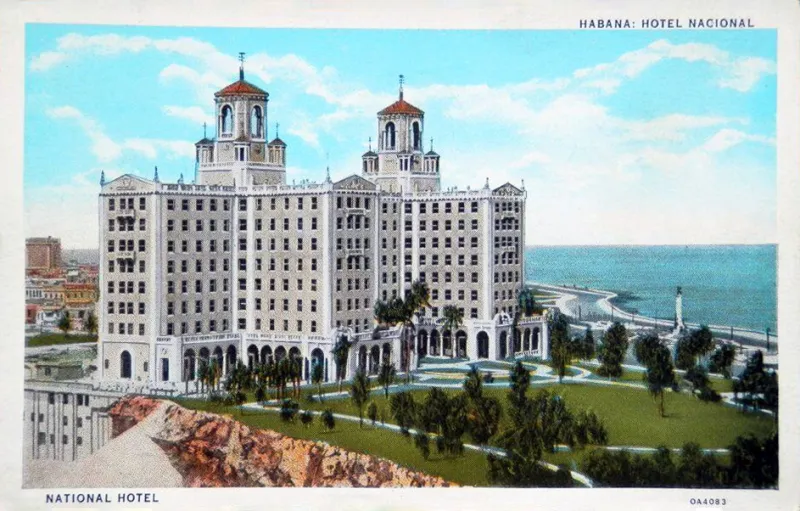
Photo: Carlos Jordi, Havana (publisher), Public domain, via Wikimedia Commons
For much of the past two decades, the conversation around luxury travel has centered on the new: newly constructed resorts with infinity pools cantilevered over tropical coastlines, newly opened urban properties designed by architects whose names appear in design magazines, newly conceived wellness retreats promising transformation through proprietary methodology. The industry has been extraordinarily effective at delivering novelty, and American travelers have responded accordingly.
Yet something has shifted. Quietly at first, and now with increasing clarity, a segment of the American travel market — well-traveled, culturally engaged, and skeptical of experiences that feel manufactured — has begun moving in a different direction. These are travelers who have already done the Maldives and the Amalfi Coast. They have stayed in the celebrated design hotels of Mexico City and the converted plantation properties of Barbados. What they are seeking now is something that cannot be built from scratch: genuine historical resonance, a sense of place so specific and irreproducible that no competitor could replicate it regardless of budget.
Havana, for this audience, has become something close to a revelation.
The Architecture of Memory
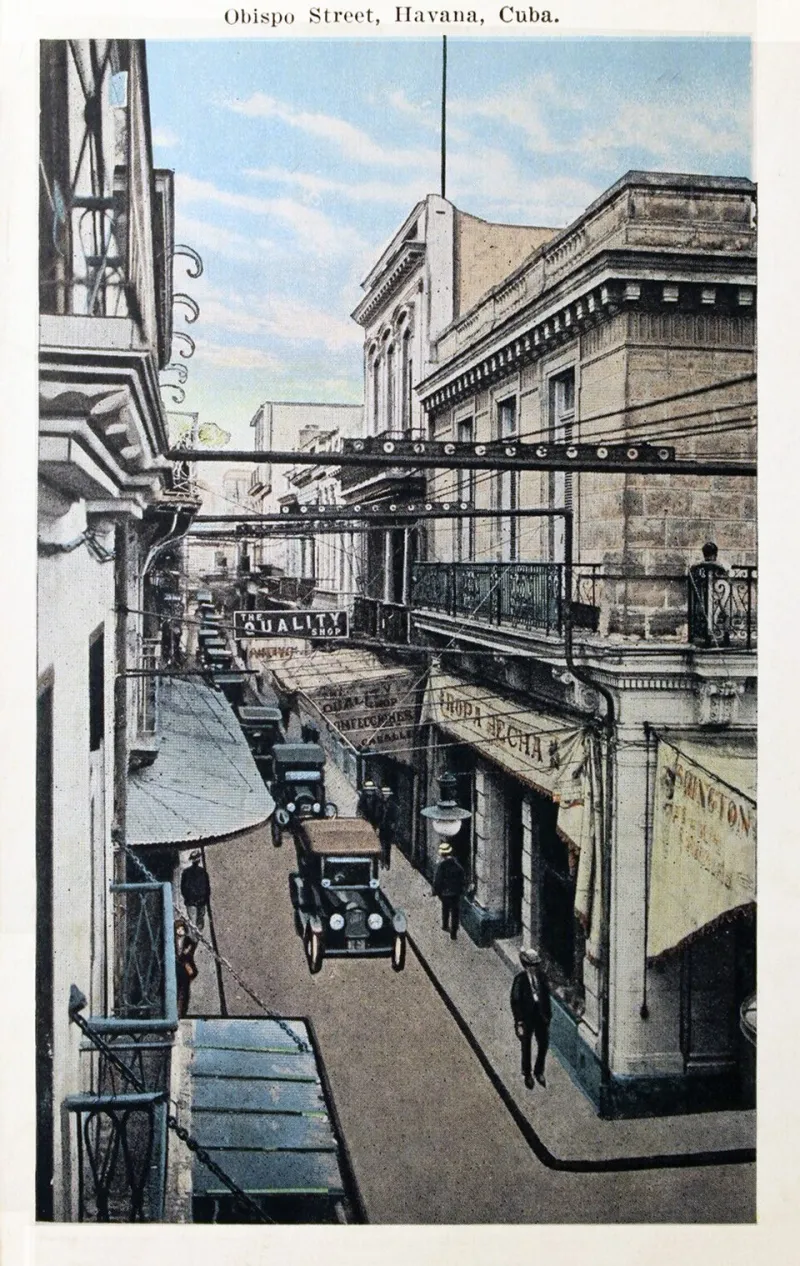
To understand why historically significant properties in Havana occupy a category of their own, it helps to consider what has made the city's built environment so exceptional — and so unusual. Havana developed rapidly during the first half of the twentieth century, drawing on the wealth generated by the sugar and tobacco industries to construct a cityscape that blended Spanish colonial grandeur, Beaux-Arts civic ambition, and the sleek optimism of mid-century modernism. The result was a city that, by the late 1950s, was widely regarded as among the most architecturally distinguished in the Western Hemisphere.
The decades that followed, while economically challenging for Cuba, had the unintended consequence of preserving much of that built heritage intact. Without the capital for widespread demolition and redevelopment, Havana's historic fabric survived in a form that cities like Miami, New Orleans, and Cartagena — despite their own considerable charms — simply cannot match. Walking through Miramar or the tree-lined avenues of Vedado is, in a very real sense, walking through a preserved chapter of twentieth-century design history.
Properties like Hotel Quinta Avenida Habana exist within this context not as theme-park recreations of a glamorous era but as authentic participants in it. The bones of these buildings — the proportions of their rooms, the quality of their original materials, the considered relationship between interior space and exterior garden — reflect standards of construction and design that are increasingly rare. When American travelers speak of feeling that a hotel has "character," this is precisely what they mean, even if they lack the vocabulary to articulate it fully.
Beyond the Chain Hotel Experience
The standardization that defines international hotel chains serves a genuine purpose: it provides predictability, and predictability has value. A business traveler checking into a familiar brand in an unfamiliar city knows exactly what to expect, and that knowledge has commercial utility.
Leisure travelers seeking transformative experiences, however, are not purchasing predictability. They are purchasing the opposite — the productive uncertainty of genuine encounter, the possibility of being genuinely surprised by beauty or history or human connection. Chain hotels, by design, minimize that uncertainty. Boutique and historic properties, by their very nature, amplify it.
In Havana specifically, the distinction becomes particularly acute. A traveler staying in a globally branded property in any Caribbean destination is, to a meaningful degree, insulated from the place they have traveled to reach. The lobby could be in San Juan or Nassau or Cancún; the buffet breakfast operates on the same logic regardless of geography. The experience is comfortable, efficient, and largely interchangeable.
A traveler staying at Hotel Quinta Avenida Habana, situated on the historic Fifth Avenue corridor that once served as the address of choice for Havana's most prominent families and international visitors, is staying somewhere that could not exist anywhere else. The specific quality of light in the afternoon, the sounds that drift in from the street, the architectural details that speak to a particular moment in Cuban history — these are not amenities that can be imported or replicated. They are the product of a specific place and a specific time, and they are available only here.
The Narrative That Only Havana Can Offer
American travelers of a certain generation carry a particular relationship to Cuba — one shaped by decades of restricted access, Cold War mythology, and the persistent glamour of pre-Revolution imagery. The Havana of Ernest Hemingway, of mid-century jazz musicians, of an era when the city competed with Paris and New York as a destination for the culturally ambitious: this is a narrative that has lost none of its power to fascinate.
Staying in a property that participated in that era — that housed guests during the golden years of Cuban hospitality and has maintained its commitment to elegance through the decades since — provides a kind of narrative continuity that no amount of thoughtful interior design can manufacture. The history is not decorative. It is structural. It is present in the way the building was conceived and in the way it continues to function, connecting the contemporary guest to a story that extends far beyond their own visit.
For American travelers who have grown accustomed to experiences that are thoroughly curated and efficiently delivered, this encounter with genuine, unmediated history can be unexpectedly moving. Havana does not perform its past for visitors; it simply continues to inhabit it. That quality — unselfconscious, deeply rooted, impossible to fake — is increasingly rare in a world of travel experiences designed primarily for social media documentation.
Modern Comfort as the Essential Complement
It would be a mistake, however, to suggest that the appeal of Havana's historic properties rests entirely on nostalgia. The most compelling luxury travel experiences do not ask guests to sacrifice comfort in the name of authenticity. They understand that physical ease and cultural richness are not competing values but complementary ones — that a traveler who has slept well in a beautifully appointed room is far better prepared to engage meaningfully with a complex and fascinating city.
Hotel Quinta Avenida Habana approaches this balance with deliberate care. The property's historical character is honored and preserved, while its amenities and services reflect the expectations of today's American luxury traveler. This is, in many respects, the defining challenge of historic hospitality done well: maintaining the soul of a place while ensuring that every guest has everything they need to be genuinely comfortable.
For travelers who have been searching for a destination that offers both the depth of genuine history and the refinement of contemporary luxury, the answer, increasingly, is Havana. And the address, for those who understand the difference that location makes, is Fifth Avenue.