Concrete, Chrome, and Continuity: Inside Havana's Art Deco Revival and What It Means for the Modern Guest
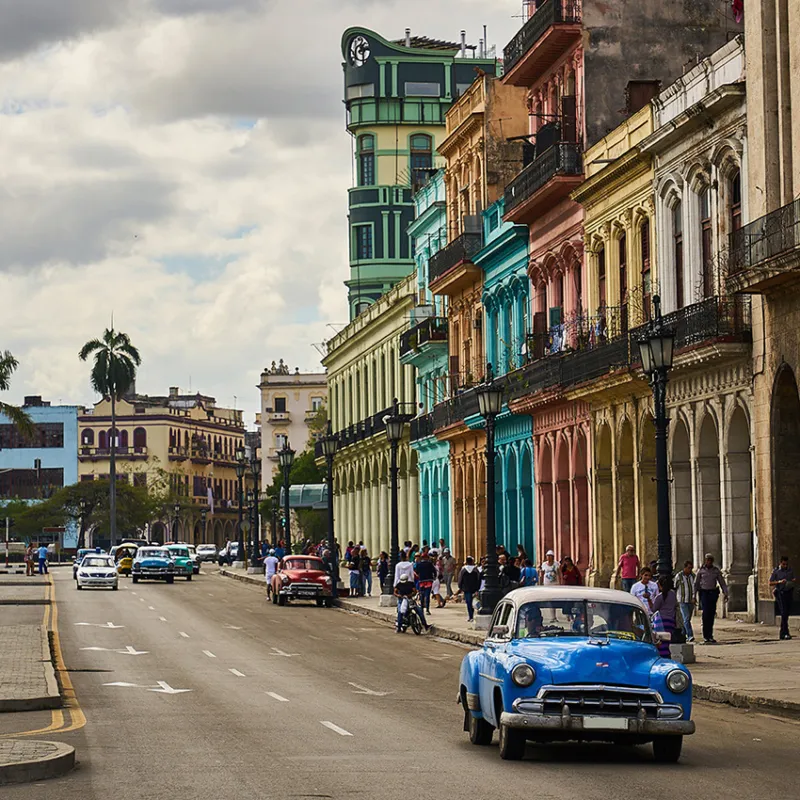
Photo: Havana Art Deco building restoration facade architectural detail Cuba, via images.visitarcuba.org
There is a particular kind of beauty that only time can produce. It lives in the patina of a terrazzo floor, in the geometric relief of a carved limestone facade, in the sweep of a cantilevered balcony that once looked out over a city at the height of its glamour. Havana has always possessed this beauty in abundance. What is changing now—quietly, methodically, and with remarkable ambition—is the effort to ensure that it endures.
Across the Cuban capital, a sustained architectural restoration movement is reclaiming some of the Western Hemisphere's most significant Art Deco and 1950s modernist structures. For American travelers considering where to invest their time and resources in 2024, the implications are substantial. A stay in a thoughtfully restored Havana property is not simply a comfortable night's sleep in a handsome building. It is an act of participation in one of the most consequential cultural preservation stories unfolding anywhere in the world today.
The Weight of What Was Built
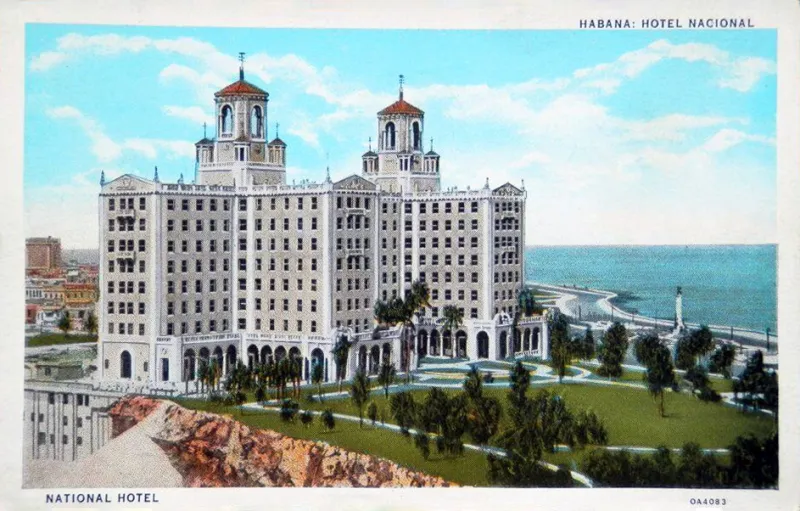
To appreciate what restoration means in Havana, one must first understand what was originally constructed here. Between roughly 1925 and 1959, the city absorbed an extraordinary wave of architectural ambition. Wealthy Cuban families, American business interests, and European-trained architects collaborated to produce a skyline that rivaled Miami, New York, and Havana's own Latin American contemporaries. Art Deco arrived in full force during the 1930s, bringing with it the signature vocabulary of the style: stepped cornices, sunburst motifs, zigzag ornamentation, and an almost theatrical confidence in the expressive power of reinforced concrete.
The decades that followed were less kind. Economic pressures, a scarcity of building materials, and the sheer passage of time conspired to weather these structures significantly. Yet the bones remained—and they remained extraordinary.
Restoration as Cultural Stewardship
The Office of the Historian of the City of Havana, led for many years by Eusebio Leal Spengler and continuing under his successors, has been the primary institutional force behind the city's restoration agenda. UNESCO recognition of Old Havana as a World Heritage Site in 1982 provided international legitimacy and, eventually, financial resources. But the restoration movement has never been confined to the colonial quarter alone. Miramar, Vedado, and the Quinta Avenida corridor—the grand boulevard that lends our property its name—have all been subjects of ongoing preservation attention.
What distinguishes serious restoration from mere renovation is the commitment to historical fidelity. Craftspeople working on Havana's most significant buildings are not simply applying fresh paint to old walls. They are sourcing period-appropriate tile patterns, replicating original ironwork through traditional forging techniques, and consulting archival photographs to ensure that decorative plasterwork is returned to its precise original configuration. This is painstaking, expensive, and deeply intentional work.
What Guests Actually Experience
For the discerning traveler, the results of this commitment manifest in ways that are both visible and atmospheric. Walking through the entrance of a properly restored Art Deco property in Havana, guests encounter a coherence that modern construction simply cannot manufacture. The proportions of a restored lobby reflect the spatial logic of its era. The interplay of natural light through original jalousie windows creates patterns that have remained consistent for generations. Even the acoustic quality of a room with genuine plaster walls and terrazzo floors differs perceptibly from that of contemporary construction.
At Hotel Quinta Avenida Habana, this philosophy of spatial integrity shapes every aspect of the guest experience. The property's position along the celebrated Fifth Avenue corridor places it within one of the city's most architecturally coherent neighborhoods—a setting where the relationship between a building and its surroundings has been carefully maintained. Guests are not looking at preservation from a distance. They are living within it.
Beyond the purely aesthetic, restored historic properties offer guests a form of orientation that purpose-built resorts cannot replicate. When a building has genuine history, the stories embedded in its walls become part of the hospitality itself. A knowledgeable concierge can point to the building across the avenue and explain its original function, its architect, and its place in the neighborhood's social history. That context enriches every subsequent experience—a morning walk, a cocktail on the terrace, a conversation with a local resident.
The Intersection of Tourism and Preservation
It would be disingenuous to discuss restoration without acknowledging the economic dimension. Tourism revenue, when responsibly channeled, has become one of the most reliable funding mechanisms for architectural conservation in Havana. Properties that attract international guests generate resources that can be reinvested in ongoing maintenance and restoration work. The relationship is not incidental—it is structural.
This creates a meaningful alignment of interests between the traveler and the city. When an American guest chooses a historically significant, carefully maintained property over a generic alternative, that choice carries weight beyond personal preference. It signals to the market—and to the institutions responsible for stewardship—that authenticity commands value. It is, in the most literal sense, a vote for preservation.
Some critics have raised legitimate questions about the pace of tourism development and its effects on local communities. These are conversations worth having. What is equally clear, however, is that thoughtful, luxury-focused tourism—the kind that prioritizes depth of experience over volume of visitors—tends to generate more sustainable outcomes than mass-market alternatives. A guest who spends a week exploring Havana's architectural heritage, dining in locally owned paladares, and engaging with the city's cultural institutions contributes differently than one who passes through on a cruise itinerary.
Why This Moment Is Significant
Havana's restoration movement is operating against a backdrop of genuine urgency. Many of the city's most important structures remain in fragile condition. Climate pressures, including the increased intensity of Atlantic hurricane seasons, pose ongoing threats to buildings that were never designed with modern meteorological realities in mind. The window for intervention, in some cases, is narrowing.
This urgency makes the current moment in Havana's architectural story genuinely significant for travelers who care about experiencing places at their most compelling. The city is in a state of active transformation—not the chaotic transformation of a place losing its identity, but the more nuanced transformation of a place consciously reclaiming it. To visit now is to witness a process that will eventually reach its conclusion, at which point the texture of discovery that currently defines the experience will necessarily change.
For guests of Hotel Quinta Avenida Habana, that process is not something observed from a comfortable remove. It is something inhabited, daily, in a building that embodies the values driving it. The Art Deco legacy of Havana is not a museum exhibit. It is a living environment—and the most rewarding way to understand it is to make it, however briefly, your home.