Hands That Remember: How Havana's Master Craftspeople Are Transforming Extended Stays Into a Living Education
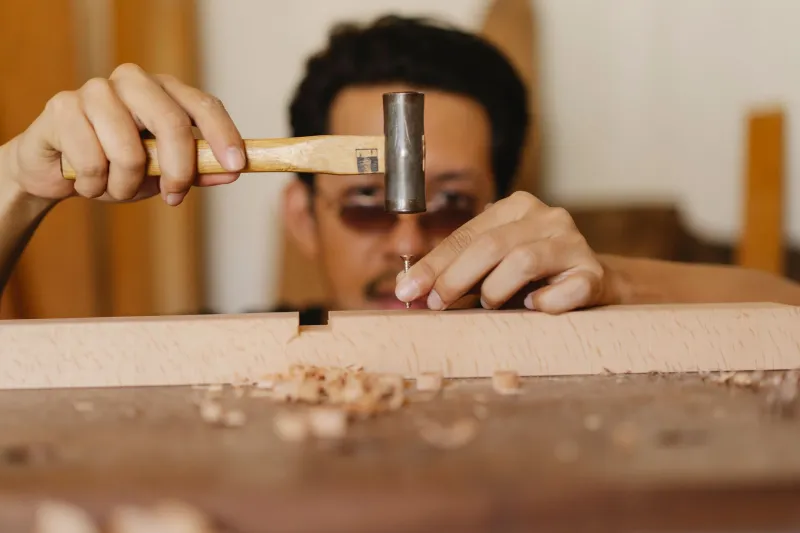
There is a particular quality of silence that settles over a craftsman's workshop in the early morning hours — a silence that is not empty but full, dense with concentration and the accumulated knowledge of decades. In Havana, that silence has a texture all its own. It carries the faint scent of cedar shavings, the mineral coolness of colonial stone, and something harder to name: the weight of an unbroken tradition.
For guests who choose to stay at Hotel Quinta Avenida Habana not merely for a long weekend but for a week or more, this silence becomes available to them in ways that few luxury properties anywhere in the world can offer. The hotel, positioned along one of Havana's most storied boulevards, sits at the center of a living cultural ecosystem — one in which master artisans, furniture restorers, textile weavers, and ceramic artists continue to practice their crafts with a rigor and authenticity that the homogenized luxury market has largely erased everywhere else.
The Artisan as Neighbor, Not Spectacle
The distinction matters enormously. In most high-end travel destinations, craft is presented as entertainment — a demonstration staged for guests, carefully timed and safely distant. A weaver performs at a market stall; a potter throws a bowl while tourists photograph from behind a velvet rope. The transaction is pleasant, but it is fundamentally theatrical.
Havana operates on different terms. Here, the craftspeople are not performing for visitors. They are simply working, as they have always worked, within the same neighborhoods and buildings that have housed their trades for generations. The furniture maker on a side street off Miramar is not there because a tourism board placed him. He is there because his father was there, and his grandfather before that, and because the knowledge he carries in his hands has nowhere else to go.
Guests of Hotel Quinta Avenida Habana, particularly those who communicate their interests to the hotel's staff, discover that introductions to these individuals are not merely possible — they are, in the right circumstances, warmly encouraged. The hotel's team, deeply embedded in the cultural life of the surrounding Miramar district, serves as a discreet bridge between curious visitors and the artisans who might otherwise remain invisible to the standard tourist itinerary.
What an Extended Stay Makes Possible
The difference between a three-night visit and a ten-day residency is not simply quantitative. It is qualitative in ways that reshape the entire character of the experience.
A brief visitor can watch a cigar roller at work and come away with a photograph and a general impression. A guest with time to return — the following morning, and the morning after that — begins to see something else entirely. They notice the specific angle of the roller's wrist, the way humidity is managed, the hierarchy of leaf selection that happens before a single cigar is begun. They may, if they are attentive and respectful, be permitted to attempt the process themselves, failing badly at first and understanding through that failure what years of practice actually produce.
This dynamic — call it earned access — is the defining luxury of an extended Havana stay. It cannot be purchased outright. It accrues through presence, patience, and the willingness to be a genuine student rather than a paying audience.
Similar relationships develop in Havana's textile workshops, where women trained in the intricate needlework traditions of pre-revolutionary Cuban households continue to produce embroidered linens and hand-blocked fabrics of extraordinary refinement. American guests with backgrounds in fashion, interior design, or simply a serious appreciation for material culture have found in these workshops an education unavailable at any price in New York or Los Angeles.
The Hotel as Creative Residency
Hotel Quinta Avenida Habana is not, in the conventional sense, an artist residency program. But the conditions it provides — gracious accommodation, deep local knowledge, genuine cultural embeddedness, and the unhurried pace that Miramar's wide, tree-lined boulevard naturally imposes — create something functionally equivalent.
Guests who arrive with a specific craft interest and communicate it clearly find that the hotel becomes an operational base for a kind of self-directed apprenticeship. A furniture designer from Chicago spent three weeks studying Havana's colonial joinery traditions, returning each evening to document her findings and refine her questions for the following day. A ceramicist from Portland used an extended stay to work alongside a studio potter whose techniques traced back to Spanish colonial methods largely abandoned elsewhere in the Caribbean. Neither guest was following a pre-packaged itinerary. Both left with something that would inform their professional work for years.
What Havana Teaches That Other Cities Cannot
It is worth pausing to consider why this particular form of cultural immersion is available in Havana and not in, say, Florence or Kyoto — cities equally associated with fine craft traditions.
The answer is partly economic and partly historical. Cuba's particular trajectory has meant that certain trades and skills that modernized out of existence in wealthier countries were preserved here not by deliberate conservation efforts but simply by circumstance. The furniture maker did not learn his craft at a school or from a book. He learned it from a person, who learned it from a person, in an unbroken chain of embodied knowledge that has survived intact precisely because there was no industrial disruption to sever it.
For American travelers accustomed to experiencing craft as a commodity — a beautiful object purchased and shipped home — this encounter with craft as living knowledge is genuinely disorienting. And that disorientation, properly attended to, is the beginning of a real education.
A Different Kind of Souvenir
The guests who return from extended stays at Hotel Quinta Avenida Habana with the most to say rarely lead with descriptions of the hotel's amenities or the quality of the meals, though both are considerable. They lead with the people they met, the workshops they entered, the things their hands learned to do imperfectly and then, incrementally, less imperfectly.
They carry home not objects but understanding — a more demanding souvenir, and a more enduring one. In a travel landscape increasingly saturated with experiences designed to be frictionless and immediately gratifying, Havana offers something that requires more of its visitors and, in doing so, returns far more in kind.
The maestro's workshop will be open tomorrow morning. The question is whether you will still be in Havana to walk through its door.