Not the Avenue You Were Expecting: What Quinta Avenida Reveals About the Nature of True Prestige
There is a particular kind of traveler who arrives in Miramar with a mental image borrowed from elsewhere. They have walked Fifth Avenue in Manhattan, perhaps strolled the Champs-Élysées, maybe spent an afternoon on Rodeo Drive. They expect something in that familiar register — a boulevard that announces its own importance through glass facades, branded awnings, and the quiet theater of conspicuous commerce. Quinta Avenida, Havana's most celebrated thoroughfare, offers none of that. And it is precisely this refusal that makes it extraordinary.
A Different Kind of Grand
To understand Quinta Avenida, one must first set aside every assumption that the word "avenue" carries in the American imagination. In the United States, a prestigious boulevard is, almost by definition, a commercial proposition. Its grandeur is measured in retail density, in the caliber of the brands that claim its addresses, in the purchasing power it attracts and displays. The street exists to facilitate transaction, and its beauty — such as it is — serves that commercial purpose.
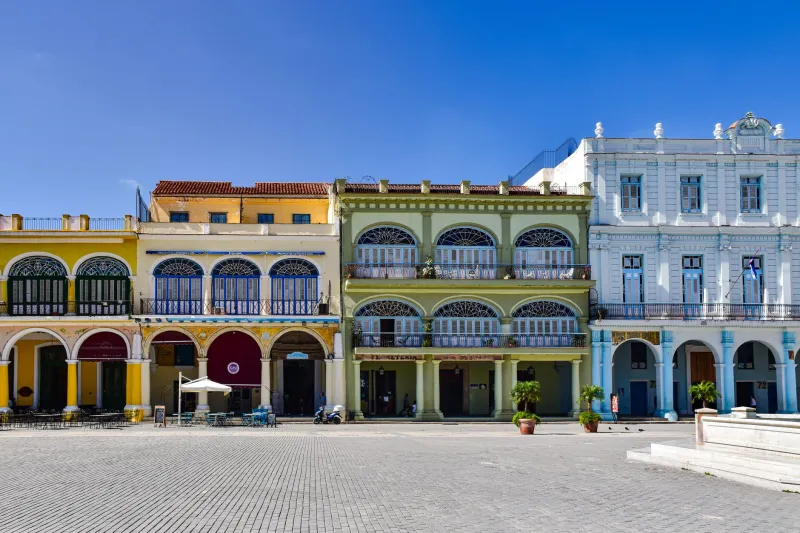
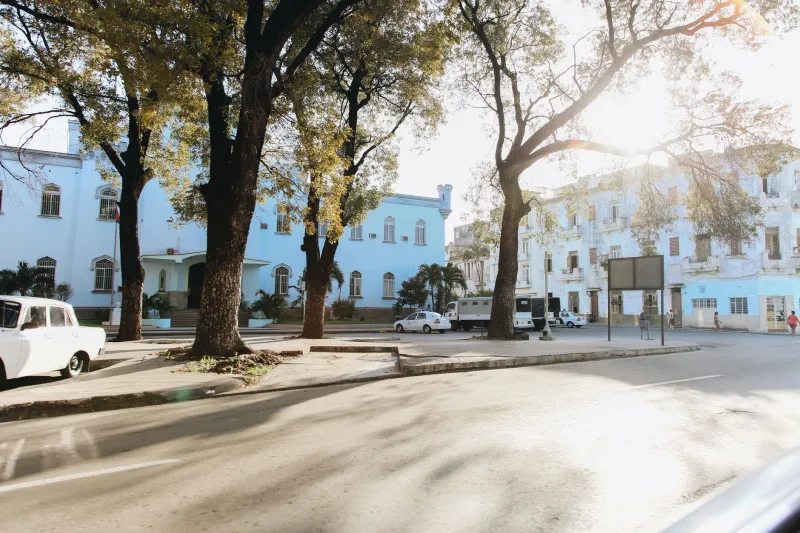
Quinta Avenida was built to a different brief entirely. Developed in the early twentieth century as Havana's most desirable residential corridor, the avenue stretches westward through the Miramar district with a divided central promenade shaded by mature trees, flanked by embassies, historic mansions, and institutional buildings that have outlasted every political transformation the island has known. There is no flagship store at its anchor. There is no luxury mall at its terminus. There is, instead, a sustained architectural conversation between eras — neoclassical volumes beside mid-century modernist gestures, tropical gardens encroaching on iron gates, the occasional crumbling cornice that refuses to be embarrassed by its own age.
This is not neglect dressed up as charm. It is something more considered than that.
The History the Street Carries Without Advertising It
Quinta Avenida's prestige was established long before the revolution and has survived everything that followed. In the 1940s and 1950s, this corridor housed the homes of Havana's professional and diplomatic elite — architects, physicians, foreign envoys, and industrialists who valued the district's relative remove from the Old City's density without sacrificing access to its culture. The boulevard's wide central median, designed for promenading rather than parking, encoded a specific social value: that the highest use of a fine avenue was not commerce but contemplative movement.
That value persists. Walk Quinta Avenida on any morning and you will find residents moving through the shade with the unhurried confidence of people who have always lived well here. The embassies that line the street's most distinguished stretches bring a quiet diplomatic gravity that no retail tenant could replicate. And the mansions — even those showing the patient erosion of decades — carry an architectural authority that no new construction, however well-funded, can manufacture.
For the discerning American traveler, this represents something genuinely rare: a prestigious address whose credentials derive from duration rather than expenditure.
What the Boulevard Demands of Its Guests
To stay on Quinta Avenida — to make Hotel Quinta Avenida Habana one's base of operations in this city — is to accept an implicit contract with the street itself. The avenue does not perform for you. It does not adjust its pace to accommodate your schedule or simplify its history into digestible signage. It asks, instead, that you meet it on its own terms.
This is a requirement that genuinely distinguishes the travelers it attracts. Those who find the boulevard's quieter register disappointing tend to be seeking a different kind of validation — the kind that comes from being seen in the right places rather than from understanding them. Those who stay, who take the time to walk the median promenade in the early morning or sit with the view from a balcony as the afternoon light reorganizes the facades across the street, consistently report that something shifts in their understanding of what prestige actually means.
A New York attorney who spent three weeks at the hotel last spring described the experience with characteristic precision: "I've stayed on the actual Fifth Avenue. I've stayed on Park Avenue. This is the first time I've stayed somewhere where the street itself seemed to have a point of view."
Presence Without Performance
What separates Quinta Avenida from every other luxury boulevard in the Western hemisphere is the complete absence of what might be called prestige theater — the elaborate staging of exclusivity that characterizes high-end commercial districts from Beverly Hills to Dubai. There are no velvet ropes here. No carefully curated window displays engineered to produce desire. No doormen whose primary function is to make you feel observed and approved.
The avenue's authority is constitutional rather than performative. It comes from what it actually is — from the accumulated weight of its architectural history, its diplomatic significance, its position as the residential address of choice for those who have always understood that the most refined statement is understatement — rather than from what it projects.
For American travelers accustomed to luxury environments that work very hard to remind you of their luxury, this can initially feel disorienting. The boulevard does not tell you it is significant. It simply is.
Why This Matters Now
There is a broader cultural shift underway among America's most accomplished travelers, one that Quinta Avenida embodies with particular clarity. The generation of luxury travel defined by conspicuous brand alignment — by the hotel whose logo announced your taste, by the address that required no explanation — is giving way to something more interested in genuine meaning. Travelers who have already stayed everywhere are increasingly asking not where they stayed but what the place actually taught them.
Quinta Avenida is, in this sense, perfectly positioned for the current moment. It offers prestige that cannot be replicated, history that cannot be manufactured, and a spatial experience that consistently produces the kind of recalibration that travelers increasingly describe as the real measure of a journey's value.
The avenue you were expecting would have given you a shopping bag to show for it. The avenue you find here gives you something considerably more durable: a revised understanding of what it means to occupy a truly distinguished address.