When Imperfection Becomes the Point: The New Luxury Traveler's Case for Havana
There is a particular kind of boredom that arrives inside perfection. It settles quietly, somewhere between the third complimentary amenity and the flawlessly choreographed sunset dinner, and it whispers a question that no five-star concierge can answer: Is this all there is?
America's most accomplished travelers — the kind who have slept in the finest suites from Bali to the Maldives, who have tasted the tasting menus and chartered the private catamarans — are beginning to recognize that boredom for what it is. Not ingratitude. Not restlessness. But the entirely rational response to experiences that have been so thoroughly optimized they have lost the one quality that makes travel meaningful: genuine encounter.
Havana does not permit that boredom. It simply will not allow it.
The Commodification of Seamlessness
For two decades, the luxury travel industry built its value proposition around the elimination of friction. Every edge was softened, every inconvenience anticipated and neutralized, every moment pre-curated to deliver the impression of discovery without its actual risks. The result was a global network of interchangeable excellence — properties where the thread count was impeccable and the soul was somewhere in transit.
The most perceptive segment of the American luxury market noticed first. Wealth managers, private equity partners, creative directors, and founders who had spent careers developing sophisticated judgment about quality began applying that same judgment to their travel choices. And what they found was that seamlessness, once the ultimate luxury signal, had become its own form of mass production.
When every resort offers the same curated playlist in the same infinity pool overlooking the same photographed horizon, the experience is no longer rare. It is merely expensive.
Havana offers something categorically different, and that difference begins the moment a guest arrives on Quinta Avenida.
Character as the Rarest Amenity
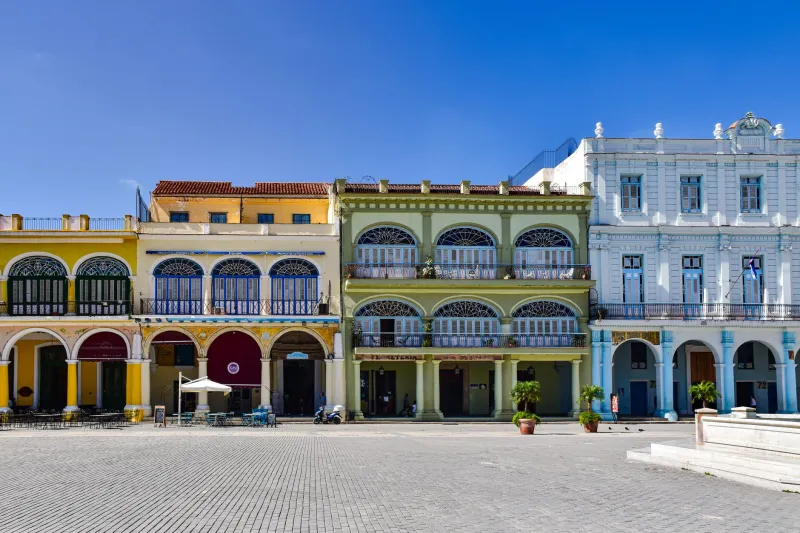
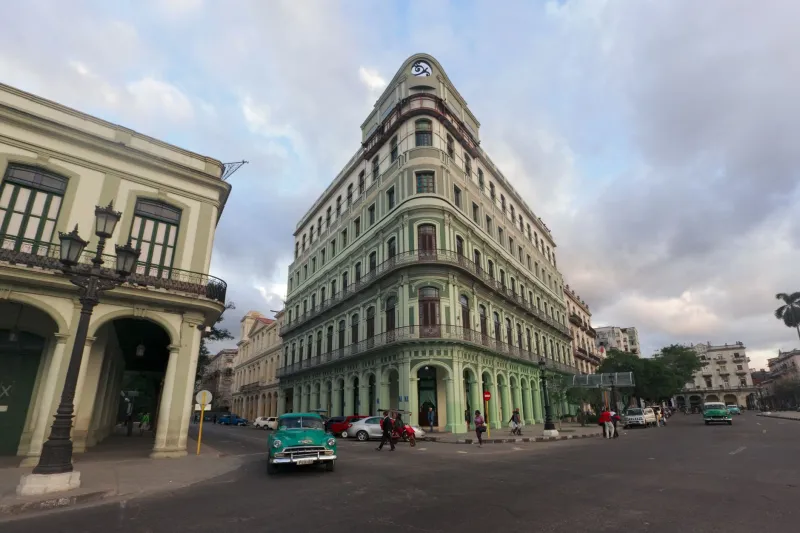
The boulevard that runs past Hotel Quinta Avenida Habana is not a stage set. It was not designed to evoke nostalgia or perform authenticity for visiting cameras. It exists on its own terms — wide and stately, lined with the architectural evidence of successive eras, populated by residents who have built their lives here and carry that rootedness in every interaction.
This is what discerning travelers mean when they speak of character. Not charm in the decorative sense, not the carefully aged patina applied to a new-build boutique hotel, but the genuine accumulation of consequence — a place shaped by forces larger than hospitality, by history and ambition and loss and reinvention.
To stay on Quinta Avenida is to exist inside that accumulation. The building has its own memory. The neighborhood has its own logic. And the city, extending outward from Miramar in every direction, operates according to rhythms that no amount of advance research will fully prepare a visitor to navigate.
That is precisely the point.
The Psychology of the Demanding Destination
Research into what psychologists call "optimal experience" — the state of absorbed engagement that produces lasting satisfaction — consistently finds that challenge is a prerequisite. The mind requires something to work against. Meaning is not delivered; it is earned through the expenditure of attention and adaptability.
Havana is constitutionally incapable of delivering the passive experience. The city asks questions. It presents situations that cannot be resolved by reaching for a phone or invoking a loyalty program tier. It requires its visitors to be present in the oldest sense of that word — actually here, actually attentive, actually willing to meet the place on its own terms.
For high-achieving Americans who have spent their professional lives developing precisely these capacities — situational awareness, rapid assessment, the ability to read rooms and build trust under uncertainty — Havana is not a challenge. It is a recognition. The city speaks a language they already know, and that fluency produces a quality of satisfaction that no curated resort experience can replicate.
What Status Looks Like Now
There is also a social dimension to this shift that deserves honest acknowledgment. Among a certain tier of American traveler, the ability to navigate Havana comfortably — to have relationships there, to understand its textures and contradictions, to speak about it with the specificity that only genuine immersion provides — has become a meaningful form of cultural capital.
It signals something that a Maldives booking simply cannot: discernment sophisticated enough to prefer difficulty. Taste refined enough to find value in what cannot be easily purchased. The willingness to engage rather than merely consume.
This is not performative. The most interesting people in any professional circle are generally those who have accumulated unusual experiences and allowed those experiences to change them. Havana changes people. It is one of the few remaining destinations that can make that claim without qualification.
The Hotel as Threshold
Hotel Quinta Avenida Habana understands its position in this equation. The property does not attempt to insulate guests from Havana's nature. It serves, instead, as a threshold — a place of genuine comfort and considered elegance from which the city's full complexity becomes accessible rather than overwhelming.
The distinction matters. Comfort and insulation are not the same thing. A guest who returns from an afternoon in Centro Habana having navigated something genuinely unscripted, having connected with someone whose life experience bears no resemblance to their own, having found their way through a situation that required actual ingenuity — that guest returns to Quinta Avenida with something to process, something to carry. The hotel provides the conditions for that processing: the quiet room, the evening meal, the unhurried morning.
It is the rhythm that makes transformation possible. Challenge and recovery. Engagement and reflection. The city and the sanctuary.
A Different Calculus
The travelers who choose Havana are not choosing against comfort. They are choosing for something that comfort alone cannot provide: the irreplaceable satisfaction of having been genuinely somewhere, of having met a place that did not accommodate itself to their preferences, of having expanded rather than merely relaxed.
In a world where luxury has largely succeeded in eliminating inconvenience, the most sophisticated travelers are making a different calculation. They are asking not what a destination will provide, but what it will demand. And they are discovering, with the particular satisfaction of the truly discerning, that the destinations worth remembering are always the ones that asked the most.
Havana asks everything. That, in the end, is why it gives back so much.