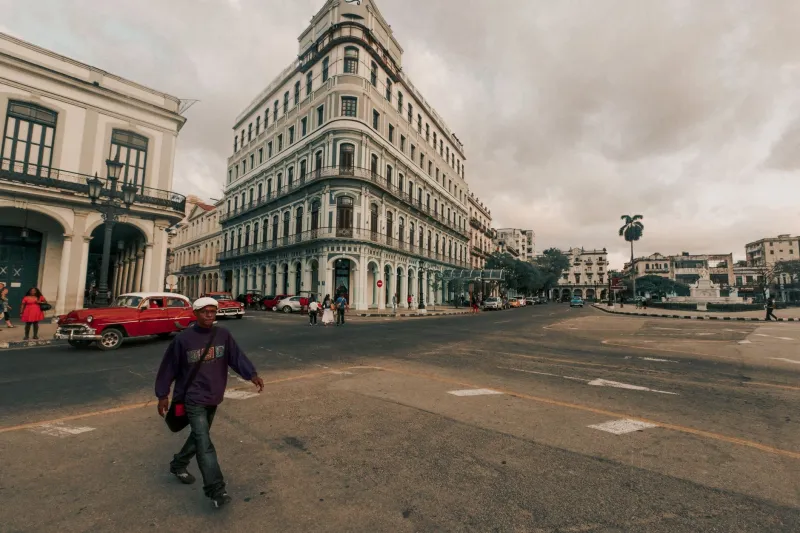
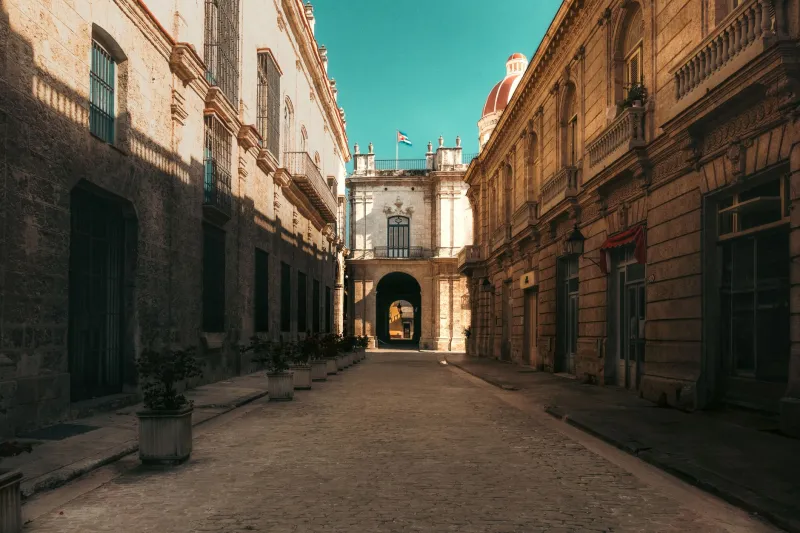
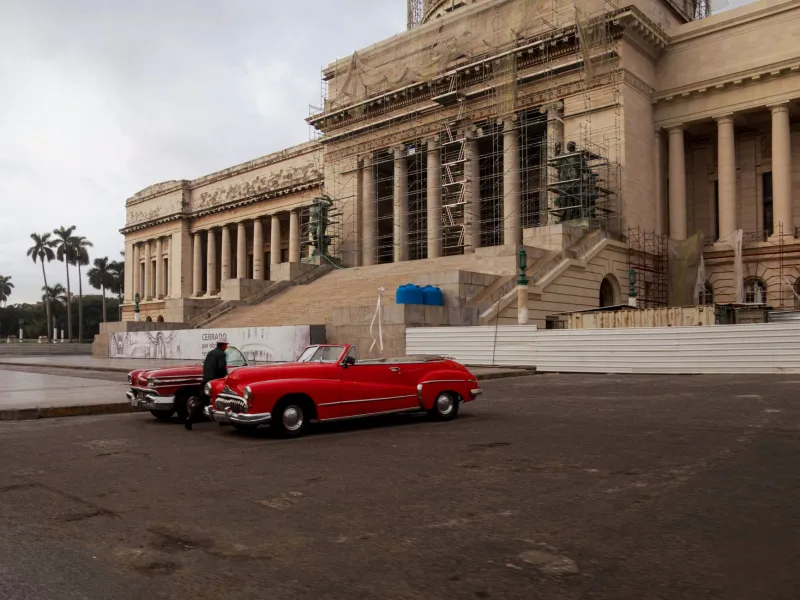
Order Is Overrated: How Havana's Beautiful Unpredictability Is Redefining What Luxury Means
There is a particular kind of fatigue that afflicts the sophisticated traveler. It settles in somewhere between the third thread-count upgrade and the fifth personalized welcome amenity — a creeping suspicion that the most expensive hotel rooms in the world have begun to resemble one another with uncomfortable precision. The butler learns your name before you arrive. The pillow menu arrives before you ask. The city outside your window is curated, managed, and delivered to you in digestible portions by a concierge who has already decided what you should find remarkable.
This is luxury as it has been practiced for three decades. And it has, quietly and completely, become a commodity.
The Trouble with Perfection
America's most accomplished travelers — the ones who have stayed in every category of five-star property from the Maldives to Milan — are beginning to articulate something they have sensed but struggled to name. The problem with perfection, they are discovering, is its fundamental dishonesty. A seamless experience is a controlled one. A curated journey is, by definition, someone else's vision of what your journey should contain. The most expensive hotel in the world cannot manufacture the thing that makes travel genuinely transformative: the encounter you did not anticipate, the conversation that redirects your thinking, the alleyway that leads somewhere the itinerary never mentioned.
Havana has known this for years. The city simply had no choice but to build its appeal around the irreducible, the unmanageable, and the magnificently unscripted.
What Unpredictability Actually Costs
To understand why Havana's unpredictability has become a luxury asset rather than a liability, it helps to consider what predictability actually requires. The seamless resort experience depends on an enormous infrastructure of control — controlled supply chains, controlled staff training, controlled guest flow, controlled environmental conditions. It is, in the truest sense, a manufactured environment. And manufactured environments, however beautiful, carry the faint antiseptic quality of a showroom.
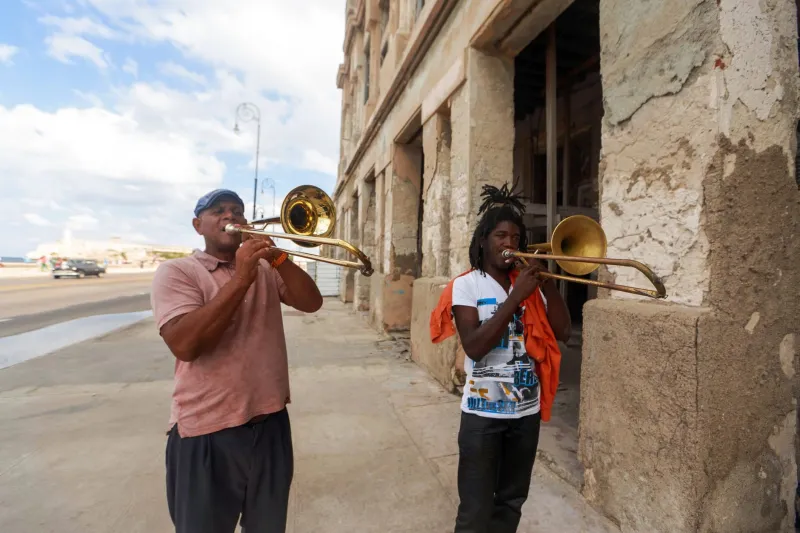
Havana operates under entirely different conditions. The city's infrastructure, its social rhythms, and its cultural logic evolved outside the frameworks that govern conventional tourism. A street musician on the Malecón is not performing for a curated experience package. A conversation with a retired architect in Vedado is not scripted by a hospitality consultant. The afternoon rainstorm that drives everyone under the same awning and produces an hour of unexpected fellowship is not a wellness amenity.
These things happen because Havana is a living city, not a resort. And guests of Hotel Quinta Avenida Habana, positioned along one of the capital's most storied boulevards, are discovering that proximity to this living quality is worth more than any amenity their previous hotels could have offered.
The Neuroscience of the Unexpected
Research in cognitive psychology supports what discerning travelers are learning through experience. The human brain is wired to discount the expected. Anticipated pleasures — however refined — register with diminishing intensity over time. Unexpected pleasures, by contrast, produce disproportionately strong responses. The mind encodes surprise more deeply than satisfaction. It is why travelers remember the accidental discovery more vividly than the recommended restaurant, why the conversation that began with a wrong turn outlasts the guided tour in memory.
Havana is, neurologically speaking, an extraordinarily stimulating destination. The city presents the traveler with constant small surprises — a crumbling façade that conceals an extraordinary interior courtyard, a corner where three generations of the same family have gathered every Sunday afternoon for forty years, a jazz improvisation that begins at midnight and follows no known structure. These are not experiences that can be added to a hotel's amenity list. They are the natural output of a city that has retained its authentic complexity.
Quinta Avenida as Base Camp for the Unplanned
The role of Hotel Quinta Avenida Habana in this context is worth examining carefully. A property of this caliber does not abandon the standards that define genuine luxury — the quality of the room, the attentiveness of the staff, the excellence of the table. These remain non-negotiable. What distinguishes the Quinta Avenida experience is the understanding that the hotel's function is to serve as a stable, elegant foundation from which the unpredictable becomes accessible rather than threatening.
Guests return from an afternoon of unplanned wandering through Miramar's residential streets to a room that is precisely as they left it. They arrive at dinner having spent two hours in conversation with a ceramicist whose studio they found by following the sound of a kiln — and the hotel's kitchen receives them without reservation complications. The luxury of the property amplifies the value of the city's unpredictability by ensuring that every unplanned excursion begins and ends in conditions of genuine comfort.
This is a more sophisticated model of luxury hospitality than the all-inclusive resort has ever managed to articulate. It requires a guest who brings curiosity to the transaction rather than passivity. It rewards travelers who understand that the best moments of any journey are, by definition, the ones that cannot be pre-purchased.
The New Definition
Luxury travel's most forward-thinking practitioners — the editors, the architects, the fund managers, the artists who populate Quinta Avenida's guest list — have begun to define their best travel experiences not by what they consumed but by what they encountered. The distinction matters enormously. Consumption is passive, acquisitive, and ultimately finite. Encounter is active, relational, and genuinely open-ended.
Havana offers encounter in quantities that no other city in the Western Hemisphere can currently match. Its very resistance to the homogenizing forces of global tourism — a resistance born of circumstance rather than design — has preserved the conditions under which authentic encounter remains possible. The street, the square, the waterfront, the neighborhood bar: these remain spaces where travelers and residents meet as equals, without the mediation of a hospitality infrastructure designed to keep them pleasantly separated.
For those who have grown weary of the showroom — who have begun to suspect that the most expensive predictability in the world is still just predictability — Havana represents something genuinely rare. It represents the possibility that travel can still surprise you. That luxury, properly understood, was never about eliminating the unexpected. It was always about being well-positioned to receive it.
Hotel Quinta Avenida Habana was built on that understanding. The city, as it always has, provides the rest.