Where Light Refuses to Behave: Why Havana Has Become the World's Most Serious Photography Destination
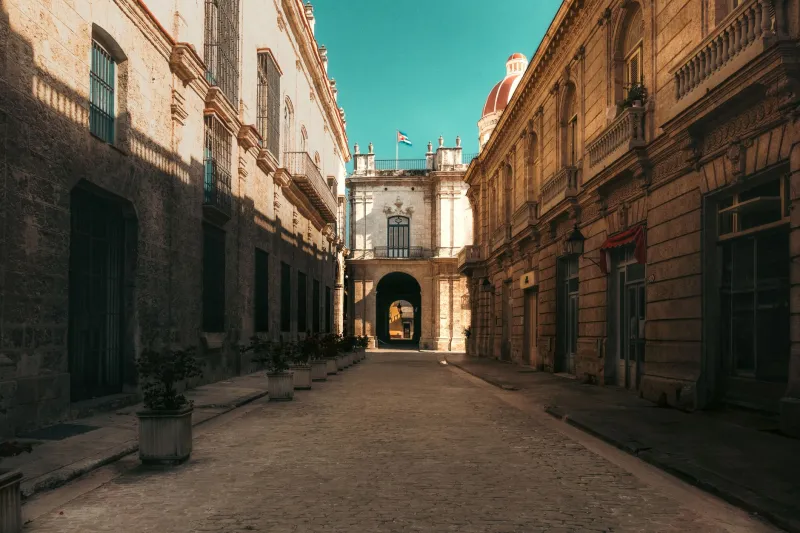
There is a particular quality of light that exists only in Havana — one that professional photographers describe with a reverence usually reserved for sacred places. It arrives without warning. It bends around coral stone corners in ways that defy expectation. It pools in the doorways of ochre-walled mansions and dissolves into the Malecón's perpetual sea haze with an indifference to convention that has, over the past decade, drawn some of the most accomplished visual artists in the world to this singular city.
This is not the controlled, reproducible light of a studio. It is not the photogenic predictability of Santorini's whitewash or the manicured golden hour of a Tuscany vineyard. Havana's light is contradictory, temperamental, and — for those with the patience and technical skill to understand it — absolutely irreplaceable.
The Atmospheric Conditions That Cannot Be Replicated
The science behind Havana's visual character begins with geography. The city sits at the intersection of the Caribbean Sea and the Gulf of Mexico, wrapped in a subtropical humidity that diffuses direct sunlight into something softer, warmer, and more complex than most latitudes allow. Salt particles suspended in the maritime air act as a natural diffusion filter, stripping harshness from midday sun and extending the usable golden hour well beyond what photographers experience elsewhere.
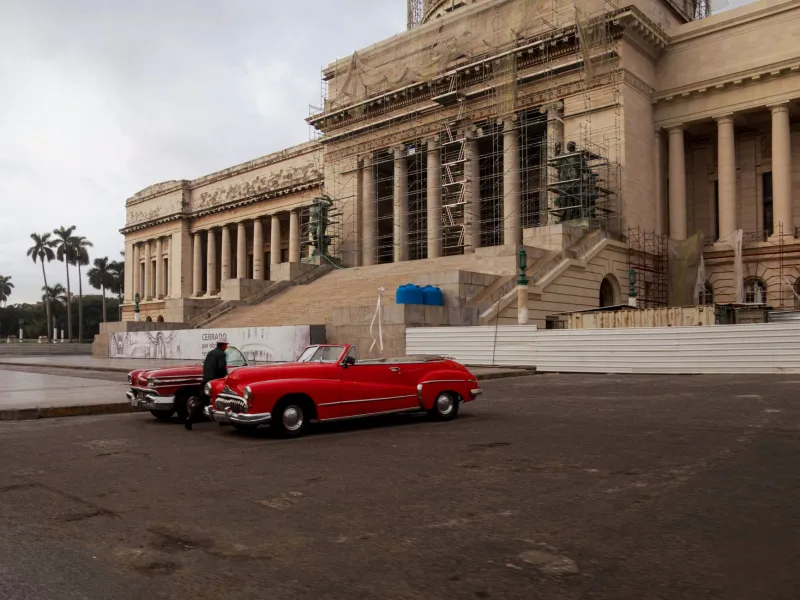
Then there is the architecture itself — a layered accumulation of Spanish colonial grandeur, Art Deco ambition, Soviet-era utilitarianism, and organic decay that creates textural contrasts of extraordinary depth. Peeling paint reveals three generations of color beneath it. Wrought-iron balconies cast shadows that shift minute by minute as the sun arcs across the sky. A cracked plaster wall becomes, in the right light, a canvas of unintentional abstraction.
For photographers accustomed to chasing the perfect — the flawless subject, the unblemished surface, the symmetrical composition — Havana represents a profound recalibration. The city insists on imperfection, and in doing so, offers something no artificially curated location can provide: authenticity at every frame.
Why Serious Photographers Are Choosing Havana Now
Among the American photography community — from editorial professionals to dedicated enthusiast travelers — Cuba has emerged as what many describe as a "last classroom." The combination of unrestricted street life, architectural density, and a population that moves through its city with a naturalness unaffected by mass tourism creates documentary opportunities that have all but vanished from more heavily visited destinations.
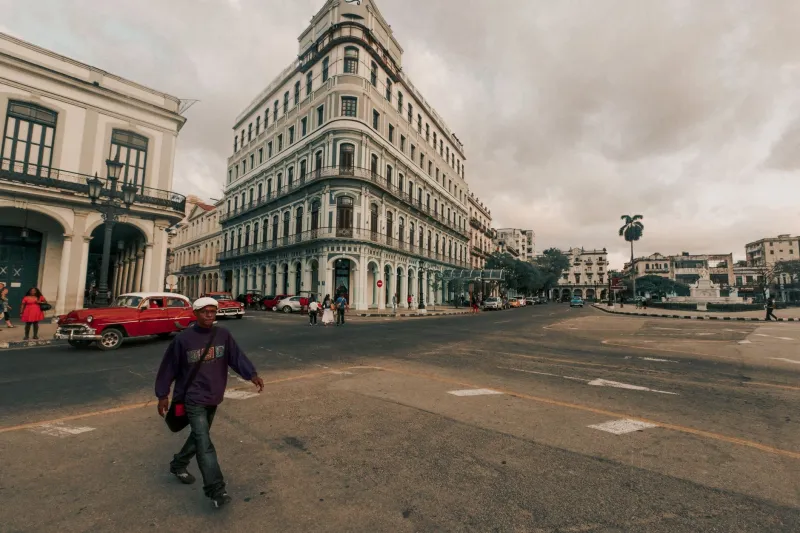
Havana's residents occupy their streets and plazas with a kind of unselfconscious vitality. Children chase soccer balls through baroque archways. Elderly men play dominoes beneath the shade of ceiba trees while afternoon light falls across their faces in long, amber diagonals. Musicians rehearse on open balconies, their instruments silhouetted against whitewashed walls. These are not staged encounters. They are daily life — and they photograph with a fidelity to the human condition that is increasingly rare in a world of curated visual experiences.
The city also rewards those who return. Havana changes with the weather, the season, and the hour in ways that make a second or third visit as visually productive as the first. A courtyard photographed in the flat light of midmorning becomes an entirely different composition when afternoon rain clouds gather and the sky shifts to pewter behind the cathedral's twin towers.
Building a Photography Itinerary Around Havana's Neighborhoods
For travelers arriving with cameras and serious intentions, the question of where to stay is not incidental — it is foundational. A hotel's location determines which neighborhoods are accessible at dawn, which streetscapes fall within walking distance before the city fully wakes, and which vantage points can be reached before the light changes.
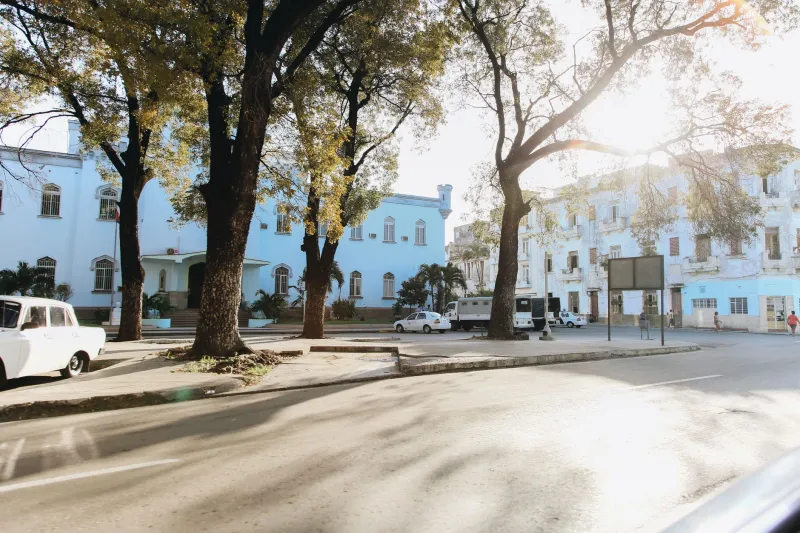
Hotel Quinta Avenida Habana, positioned along the storied boulevard of Miramar, offers access to a Havana that many visitors never reach: a quieter, more residential city of wide tree-lined avenues, mid-century embassy architecture, and private gardens that open unexpectedly onto streets of profound visual interest. The early morning light along Quinta Avenida itself — falling through the canopy of Royal Palms and catching the facades of restored Republican-era mansions — constitutes a photographic sequence that rewards those willing to rise before the city does.
From this base, the city's most photographically compelling districts are within comfortable reach. Habana Vieja, with its compressed colonial geometry and perpetual human activity, rewards long mornings of unhurried exploration. The Malecón, most dramatic at dusk and during the occasional winter storm surge, offers seascape compositions of genuine power. Centro Habana's dense residential blocks — chaotic, intimate, and visually overwhelming — demand a different approach: slower, more deliberate, attentive to small details rather than grand gestures.
The hotel's concierge team, familiar with the rhythms and particularities of each neighborhood, is positioned to help guests build day-by-day itineraries calibrated to light conditions, seasonal weather patterns, and the local events that bring additional life and color to Havana's streets.
The Ethics of Photographing a Living City
Any serious discussion of photography in Havana must acknowledge the ethical dimensions of pointing a lens at a city whose residents are not, by and large, accustomed to being treated as visual subjects. The most accomplished photographers who work in Havana consistently emphasize the importance of engagement over extraction — of taking time to speak with people, to earn trust, to photograph with rather than of.
This approach, beyond its ethical merits, also produces better images. The photographs that emerge from genuine human connection carry a quality of presence that technically superior images made without consent rarely achieve. Havana, more than most cities, rewards the traveler who arrives with curiosity rather than a shot list.
For American visitors, there is also the straightforward reality that Cuba remains a destination requiring some logistical preparation. Travel authorization, connectivity limitations, and currency considerations all benefit from advance planning — and from staying in a property whose staff can provide guidance drawn from genuine local knowledge.
What the Camera Teaches the Traveler
There is a reason that photographers, more than almost any other category of traveler, tend to return to Havana repeatedly. The discipline of serious photography — of learning to see rather than merely look — intersects in productive ways with what Havana itself demands of its visitors: patience, attentiveness, a willingness to relinquish the itinerary in favor of the unexpected moment.
The city does not yield its best imagery to those in a hurry. It rewards lingering. It rewards the traveler who sits for an hour in the same plaza, watching the light move across the same facade, waiting for the pedestrian whose silhouette will complete a composition. In this sense, Havana functions as something rarer than a photography destination. It functions as a lesson in how to be present — a quality that the most accomplished travelers, regardless of whether they carry a camera, consistently identify as the city's most enduring gift.
Hotel Quinta Avenida Habana exists to ensure that the practical dimensions of that pursuit — comfort, access, expertise, and a reliable point of return at the end of a long day in the streets — are handled with the discretion and quality that serious travelers have come to expect.