The Scarcity Principle: Why Quinta Avenida Offers the One Thing No Five-Star Resort Can Buy
The Problem With Everywhere Else
There is a particular fatigue settling over America's most experienced travelers — a weariness not with travel itself, but with the predictable choreography that now accompanies it. The private-pool villa in the Maldives. The cliff-edge suite in Santorini. The converted palazzo in Florence, photographed from the same angle by ten thousand guests before you. These are not poor experiences. They are simply no longer rare ones.
The hospitality industry has grown extraordinarily efficient at delivering comfort. What it has failed to deliver — what, by its very nature, it cannot manufacture at scale — is genuine scarcity. The sense that you are somewhere not merely expensive, but somewhere genuinely difficult to be. Somewhere that has not been optimized for your arrival, because it has never needed to be.
That distinction is why a particular stretch of Havana is drawing the attention of American travelers who have, by any conventional measure, already seen everything worth seeing.
A Boulevard That Was Never Designed for Tourism
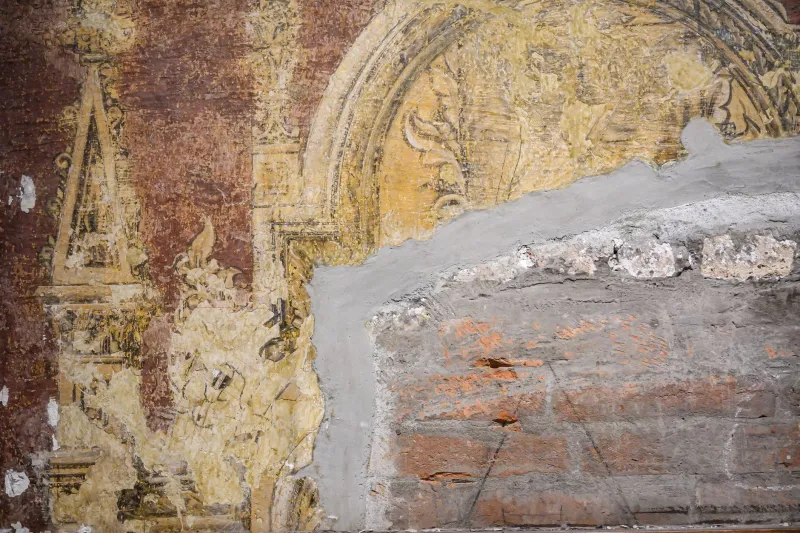
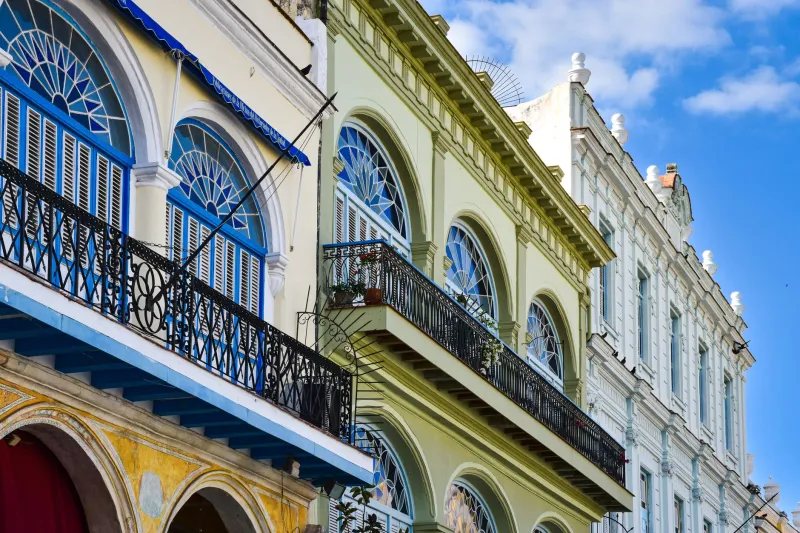
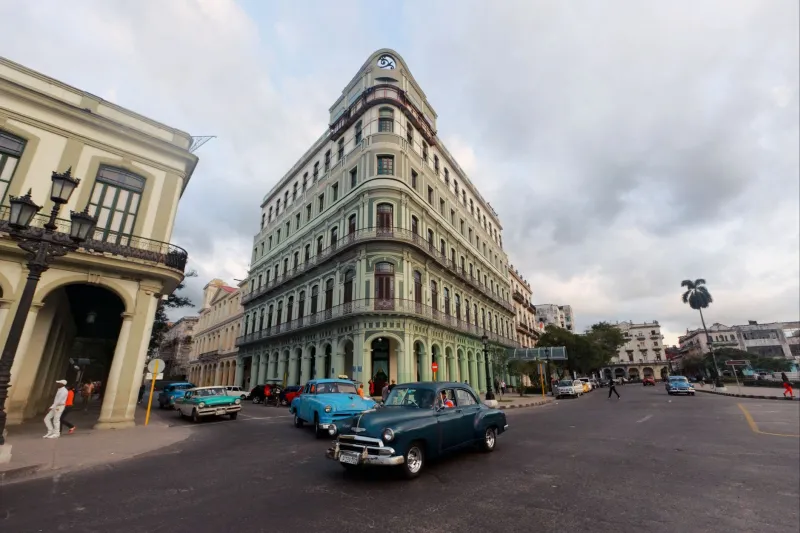
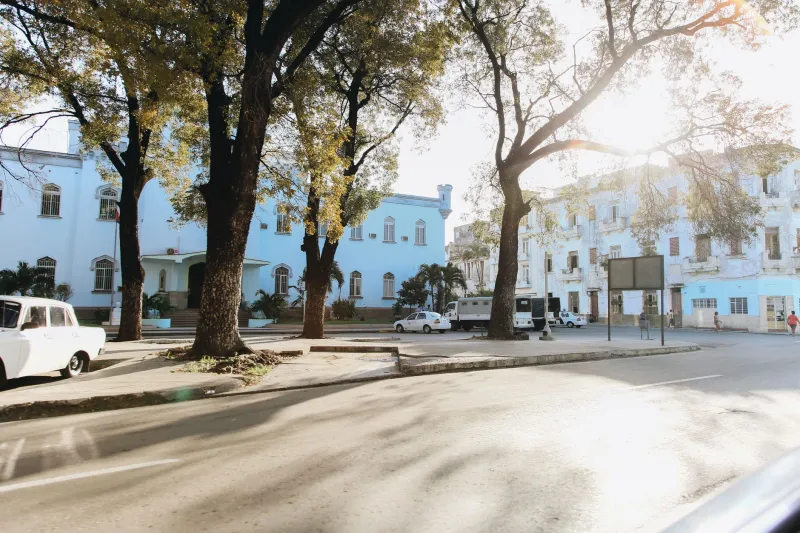
Quinta Avenida — Fifth Avenue in translation, though the comparison to its Manhattan namesake is instructive precisely where it breaks down — was conceived in the early twentieth century as a residential and diplomatic corridor of the highest order. Broad, tree-lined, punctuated by the neoclassical and Art Deco facades of embassies and private residences, it was built to impress heads of state and foreign dignitaries, not to accommodate transient guests.
That original purpose has left an indelible mark on the avenue's character. Unlike the purpose-built resort districts that dominate so much of the Caribbean and Latin American luxury market, Quinta Avenida was never zoned for hospitality at volume. The result is a streetscape of almost startling architectural integrity — one that has absorbed the passage of decades without surrendering its fundamental dignity.
For the traveler arriving from Miami or New York, the effect is immediate and difficult to articulate. The boulevard does not perform for you. It simply exists, on its own terms, as it always has.
Geographic Isolation as a Luxury Amenity
The Miramar district, where Quinta Avenida runs its most distinguished length, sits at a deliberate remove from the compressed energy of Old Havana's tourist corridors. This is not a flaw in the address — it is, for a specific kind of traveler, its most valuable attribute.
The guests who choose Hotel Quinta Avenida Habana are not, by and large, seeking proximity to souvenir stalls or the performative bustle of a heritage quarter designed to be walked through quickly and photographed. They are seeking something closer to the experience of inhabiting Havana — of existing within a city that operates according to its own internal logic, rather than one curated for external consumption.
The distance from the crowds is, in this sense, a form of curation. What is being curated is not an experience, but an absence of one — the absence of the managed, the scripted, and the endlessly repeated.
What Scarcity Actually Means at This Address
In conventional luxury marketing, scarcity is almost always simulated. Limited-edition suites. Members-only access tiers. Seasonal availability manufactured to suggest demand that may or may not exist. Experienced travelers recognize these mechanisms for what they are: commercial theater.
The scarcity of Quinta Avenida is of an entirely different order. It derives from factors that no hospitality investment can alter: the finite number of architecturally significant properties along the avenue, the regulatory environment that has preserved the corridor's residential scale, and the simple geographic reality that there is only one Quinta Avenida in Havana, just as there is only one Havana in the world at this particular moment in its history.
This is scarcity produced not by pricing strategy, but by circumstance — by history, by politics, by the particular way a city develops when it is not subject to the relentless pressure of tourist-driven development. For travelers who have spent years watching their preferred destinations incrementally surrender their distinctiveness to the demands of mass-market hospitality, this is a form of luxury that registers as genuinely novel.
The Anti-Resort Defined
The concept of the anti-resort has circulated in travel media for some years now, typically applied to properties that substitute rusticity for comfort or remoteness for amenity. That is not what Quinta Avenida represents.
The elegance here is real. The service is considered and precise. The architecture rewards sustained attention in ways that a hastily constructed resort complex, however generously budgeted, simply cannot. What distinguishes this address from the conventional luxury resort is not an absence of refinement, but an absence of the machinery of mass hospitality — the conference facilities designed to accommodate five hundred, the pool bars engineered for perpetual occupation, the lobby calibrated to process arrivals at industrial volume.
Guests here are not processed. They arrive into a building with a history, on a boulevard with a history, in a city whose history is arguably the most layered and contested in the Western Hemisphere. The experience of staying here is inseparable from that context. That inseparability is the point.
Why American Travelers, Specifically, Are Taking Notice
The particular appeal of this address to American travelers is worth examining with some precision. The United States has its own extraordinary luxury hospitality landscape — from the grand resort properties of Hawaii and the Florida Keys to the boutique hotels of New York's most coveted neighborhoods. Americans are not traveling to Havana because they lack options at home.
They are traveling here because Havana offers something the domestic landscape cannot: genuine foreignness. Not the attenuated foreignness of a resort designed by an international brand to feel simultaneously exotic and familiar, but the full, unmediated experience of a place that has developed entirely outside the cultural and economic orbit of the United States.
For decades, that foreignness was enforced by political restriction. Now, as travel between the two countries navigates a complex and evolving regulatory landscape, American visitors arriving on Quinta Avenida carry with them a particular awareness: they are among the first of their compatriots to see this place as it currently exists. That awareness sharpens the experience in ways that no amenity package can replicate.
The Rarity That Endures
Luxury, at its most defensible, is a word that describes access to the genuinely uncommon. Not the expensive, the comfortable, or the well-appointed — these qualities can be purchased with sufficient capital in any major city on earth. The genuinely uncommon requires something that money alone cannot secure: timing, circumstance, and the willingness to seek out what has not yet been found by everyone.
Quinta Avenida, at this moment, satisfies all three conditions. The avenue's architectural grandeur is intact. Its accommodation footprint remains limited. And the window during which it can be experienced in its current form — unencumbered by the development pressures that eventually transform every discovered destination — is, by any honest assessment, finite.
For the traveler who understands that distinction, the address requires no further argument. For those still weighing their options against the familiar coordinates of conventional luxury, perhaps only one question is worth asking: when was the last time a hotel genuinely surprised you?