The Window That Will Not Wait: How Cuba's Fleeting Moment Is Reshaping the Philosophy of Luxury Travel
There is a particular quality of attention that arrives only when something is understood to be temporary. The final evening of a long journey. The last hour of golden light over a city you may never revisit. The knowledge, held quietly but persistently, that what surrounds you will not remain as it is — and that you, therefore, must be fully present to receive it.
This is the consciousness that Havana now produces in its most perceptive visitors. And increasingly, it is the reason they come.
The Uncertainty That Became an Asset
For decades, the political complexity surrounding travel between the United States and Cuba was framed almost exclusively as an obstacle. Regulatory shifts, diplomatic tensions, the perpetual ambiguity of what was permitted and what was not — these were the conditions American travelers had to navigate before they could set foot on the Malecón or draw a breath of salt air along Quinta Avenida.
Something has shifted in the way sophisticated travelers interpret that complexity. Rather than treating it as bureaucratic friction to be minimized, a discerning cohort has begun to regard it as the journey's first meaningful threshold. The effort required to arrive here — the intentionality demanded before the first bag is packed — produces a traveler who is already more present, more deliberate, more awake to what surrounds them, than the passenger who simply books a flight and arrives.
At Hotel Quinta Avenida Habana, this shift is observable in the guests who walk through the doors. They are not passive consumers of an experience that has been assembled for their convenience. They are participants in something they understand to be conditional — and that understanding transforms everything they encounter.
What Impermanence Actually Feels Like
Havana does not pretend to be permanent. That, perhaps, is its most radical offering.
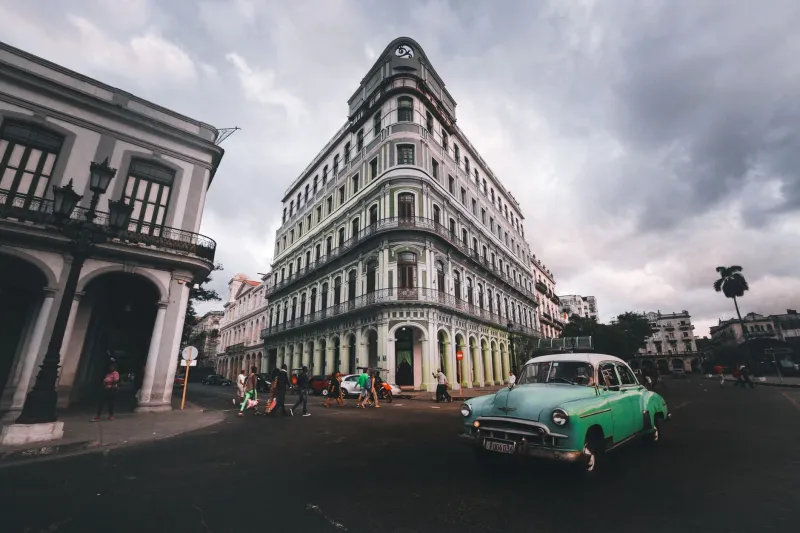
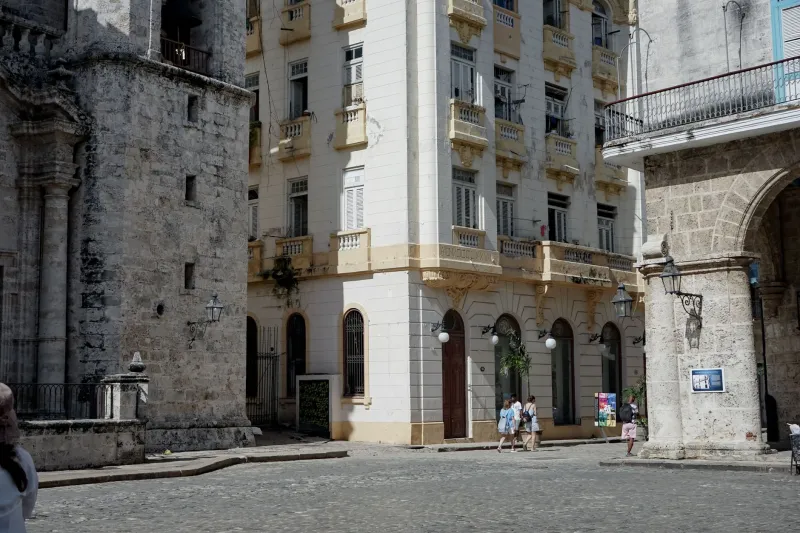
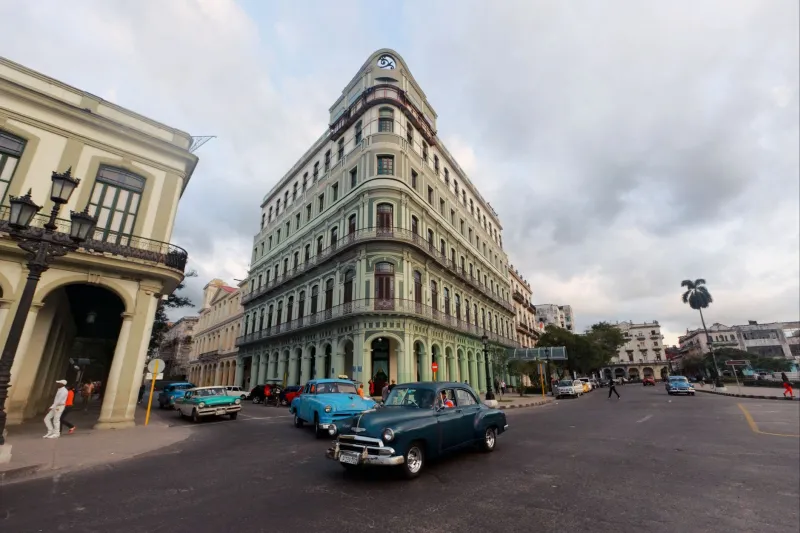
The city wears its history on its surface — not as decoration, but as evidence. Facades that have weathered decades without renovation stand beside colonial archways that have hosted generations of conversations, negotiations, celebrations, and losses. The buildings along Quinta Avenida, that broad and stately boulevard that stretches through Miramar, carry within their proportions a confidence that was built for the long term. Yet they exist within a present that is unmistakably in flux.
For the American traveler accustomed to destinations that have been smoothed, optimized, and rendered reliably consistent, this quality of visible change is disorienting at first. Then it becomes clarifying. When a place makes no promise of remaining as it is, the traveler stops deferring their attention. There is no 'I'll come back and see that properly.' There is only now, and the decision about how fully to inhabit it.
This is not discomfort dressed up as philosophy. It is a genuine reorientation of awareness — one that many guests describe as among the most valuable things they have taken home from Havana.
The 'Now or Never' Traveler
Psychologists who study attention and presence have long noted that scarcity — real or perceived — heightens engagement. The awareness that an experience is finite does not diminish it. It concentrates it.
Havana offers this concentration in a form that no marketing campaign could manufacture. The political landscape between the United States and Cuba has opened and narrowed before, and those who have followed its history closely understand that the current window of access is not guaranteed to remain as it is. This is not cause for anxiety. It is cause for movement.
The guests who arrive at Hotel Quinta Avenida Habana with this understanding carry themselves differently. They linger longer over a conversation with a musician performing in the courtyard. They ask more questions of the staff who know this city's stories. They accept an unplanned detour through a neighborhood they hadn't researched, because they have already made peace with the impossibility of controlling this experience — and found, in that surrender, something they didn't know they needed.
This is the traveler that Havana is producing. And the luxury industry, which has spent decades perfecting the art of predictable comfort, is beginning to recognize that this quality of engaged presence is something no amenity package can replicate.
Luxury Redefined at the Edge of Change
The traditional markers of luxury travel — the thread count, the tasting menu, the private transfer — have not disappeared from the calculus of a stay at Hotel Quinta Avenida Habana. They remain, and they matter. A guest who has navigated the particular demands of travel to Cuba deserves to arrive at an address that meets them with genuine elegance.
But the guests who leave most transformed are those who allow Havana's impermanence to work on them. Who understand that the city's evolving nature — the restoration projects underway on historic facades, the private restaurants opening in repurposed homes, the musicians who have played the same corner for thirty years and may not be there next season — is not a liability to be managed but a dimension of the experience to be honored.
There is a version of luxury that insulates. And there is a version that opens. Havana, by its very nature, insists on the latter.
The Philosophy the Boulevard Teaches
Quinta Avenida was designed with a certain grandeur in mind — wide lanes, a central promenade of royal palms, the proportions of a boulevard that expected to be taken seriously. It was built, in other words, for permanence. Yet it has survived eras that tested that aspiration in ways its architects could not have anticipated.
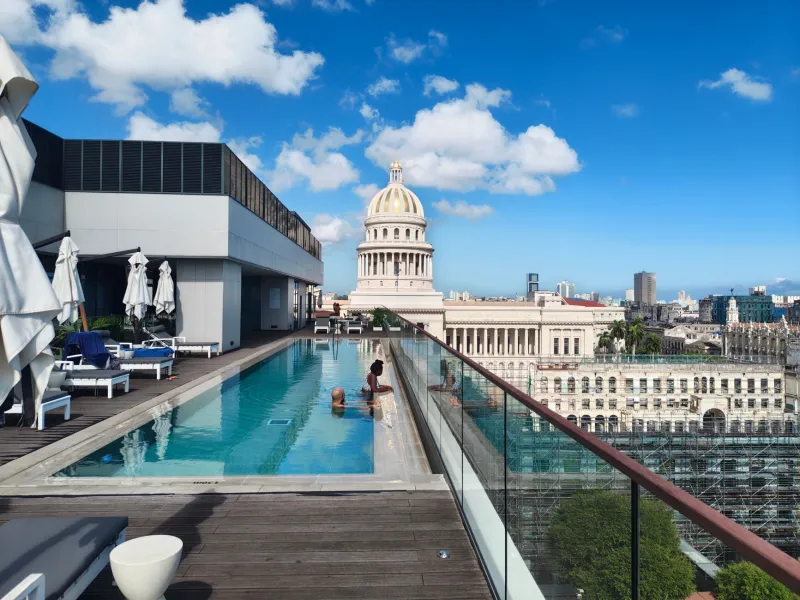
What remains is something more interesting than simple endurance. The avenue has developed a quality of presence — an awareness, if a street can be said to possess such a thing, that it exists within time rather than outside it. To walk its length, or to gaze upon it from the upper floors of Hotel Quinta Avenida Habana as the light changes over the palms, is to feel that quality transmitted directly.
Guests who are attuned to it find that the boulevard's lesson follows them home. They return to their lives in New York or Los Angeles or Chicago carrying something they struggle to name precisely — a recalibrated relationship with urgency, perhaps, or a renewed capacity for attention. A memory not of what they saw but of how fully they were present to see it.
That, ultimately, is what Havana gives its most receptive visitors. Not a destination that has been perfected and preserved under glass, but a living city at a singular moment in its history — and the irreplaceable experience of having been there, awake and willing, while the window was still open.
The window, it should be noted, is open now.