The Quiet Advantage: How Havana's Connectivity Gap Became the World's Most Coveted Executive Retreat
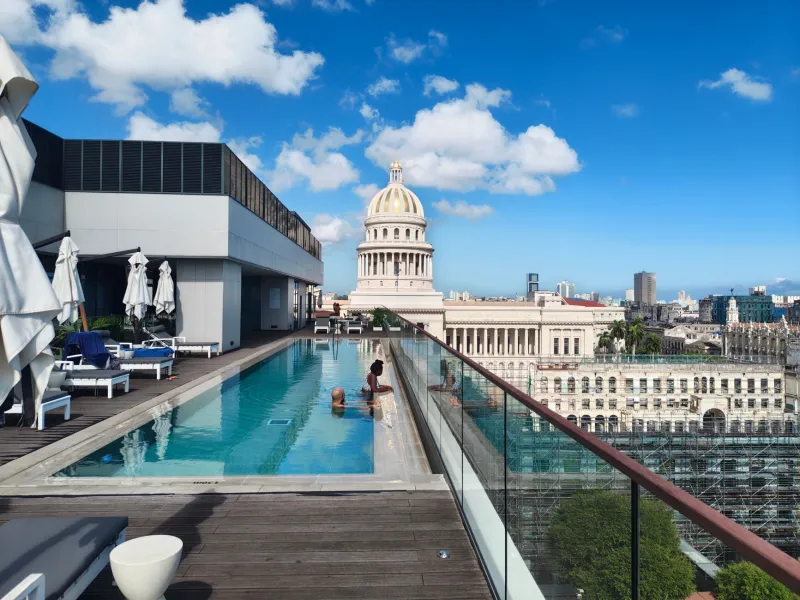
There is a particular kind of exhaustion that no amount of sleep can cure. It accumulates not in the muscles but in the attention itself — a slow erosion of focus brought on by years of perpetual availability. Notifications, threads, pings, and alerts have colonized the modern mind so thoroughly that many high-achieving Americans have forgotten what it feels like to inhabit a single moment without simultaneously managing another. Havana, for reasons both historical and infrastructural, has not forgotten. And increasingly, the world's most discerning travelers are flying toward that forgetting with considerable intention.
Cuba's relationship with digital connectivity remains, by global standards, remarkably restrained. Internet access is limited, social media platforms load slowly when they load at all, and the ambient noise of the algorithmic world — the scroll, the refresh, the compulsive check — simply does not follow you here. For travelers accustomed to five-bar signal strength and seamless roaming, this can register, initially, as a minor inconvenience. Within forty-eight hours, most guests at Hotel Quinta Avenida Habana describe it as the most clarifying experience of their adult lives.
The Neurological Case for Unavailability
Research from the American Psychological Association has long documented the cognitive toll of what psychologists call "continuous partial attention" — the state in which we are perpetually half-present, one eye always drifting toward the luminous rectangle in our pocket. The result is not merely distraction. It is a measurable degradation of decision-making, creativity, and emotional regulation. The very faculties that define professional excellence are quietly hollowed out by the infrastructure designed to serve them.
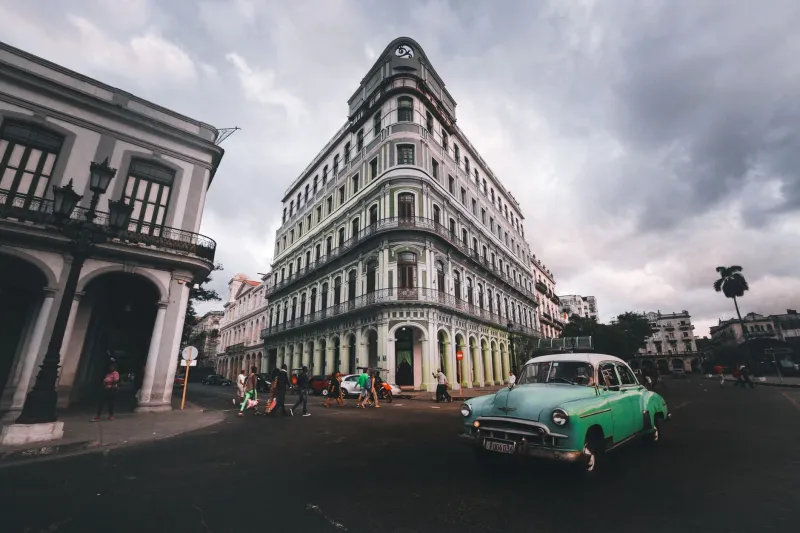
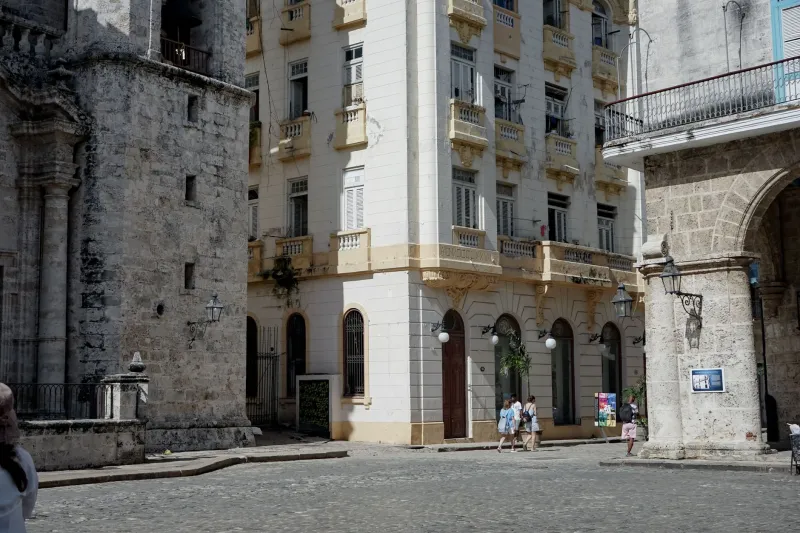
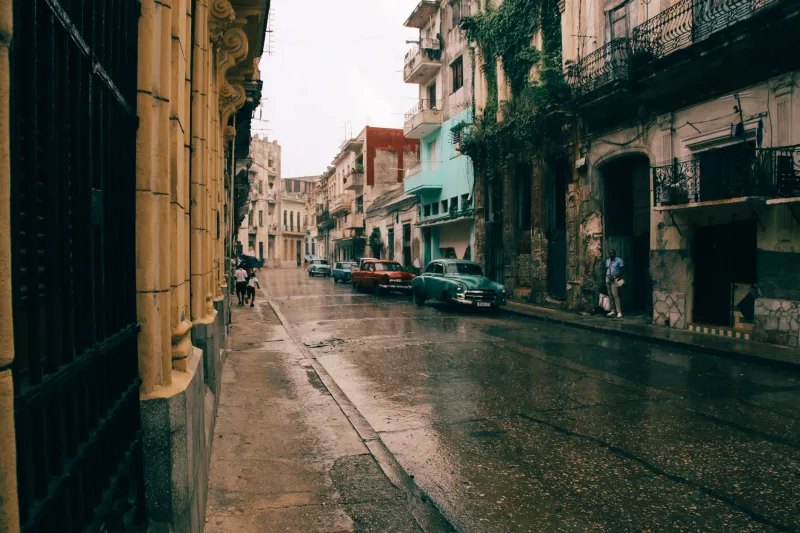
Havana does not offer a wellness program. It does not serve you a morning meditation or a curated breathwork session. It simply removes the mechanism of interruption. The city's streets demand your eyes. Its conversations demand your ears. Its architecture — the salt-worn facades of Miramar, the grand colonial symmetry of Quinta Avenida — demands the kind of sustained aesthetic attention that a phone screen has made nearly impossible to sustain elsewhere. What emerges, in the absence of digital noise, is something that no spa menu can schedule: genuine cognitive rest.
What Luxury Has Always Really Meant
The most revealing conversations at Hotel Quinta Avenida Habana tend to happen not in the lobby or the dining room, but on the broad shaded terrace in the hour before dinner, when guests have been without reliable connectivity for long enough to notice what has replaced it. They describe reading entire books in a single afternoon. They describe conversations with their traveling companions that felt, for the first time in years, genuinely unhurried. One guest, a partner at a prominent New York law firm, noted that she had solved a professional problem she had been circling for months — not by consulting her inbox, but by sitting quietly with a glass of Cuban rum and allowing her mind to arrive at its own conclusion.
This is what luxury has always meant at its most essential: the conditions in which a human being can function at their highest capacity. Thread-count and butler service are pleasant. The restoration of one's own attention is transformative. The most expensive hotels in the world sell you access to the former. Havana, almost inadvertently, delivers the latter.
The Boulevard as a Boundary
There is something architecturally appropriate about the fact that Hotel Quinta Avenida Habana sits along one of the Western Hemisphere's most ceremonially significant avenues. Quinta Avenida — Fifth Avenue — was conceived as a boulevard of consequence, a promenade where the pace of life was meant to be deliberate, where the width of the road and the grandeur of the flanking residences communicated that certain things were worth slowing down for. That civic philosophy, embedded in the street's very geometry, extends into the hotel's character.
Guests who step outside the property find themselves on a tree-lined expanse designed for unhurried movement. There are no billboards competing for attention. There is no commercial cacophony. The avenue asks, architecturally, that you be present — and the city beyond it makes that presence richly rewarding. A morning walk in Miramar without a podcast in your ear is a fundamentally different experience than the same walk elsewhere. You hear the birds. You notice the way morning light moves across Cuban coral stone. You observe the rhythms of a neighborhood that has been conducting its life at a considered pace for generations.
Reclaiming the Itinerary — and the Self
The practical question most American travelers ask before arriving in Havana is some version of: How do I manage without connectivity? The more useful question, and the one that tends to emerge naturally after a day or two at Hotel Quinta Avenida Habana, is: What have I been managing in its place?
The hotel's concierge team is practiced in the art of designing days that do not require a phone to navigate. Private guided excursions, curated culinary experiences, and carefully arranged introductions to Havana's cultural and artistic community are all coordinated in advance, leaving guests free to be fully present within each experience rather than documenting it for an audience that will consume it in a three-second scroll. The itinerary becomes a series of encounters rather than a sequence of content opportunities.
This is a meaningful distinction. The traveler who photographs a meal has a different relationship to that meal than the traveler who simply eats it. The guest who films a sunset shares something with followers but surrenders something to themselves. Havana, by limiting the infrastructure of sharing, quietly restores the infrastructure of experiencing.
Status Redefined
Among America's most accomplished travelers, a new vocabulary of prestige is emerging. It is no longer sufficient to have been somewhere; one must have been present there. The ability to be genuinely unreachable — not performatively offline, but structurally, geographically beyond the reach of the notification economy — has become a marker of both confidence and sophistication. It signals that one's professional standing is secure enough to permit absence. It signals that one's sense of self does not require constant external affirmation.
Havana offers this status honestly, without the theater of a digital detox retreat or the self-congratulatory announcement of a social media fast. The city simply is what it is. And what it is, for the traveler willing to arrive without resistance, is a place where the most demanding luxury of the modern era — the luxury of one's own undivided attention — is not a premium add-on. It is the default condition.
At Hotel Quinta Avenida Habana, that condition is preserved with care. The rooms are quiet. The avenue is generous. The city, just beyond the door, is waiting to be experienced rather than documented — and it will reward, with uncommon generosity, every guest who arrives prepared to receive it.