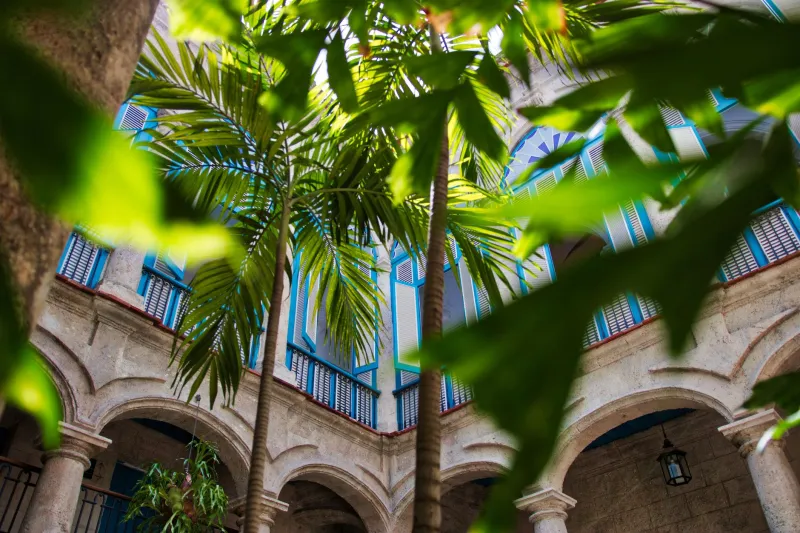
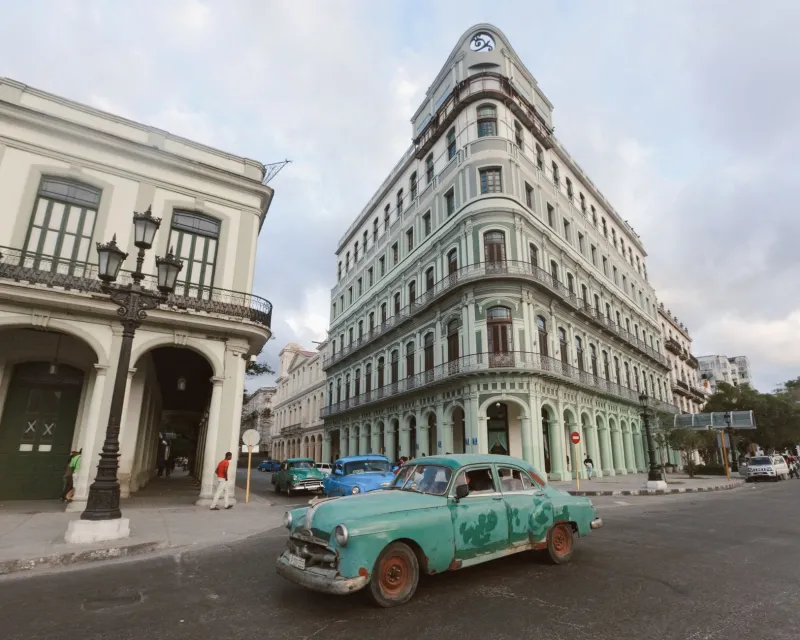
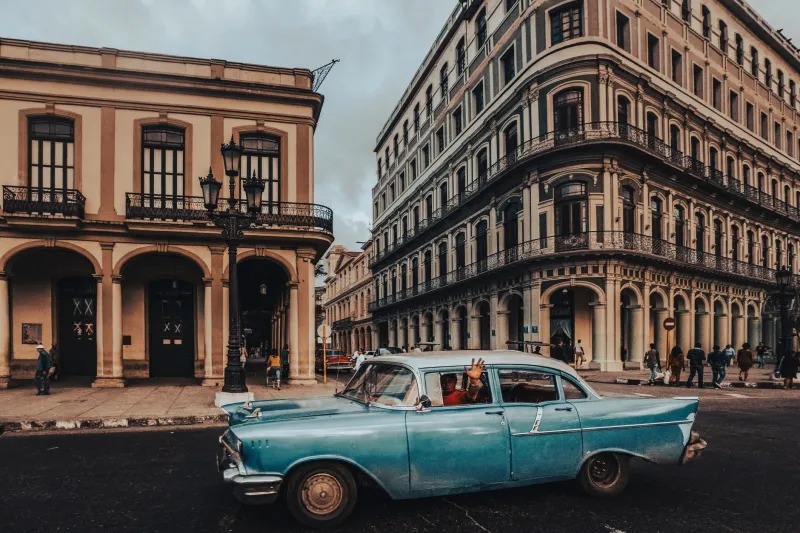
The Unscripted Journey: How Havana's Beautiful Disorder Is Winning Over America's Most Demanding Travelers
There is a particular kind of traveler who has stayed everywhere worth staying. They have watched the sun dissolve into the Amalfi Coast from a cliffside terrace. They have been guided through Kyoto's temple corridors by a private docent. They have slept in overwater bungalows and penthouse suites engineered to eliminate every conceivable inconvenience. And yet, somewhere between the third butler-delivered breakfast and the fourth pre-curated cultural excursion, something essential went missing — the feeling of being genuinely surprised by the world.
Havana, as it happens, has a remedy for that.
The Tyranny of the Flawless Experience
The modern luxury travel industry has spent decades perfecting the art of anticipation. Every preference logged, every friction point smoothed, every departure from expectation treated as a failure of service. The result is an extraordinary global infrastructure of beautiful, interchangeable comfort — resorts that feel less like places and more like well-appointed non-places, destinations engineered to deliver precisely what was promised and nothing more.
What this model cannot deliver, by definition, is surprise. And surprise, it turns out, is the neurological engine of memory. Psychologists have long understood that the human brain encodes unexpected events with far greater depth and durability than anticipated ones. The planned sunset cruise fades; the spontaneous conversation with a retired musician in a Vedado doorway does not.
Havana has never been in the business of eliminating surprise. It has, in fact, made surprise a structural feature of daily life — and for the growing cohort of American travelers actively seeking it, the city has become something close to irreplaceable.
What Friction Actually Feels Like
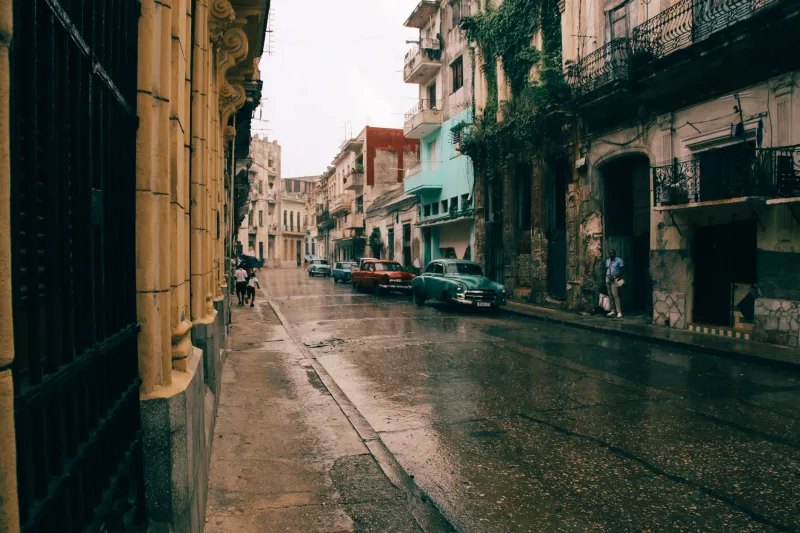
Guests arriving at Hotel Quinta Avenida Habana along the elegant sweep of Miramar's most storied boulevard often describe their first days in Havana as a kind of recalibration. The wifi, when it connects, does so on its own schedule. The afternoon rainstorm that was not in the forecast sends everyone scrambling under the nearest colonnade, where strangers become briefly intimate. The street musician who drifts beneath your open window at eleven in the evening was not arranged by the concierge.
None of this is managed. All of it is real. And the distinction matters enormously.
The traveler who came expecting a curated cultural performance and instead found themselves sharing a doorway with a Havana family waiting out the same downpour — speaking through gestures and broken Spanish and laughter — has received something no itinerary could have delivered. They have received contact with a place as it actually is.
This is what the most discerning segment of American luxury travelers are increasingly seeking, and increasingly willing to pay for the privilege of finding. Not hardship. Not deprivation. But genuine, unmediated encounter with a city that has not been polished into submission for their benefit.
The Psychology of the Unplanned Moment
Research in experiential psychology consistently demonstrates that the experiences people rate most highly in retrospect are rarely those that unfolded exactly as expected. It is the detour, the delay that led somewhere extraordinary, the plan abandoned in favor of following curiosity down an unfamiliar street — these are the episodes that accumulate into what travelers mean when they say a trip changed them.
Havana is structurally generous with exactly these moments. Its streets resist the kind of total legibility that GPS and algorithmic travel planning have imposed on most major cities. Its neighborhoods shift character within a single block. Its people engage with visitors not as service providers performing hospitality but as inhabitants of a city with its own rhythms, its own humor, its own sense of what an afternoon is for.
At Hotel Quinta Avenida Habana, the approach to guest experience reflects a sophisticated understanding of this dynamic. The hotel provides an anchor of genuine elegance — the kind of considered comfort and attentive service that allows a traveler to venture freely into the city's productive chaos, knowing that something refined and restorative awaits their return. It is a base camp for the unscripted, not a substitute for it.
Havana's Competitive Advantage Is Its Resistance
The cities that have most aggressively accommodated Western expectations of convenience — seamless digital connectivity, standardized service culture, English-speaking interfaces at every turn — have, in many cases, traded their distinctiveness for accessibility. They have become easier to visit and harder to remember.
Havana has not made that trade. Partly by circumstance, partly by the particular character of a city that has always moved to its own tempo, the Cuban capital remains stubbornly, magnificently itself. The consequence is that a stay here cannot be passively consumed. It must be actively engaged with. Travelers must negotiate, adapt, improvise, and occasionally surrender their plans entirely in favor of what the city is actually offering on a given afternoon.
For a specific and growing type of American traveler — typically experienced, intellectually curious, and frankly bored with the predictability of conventional luxury — this resistance is not an obstacle. It is the entire point.
The Return of the Traveler as Participant
There is a meaningful distinction between a tourist and a traveler, and Havana has a way of insisting on it. The tourist observes. The traveler participates. Havana's particular genius is that it makes participation feel less like an effort and more like an inevitability — the city simply draws people in, through its music, its architecture, its conversations, its inexhaustible capacity to produce the unexpected.
Guests at Hotel Quinta Avenida Habana who arrive with rigid itineraries frequently find those itineraries quietly dismantled by the city itself, replaced by something they could not have anticipated and would not trade for the original plan. The afternoon that was supposed to be spent at a gallery becomes a three-hour conversation in someone's courtyard. The morning walk planned for thirty minutes extends into a neighborhood that wasn't on any map they'd consulted.
These are not failures of planning. They are Havana doing precisely what Havana does best — revealing itself to people willing to be surprised.
A Different Standard of Memorable
The most telling measure of any travel experience is not what it delivers in the moment but what it leaves behind in the months and years that follow. By that standard, the sanitized resort — however impeccably staffed, however flawlessly appointed — rarely competes with a week spent genuinely inside a city as alive and contradictory as Havana.
What Hotel Quinta Avenida Habana offers, at its most essential, is not merely accommodation but orientation — a place of beauty, calm, and considered luxury from which the full, unfiltered experience of one of the world's most singular cities becomes available. The unplanned conversations, the music that finds you rather than the other way around, the rain, the detours, the moments of genuine connection with a place that has never pretended to be anything other than what it is.
For the American traveler who has had everything and found it insufficient, Havana offers something genuinely rare: the experience of not quite knowing what comes next, and discovering that this, above all else, is what they came for.