The Friction Is the Point: Why Havana's Glorious Inconvenience Is Luxury Travel's Best-Kept Secret
There is a particular kind of traveler—seasoned, self-aware, and quietly exhausted by perfection—who arrives in Havana and exhales for the first time in years. Not because the city has handed them everything they requested. Quite the opposite. Havana has handed them something they did not know they needed: resistance.
In a global travel landscape where algorithmic precision has reduced the five-star experience to a series of frictionless transactions, Cuba's capital endures as something magnificently, stubbornly different. It does not load quickly. It does not optimize. It does not apologize for itself. And for a growing cohort of sophisticated American travelers, that intractability has become the most compelling amenity on offer anywhere in the world.
A City That Cannot Be Hacked
Consider what modern luxury travel has become. A guest books a suite in Singapore, Tokyo, or Dubai and encounters a choreography so precise that the experience begins to resemble a simulation. Every surface gleams on schedule. Every staff interaction follows a script refined by a hospitality consultancy in Geneva. The minibar is restocked by 3:00 p.m. without fail. It is, by every measurable standard, excellent. And it leaves almost no impression whatsoever.
Havana operates under an entirely different logic. The city was not built for the convenience of visitors, and it has never recalibrated itself to accommodate contemporary expectations. Streets that appear on no mapping application lead to the most extraordinary private galleries. A planned afternoon itinerary dissolves when a neighbor's quinceañera spills into the boulevard. The restaurant your concierge recommended has, without announcement, become something else entirely. You adapt. You surrender. You discover.
This is not a failure of infrastructure. It is, for those willing to receive it as such, an invitation to be fully present in a way that the curated hotel corridors of more predictable destinations simply cannot provide.
The Psychology of Surrender
Psychologists who study peak travel experiences have long noted that genuine memory formation requires novelty and mild cognitive challenge. The brain does not archive the expected. It archives the surprising, the incongruous, the moment that demanded something of you. By that measure, a single afternoon in Havana—navigating its rhythms, reading its silences, negotiating its pace—may produce more lasting impressions than a fortnight in a resort engineered for seamless relaxation.
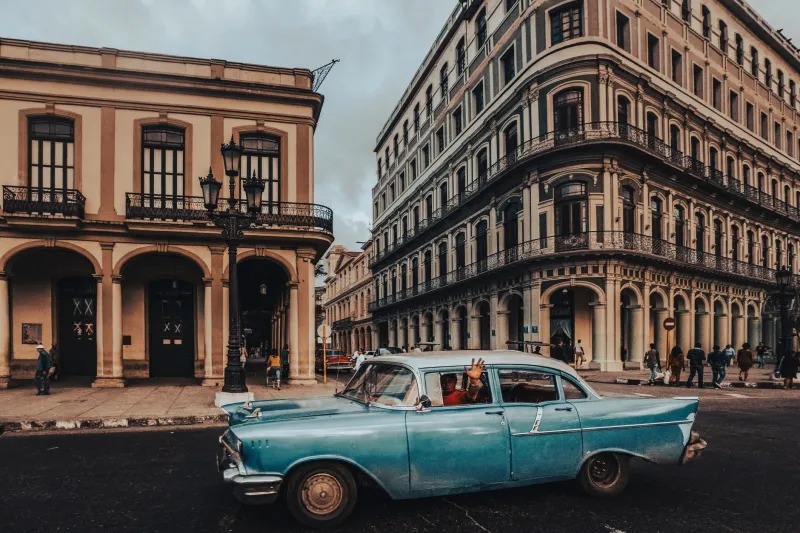
America's most intellectually adventurous travelers have begun to articulate this instinctively. They return from Havana not with photographs of infinity pools, but with stories. The vintage Buick that broke down on the Malecón and led to an impromptu conversation with its owner, a retired engineer who quoted Hemingway from memory. The afternoon rainstorm that shuttered the museum and redirected them to a neighbor's courtyard, where a trio was rehearsing son cubano with the seriousness of a Carnegie Hall performance. These are not inconveniences that were overcome. They are the experience itself.
Where Hotel Quinta Avenida Habana Enters the Picture
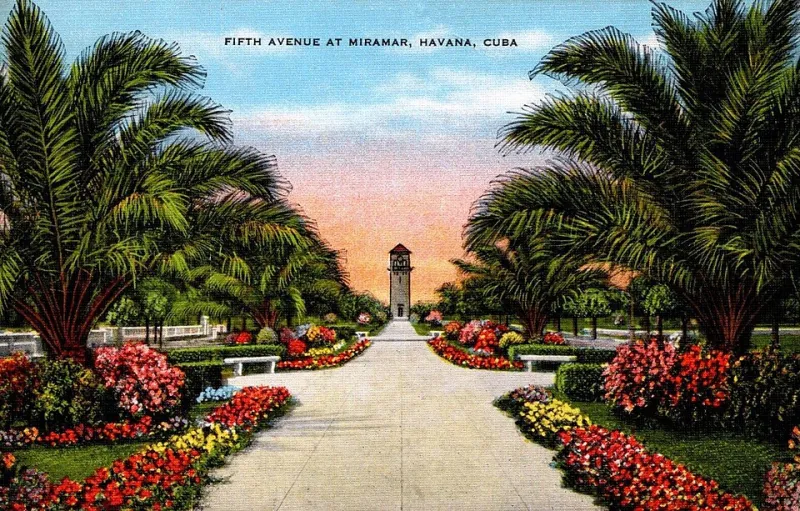
Positioned along the stately corridor of Quinta Avenida in Miramar—Havana's most gracious residential boulevard—Hotel Quinta Avenida Habana occupies a singular position in this conversation. The property does not pretend that Havana is something it is not. It does not paper over the city's particularities with imported amenities or manufacture a hermetically sealed version of Cuban culture for easy consumption. Instead, it serves as an exceptionally elegant base from which guests may venture into the city's productive unpredictability and return, each evening, to spaces of genuine refinement.
This balance—between the city's beautiful disorder and the hotel's considered comfort—is not accidental. It reflects a philosophy that the most meaningful travel experiences are not delivered to guests but discovered by them, with the right foundation beneath their feet. A well-appointed room, an attentive staff fluent in the art of anticipation, and a location that places guests within reach of Havana's most rewarding neighborhoods: these are not luxuries that insulate travelers from the city. They are the conditions that make authentic engagement with it sustainable.
The New Definition of Five Stars
For much of the twentieth century, luxury travel was defined by subtraction—the removal of effort, uncertainty, and discomfort from the traveler's experience. That definition served a purpose, and it still does, for a segment of the market. But a quiet revolution has been underway among America's most traveled and culturally engaged visitors, who have begun to define luxury not by what is removed from an experience, but by what is made possible within it.
By that definition, Havana may be the most luxurious destination on earth. It offers something that no amount of money can manufacture in Miami, Manhattan, or Malibu: genuine unpredictability, the kind that sharpens attention and restores a sense of wonder that over-scheduled modern life has steadily eroded. The city asks something of you. It asks you to slow down, to look, to listen, to abandon the itinerary and follow the sound of a trumpet through an archway you did not plan to enter.
This is not a destination for every traveler. It requires a certain disposition—a willingness to be surprised, to be occasionally stymied, and to find value in the unscripted moment. But for those who arrive with that disposition, Havana does not merely meet expectations. It renders the very concept of expectations beside the point.
Arriving Prepared to Be Unprepared
The travelers who leave Havana most transformed share a common characteristic: they arrived with their plans held loosely. They had done their research, booked their accommodations at a property worthy of the city's complexity, and then—crucially—they gave themselves permission to depart from every plan they had made.
Hotel Quinta Avenida Habana's concierge team understands this dynamic better than most. Their role is not to eliminate uncertainty but to help guests navigate it with confidence and curiosity. They know which uncertainties are worth embracing and which require a steady hand. They know the city's rhythms well enough to anticipate where the unexpected tends to reward and where it merely inconveniences. That knowledge, offered graciously and without condescension, is itself a form of luxury—perhaps the most meaningful form available in a city that has made an art of the unscripted.
Havana will not be convenient. It will not be predictable. It will not conform to the expectations you carried across the Florida Straits. What it will offer, to those patient enough to receive it, is something far rarer: the sensation of being genuinely alive inside a moment that no algorithm designed and no travel consultant packaged. In a world that has made inconvenience nearly extinct, that sensation is worth crossing an ocean to find.