Disconnected and Fully Alive: How Havana's Silence Became the World's Most Coveted Luxury
Photo: Unknown authorUnknown author, Public domain, via Wikimedia Commons
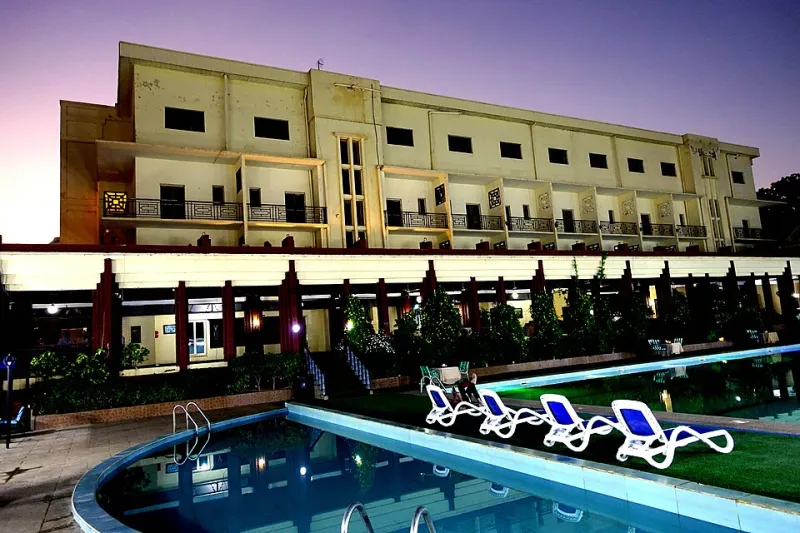
There is a particular moment that nearly every guest at Hotel Quinta Avenida Habana describes with the same quiet astonishment. It arrives, typically, on the second morning. The hand reaches instinctively toward the nightstand, searching for a phone that has, for once, nothing urgent to say. And then — stillness. Not the anxious stillness of a lost signal, but something far more unfamiliar: peace.
In a travel landscape where luxury is increasingly defined by bandwidth speeds, smart room integrations, and on-demand streaming libraries, Havana has arrived at an entirely different conclusion about what the discerning traveler actually needs. The Cuban capital, by circumstance and by character, offers something that no amenity budget can replicate — a genuine severance from the noise of modern American life, and an invitation to inhabit the present tense in full.
The Paradox at the Heart of Havana
It would be easy, and entirely wrong, to frame Havana's relationship with connectivity as a deficiency. American travelers arriving for the first time often approach the city's limited internet infrastructure with mild trepidation, conditioned by decades of travel culture that equates access with comfort. What they discover, almost without exception, is that the absence of constant digital stimulation does not diminish the experience of Havana — it amplifies it beyond measure.
The city demands attention. Its architecture, a magnificent collision of Spanish colonial grandeur, Beaux-Arts ambition, and mid-century modernism, does not yield its beauty to the distracted glance. Its people — warm, witty, and possessed of a conversational intelligence sharpened by generations without social media — require genuine engagement. Its music does not stream; it performs, live and unrepeatable, on every corner and in every courtyard. Havana is, in the most literal sense, a city that rewards presence.
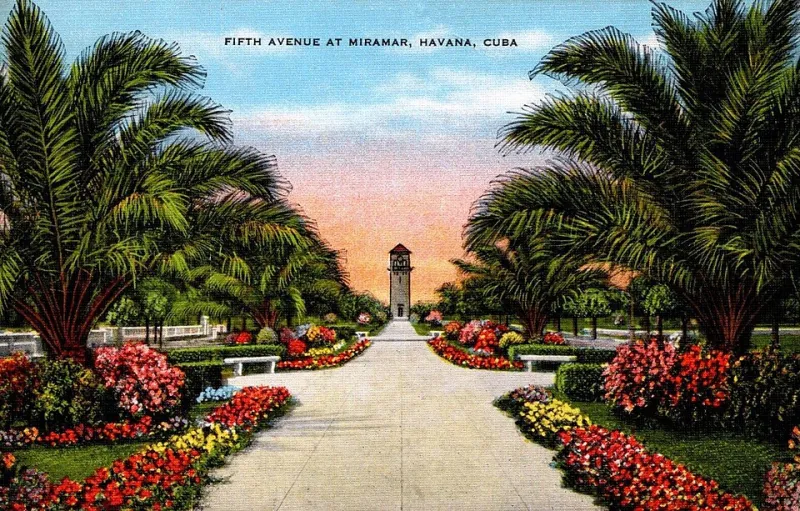
For guests staying along Quinta Avenida — Havana's most distinguished residential boulevard, wide and tree-lined and removed from the tourist frenzy of the old city — this quality is experienced at its most refined. The avenue itself moves at a tempo that feels almost deliberately curative. Morning light filters through royal palms. Vintage automobiles pass with the unhurried dignity of another era. Neighbors exchange greetings across garden walls. There is, in all of it, a rhythm that the smartphone-addled American nervous system has nearly forgotten how to recognize: the rhythm of actual life, unmediated.
Rediscovering Conversation as an Art Form
One of the more surprising discoveries that guests at Hotel Quinta Avenida Habana consistently report is the quality of conversation they find themselves having — with fellow travelers, with hotel staff, with the strangers they encounter on an evening stroll. Without the reflexive retreat into screens that defines so much of contemporary social interaction, people simply talk. More than that, they listen.
This is not a trivial observation. For many American travelers, particularly those arriving from high-pressure professional environments in cities like New York, Chicago, or Los Angeles, the restoration of genuine dialogue feels almost therapeutic. Business relationships are built on trust and nuance — qualities that flourish in the unhurried atmosphere of a Havana evening, where a conversation over a perfectly prepared daiquiri on the hotel terrace can stretch, effortlessly and productively, across two hours without anyone reaching for a device.
The hotel's staff, many of whom speak with the fluent, story-rich eloquence that is a hallmark of Cuban intellectual culture, become something more than service professionals in this context. They become interlocutors — guides not merely to the city's geography, but to its sensibility. Guests find themselves learning things about Havana, about Cuba, about themselves, that no travel application would ever think to surface.
The Luxury of Spontaneity
There is another dimension to Havana's disconnected quality that reveals itself more slowly, but with equal force: the return of spontaneity. In a world where every experience is pre-researched, pre-reviewed, and pre-booked through a series of apps and algorithms, the capacity for genuine surprise has become vanishingly rare. Havana restores it.
Without the constant availability of instant information, guests are invited — compelled, even — to wander. To follow music down an unfamiliar street. To accept an invitation from a local artist whose studio occupies the ground floor of a crumbling mansion. To discover a paladar — one of Havana's celebrated private restaurants — not because it appeared in a listicle, but because a fellow guest mentioned it over breakfast with the particular enthusiasm of someone sharing a secret.
The concierge team at Hotel Quinta Avenida Habana understands this quality of discovery intimately, and curates experiences that honor rather than override it. Recommendations are offered not as itineraries to be executed, but as starting points for improvisation. The finest experiences in Havana, the team will tell you, are rarely the ones you planned.
Observation as Sophistication
Perhaps the most quietly revolutionary aspect of a Havana stay is what it does to the faculty of observation. Deprived of the constant visual stimulation of feeds, notifications, and screens, the eye recalibrates. It begins to notice things it would otherwise scroll past: the particular shade of ochre on a colonial facade at four in the afternoon, the geometry of shadow cast by a wrought-iron balcony, the expression on a musician's face in the middle of a phrase that contains an entire biography.
This recalibration is not merely aesthetic. It is, in the language of contemporary wellness culture, genuinely restorative — though Havana would never be so gauche as to market itself in those terms. The city simply is what it is, and trusts the attentive visitor to understand the gift being offered.
For the American traveler who has spent years consuming the world at algorithmic speed, Havana operates as a kind of elegant correction. It does not slow you down in the manner of a spa retreat or a digital detox program — both of which, however well-intentioned, carry the faint suggestion of deprivation. It slows you down the way a great novel does, or a long meal with people you love: by making the present moment so rich, so textured, and so irreplaceable that acceleration simply ceases to make sense.
What True Luxury Has Always Been
The hospitality industry has spent considerable energy in recent years debating the future of luxury travel — what amenities define it, what price points justify it, what demographics are reshaping it. Havana, with characteristic indifference to trend cycles, has simply continued to offer what luxury has always, at its core, been: time. Unhurried, unscheduled, unapologetically analog time.
At Hotel Quinta Avenida Habana, this philosophy is woven into every aspect of the guest experience. The rooms are designed for lingering. The terrace invites contemplation. The service is attentive without being intrusive — present in the way that great hospitality always is, felt rather than announced.
Guests depart Havana changed in a way that is difficult to articulate but impossible to ignore. They return to New York or Miami or Los Angeles carrying something the city gave them that no hotel loyalty program can quantify: the memory of what it felt like to be fully, unhurriedly, magnificently present.
In a world that has mistaken speed for sophistication, that memory may be the most valuable souvenir of all.