The Executive Meridian: How Havana's Quinta Avenida Became the World's Most Unlikely Strategic Retreat
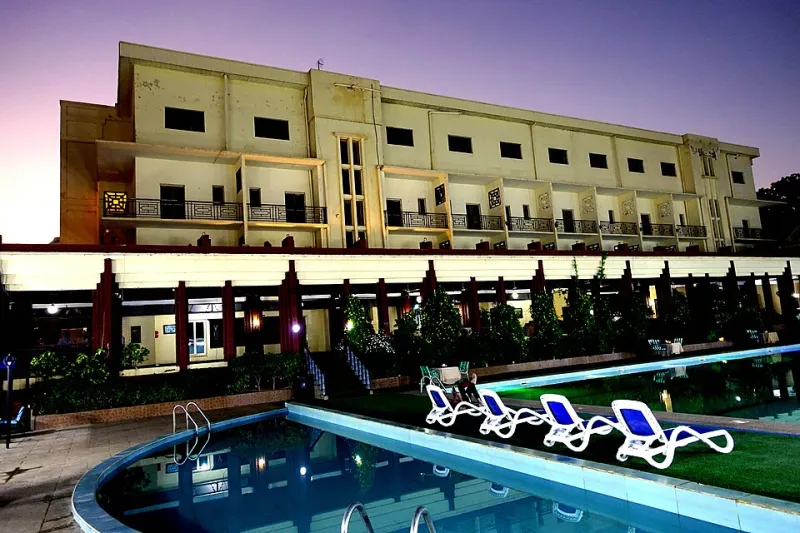
Photo: Grandhotelsudan, CC BY-SA 4.0, via Wikimedia Commons
There is a particular kind of exhaustion that no vacation cures. The chief executive who has managed three consecutive quarters of turbulence, the founder navigating a pivotal funding round, the partner whose calendar has not held an unscheduled hour in eighteen months—these individuals do not require amusement. They require perspective. And perspective, as a growing number of America's most accomplished professionals have quietly discovered, arrives most reliably in Havana.
This is not the Havana of tourist brochures or Cold War caricature. The Havana that receives these guests is something more nuanced: a city that moves at a cadence entirely its own, where the architecture imposes grandeur without demanding performance, and where the simple act of sitting on a broad, shaded balcony overlooking the Miramar district can feel—after months of relentless connectivity—like the first honest breath in years.
The Psychology of Productive Disconnection
Research in behavioral economics and organizational psychology has long suggested that creative breakthroughs rarely emerge from sustained pressure. The counterintuitive truth embraced by many of the world's highest-performing individuals is that strategic withdrawal—deliberate, curated, and sufficiently removed from the familiar—produces the conditions in which genuine insight becomes possible.
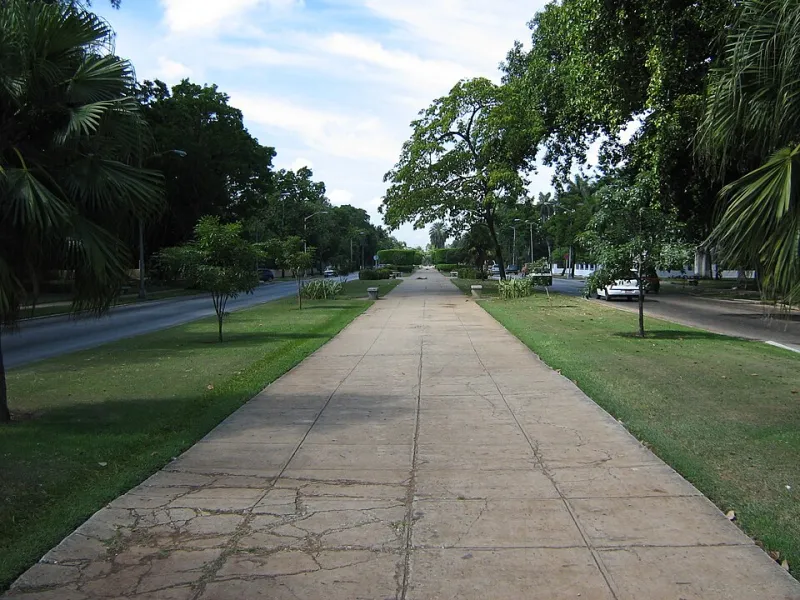
Havana satisfies this requirement in ways that more conventional luxury destinations struggle to replicate. The city's infrastructure imposes a natural limit on digital immersion. The rhythm of daily life along Quinta Avenida—the wide, tree-lined boulevard that runs through Miramar like a spine of quiet authority—is unhurried in a manner that is not negligence but philosophy. For an executive accustomed to ambient noise, the relative stillness here does not feel like deprivation. It feels, after the first twenty-four hours, like permission.
Guests at Hotel Quinta Avenida Habana consistently describe a similar arc: initial restlessness, followed by a gradual recalibration, followed by something that can only be described as cognitive spaciousness. It is within that spaciousness that the most consequential thinking tends to occur.
A Different Kind of Boardroom
The conversations that have taken place on the terraces and in the salon spaces of Havana's finest addresses would, if transcribed, constitute a remarkable document of American business history. Mergers considered and abandoned. Partnerships forged over a glass of aged rum and the slow dissolution of a Cohiba. Strategies that had stalled in the conference room somehow clarifying themselves against the backdrop of a city that has, by necessity, mastered the art of reinvention.
There is something instructive, several guests have noted, about a place that has endured as Havana has endured—that has preserved its elegance through decades of constraint, that has maintained its cultural vitality through sheer force of human creativity. For leaders who spend their professional lives navigating uncertainty, the city functions as an unlikely case study in institutional resilience.
The physical environment of Quinta Avenida amplifies this effect. The avenue itself, with its median gardens and stately residences, was conceived as an expression of aspiration—a Havana that looked toward a prosperous future without abandoning its architectural inheritance. Staying here is not merely comfortable. It is, in a subtle but genuine sense, inspiring.
The Logistics of High-Level Retreat
For the American executive considering Havana as a destination, the practical architecture of a productive stay matters as much as the setting itself. Hotel Quinta Avenida Habana is positioned to accommodate both the need for genuine respite and the reality that even the most committed practitioner of disconnection maintains certain professional obligations.
Private meeting arrangements, discreet concierge services, and the cultivation of a guest experience that anticipates rather than reacts to need—these are the operational commitments that transform a hotel stay into something closer to a working sanctuary. The property's location in Miramar, removed from the compressed energy of Old Havana while remaining accessible to it, strikes precisely the balance that senior travelers require: proximity to cultural richness without submersion in urban intensity.
For those traveling with colleagues or small teams—a practice increasingly common among executive groups using international travel as a vehicle for strategic planning—the hotel's capacity for personalized, private hospitality creates an environment that a conventional conference facility simply cannot manufacture. The informal conversations that occur over a long dinner or during an unhurried morning are frequently the ones that matter most.
What Havana Teaches That No Consultant Can
Beyond the amenities and the logistics, there is something more difficult to quantify that Havana offers the executive traveler: a confrontation with a different set of values. A city that has placed human creativity, cultural expression, and communal life at the center of its identity—even under extraordinary constraint—has something to say to individuals who have spent decades optimizing for efficiency and growth.
This is not a political observation. It is an experiential one. Guests who engage seriously with Havana—who walk its streets, attend its performances, sit with its architecture, and absorb its particular atmosphere of dignified endurance—frequently return home with a reoriented sense of what matters. Not a rejection of ambition, but a refinement of it. A clearer understanding of the difference between what is urgent and what is important.
For the executive who has been too long inside the machine, that distinction can be worth more than any strategic offsite, any executive coach, any wellness retreat. It is the kind of clarity that only arrives when you have genuinely left your context behind—and Havana, perhaps more than any city accessible to American travelers today, offers a context sufficiently foreign to accomplish that displacement.
The Balcony as Boardroom
There is a moment, familiar to many who have stayed on Quinta Avenida, that occurs in the early evening. The light changes. The heat softens. The boulevard below takes on a different character—more intimate, more human. And the executive who has spent the day doing nothing more productive than thinking finds, with some surprise, that they have arrived at an answer they had been pursuing for months.
This is what Havana offers that no conference room can: the conditions for genuine thought. The luxury of Hotel Quinta Avenida Habana is not merely in its appointments or its service, though both are exceptional. It is in the environment it places you within—a city of extraordinary complexity, beauty, and resilience that asks nothing of you except that you be present.
For America's most driven professionals, that invitation is rarer, and more valuable, than it might appear.