Avenue of Ambition: The Storied Legacy of Quinta Avenida and What It Means to Stay Here
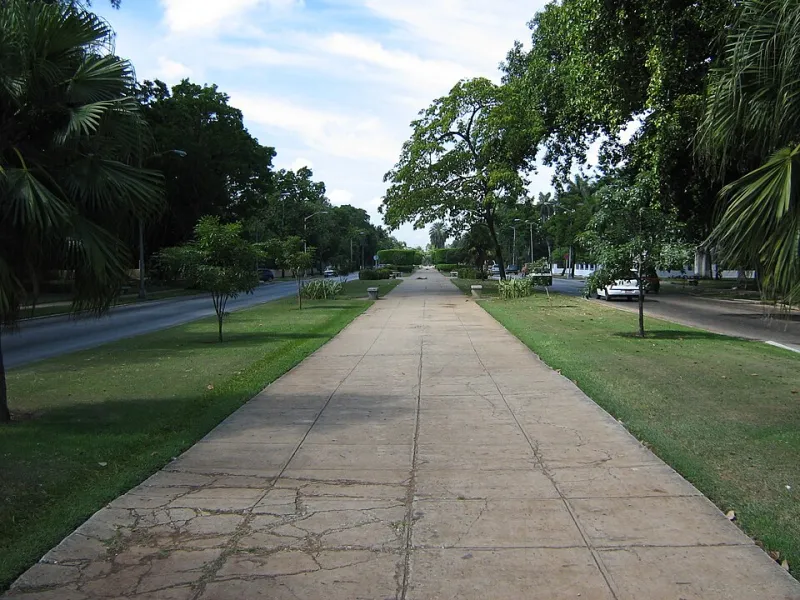
Photo: Happypepe, CC BY-SA 3.0, via Wikimedia Commons
There is a particular quality of light on Quinta Avenida in the early morning—soft, filtered through the canopy of royal palms and ancient laurels that line its wide, divided lanes—that makes the rest of the world feel briefly irrelevant. This is not an accident of geography. It is the result of more than a century of deliberate cultivation: of architecture chosen for permanence, of greenery planted with intention, of a neighborhood designed to project a specific and enduring idea of what Havana could be at its most aspirational.
For American travelers arriving at Hotel Quinta Avenida Habana, the address itself is part of the experience. Understanding why requires a short journey through history—one that reveals how a single boulevard became the definitive expression of Cuban elegance and why that legacy continues to shape the character of the city's most refined district today.
The Making of a Prestige Corridor
Quinta Avenida runs through Miramar, the residential district that sits west of the Almendares River, and its origins are inseparable from the ambitions of early twentieth-century Havana. As the Cuban capital expanded beyond the dense colonial fabric of Habana Vieja and Centro Habana, Miramar emerged as the preferred destination for the city's prosperous classes—merchants, professionals, and foreign diplomats who wanted space, air, and the architectural vocabulary of European elegance translated into a tropical setting.
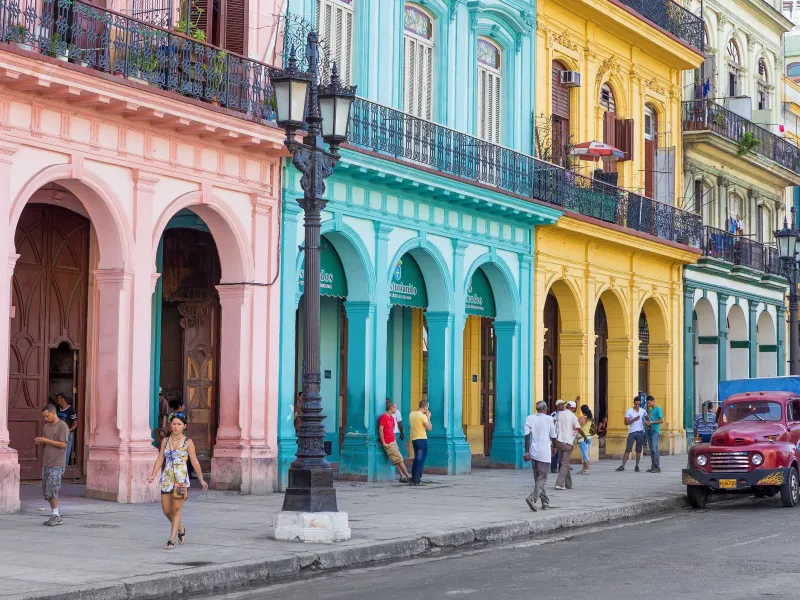
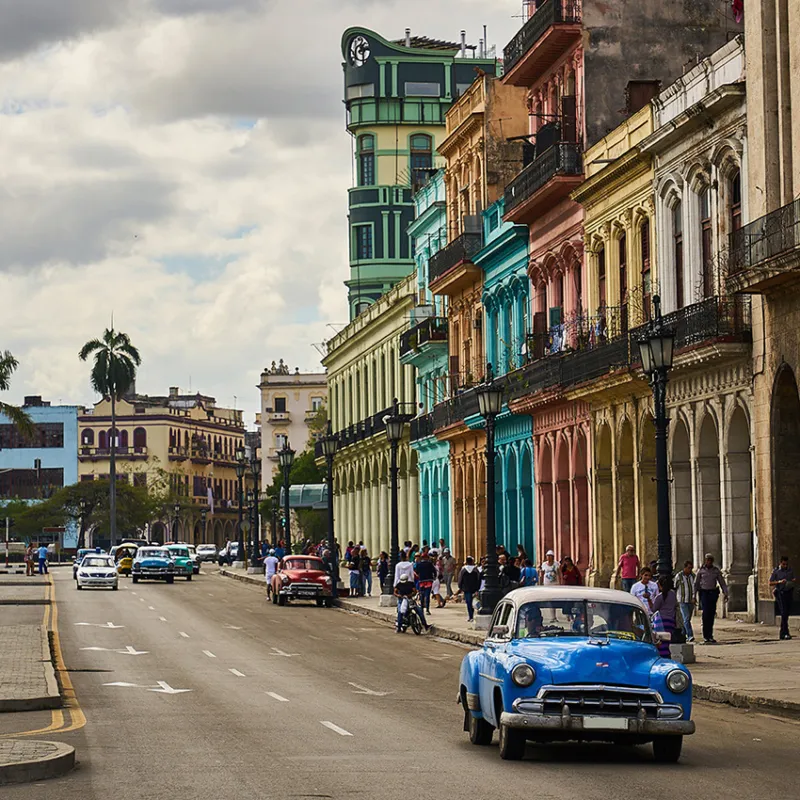
The avenue itself was modeled, in spirit if not in scale, on the grand boulevards of Paris and the tree-lined promenades of Barcelona's Eixample district. Its central median—broad enough to serve as a promenade in its own right—was planted with shade trees and punctuated by fountains and civic monuments. The mansions that rose along its flanks drew from an eclectic vocabulary: neoclassical columns, Moorish tilework, Art Deco geometries, and the ornate ironwork that Havana's craftsmen had perfected over generations.
By the mid-twentieth century, Quinta Avenida had become the most coveted address in Cuba. Embassies and consulates claimed its grandest properties. Industrialists and cultural figures built homes here that rivaled anything in Miami or Mexico City. The avenue was, in every meaningful sense, a statement—proof that Havana belonged among the hemisphere's great cities.
Preservation as Philosophy
What distinguishes Quinta Avenida today from comparable prestige corridors in other Latin American capitals is the remarkable degree to which its built environment has survived. Where development pressures in cities like Caracas or San José have erased much of their early twentieth-century residential fabric, Miramar's grandest street retains an architectural coherence that is, by any measure, extraordinary.
This preservation was not purely intentional—Cuba's economic trajectory after 1959 effectively froze much of the construction that might otherwise have replaced older structures with modernist towers or commercial development. But what might have been seen as stagnation has, in the long view, proved to be a form of stewardship. The mansions of Quinta Avenida stand today much as they were built: their proportions intact, their ornamental details unaltered, their gardens still framing facades of faded grandeur.
For the luxury traveler, this matters enormously. The experience of walking or riding along Quinta Avenida is one of rare temporal continuity—a sensation that one is moving through a city that has held its form against considerable pressure. In an era when so much of the world's architectural heritage has been sacrificed to expediency, that continuity carries genuine emotional and aesthetic value.
Diplomacy, Culture, and the Character of Miramar
The concentration of embassies along Quinta Avenida has given Miramar a distinctive cosmopolitan character that sets it apart from other Havana neighborhoods. Dozens of nations maintain diplomatic missions here, and the quiet, well-maintained streets that surround them carry the particular atmosphere of places accustomed to international attention—orderly, discreet, and possessed of a certain formal dignity.
This diplomatic identity has also shaped the cultural life of the district. Miramar has long been home to some of Havana's most respected restaurants, private art galleries, and performance spaces—venues that cater to an audience with international exposure and refined expectations. For American visitors in particular, the neighborhood offers a version of Havana that feels simultaneously authentic and accessible: deeply Cuban in its architecture, cuisine, and social rhythms, yet comfortable with the conventions of sophisticated travel.
The avenue's cultural significance extends to music and the arts. Several of Cuba's most celebrated musicians have lived in Miramar, and the neighborhood's recording studios and rehearsal spaces have contributed to the island's musical legacy in ways that are still being documented. To stay here is to occupy the same streets where some of the twentieth century's most influential Afro-Cuban music was composed, rehearsed, and eventually carried to the world.
What the Address Communicates
In Havana, as in any city with a strong sense of its own geography, address carries meaning. Quinta Avenida is not simply a location; it is a declaration. To stay on this boulevard, or in its immediate vicinity, is to align oneself with a particular tradition of Cuban taste—one that prizes architectural integrity, spatial generosity, and the kind of quiet prestige that does not require announcement.
Hotel Quinta Avenida Habana draws its identity directly from this tradition. The property's positioning within the Miramar corridor places guests at the intersection of historical significance and contemporary comfort—close enough to the avenue's grandest stretches to absorb their atmosphere, yet equipped with the amenities that modern luxury travel demands. It is a balance that the neighborhood itself has always sought: honoring what came before while making room for what the present requires.
For American travelers who have grown accustomed to luxury hotels that manufacture their sense of place through interior design alone, Quinta Avenida offers something more substantial. The prestige here is not applied; it is structural. It lives in the proportions of the buildings, the scale of the lots, the rhythm of the palms, and the long, unhurried sight lines that the avenue's designers built into its bones more than a century ago.
Arriving with Context
The most rewarding way to experience Quinta Avenida is to arrive with some understanding of what you are entering. The traveler who knows that the pale yellow mansion three blocks east once housed a foreign mission, or that the ornate ironwork on a particular gate was fashioned by craftsmen trained in the same workshops that supplied Havana's finest colonial interiors, moves through the neighborhood differently—with the particular pleasure of informed attention.
That context is something Hotel Quinta Avenida Habana is positioned to provide. Whether through curated walking routes, introductions to local architectural historians, or simply the accumulated knowledge of a staff that lives and works within this landscape, the hotel functions as a gateway to a deeper engagement with the avenue and the district it anchors.
Quinta Avenida has always been a boulevard built for people who understand that the finest things are rarely accidental. For the American traveler seeking a Havana experience that is both genuinely luxurious and genuinely Cuban, there may be no more fitting place to begin.