Where Grandeur Meets Grit: The Productive Contradictions That Make Havana's Finest Hotels Unforgettable
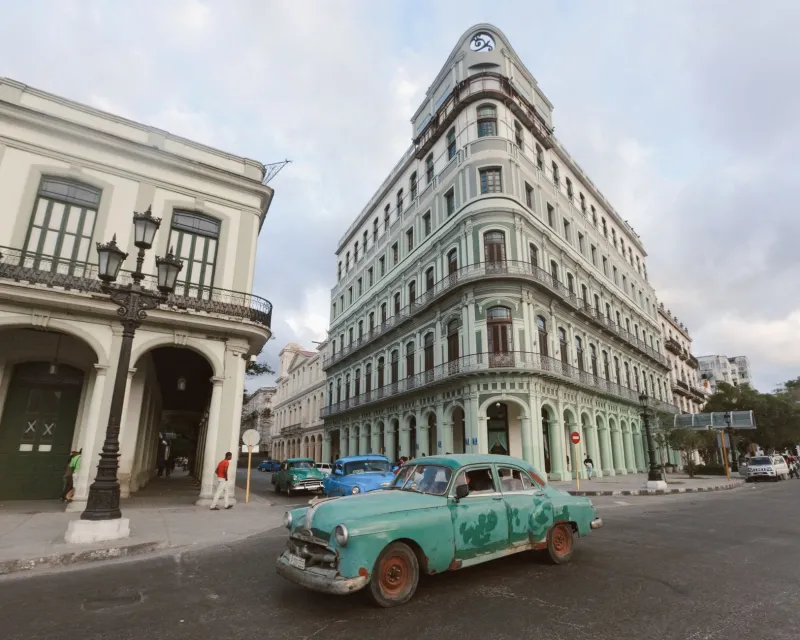
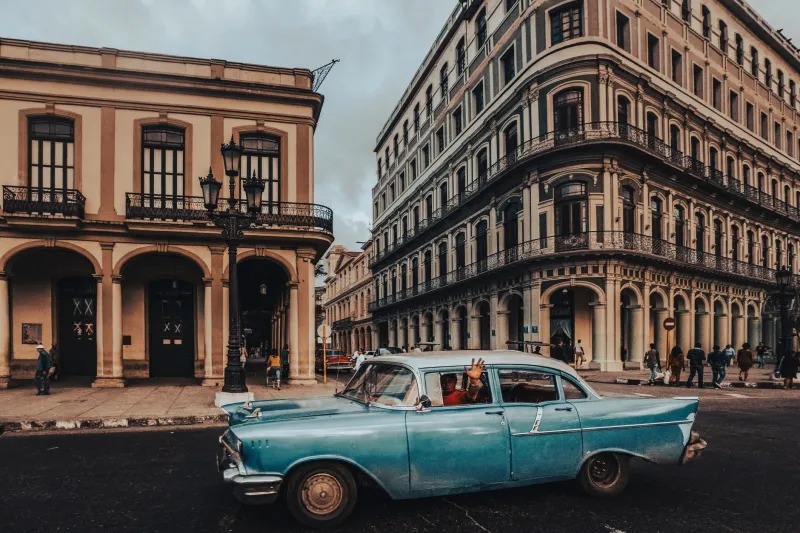
There is a particular moment that nearly every guest at Hotel Quinta Avenida Habana eventually describes. It arrives, almost always, without warning. Perhaps it comes while standing at a tall window, watching the late-afternoon light fall across a colonnade of royal palms lining the boulevard below, only to notice, just beyond the garden wall, the flaking plaster of a neighboring facade slowly surrendering itself to the humid air. Or perhaps it arrives at the dinner table, when a perfectly executed ropa vieja — tender, fragrant, impeccably plated — is delivered by a server whose quiet formality would not be out of place in a Michelin-starred room on the Upper East Side, while somewhere outside, a 1957 Chevrolet Bel Air rattles past with a sound like distant thunder.
The moment, whenever it comes, is one of productive disorientation. And it is, arguably, the most valuable thing a luxury hotel in Havana can offer.
The Illusion of Seamlessness
American luxury travel has long been organized around a single governing principle: the elimination of friction. The finest hotels in New York, Los Angeles, and Miami have refined this principle to an extraordinary degree. Marble is perpetually polished. Climate control is invisible and absolute. Every transition — from lobby to room, from room service to restaurant — is engineered to feel effortless, anticipated, resolved before the guest is even aware of a need.
This is a remarkable achievement. It is also, in a quietly significant way, an impoverishment.
When every variable is controlled, when every surface is perfected and every experience pre-smoothed, the traveler is ultimately sealed inside a very expensive version of the familiar. The hotel becomes a container for comfort rather than a portal to encounter. Luxury, in this formulation, is a form of insulation — from the unexpected, from the unresolved, from the world as it actually is.
Havana refuses this bargain. And the finest hotels here, rather than fighting that refusal, have learned to honor it.
The Architecture of Contradiction
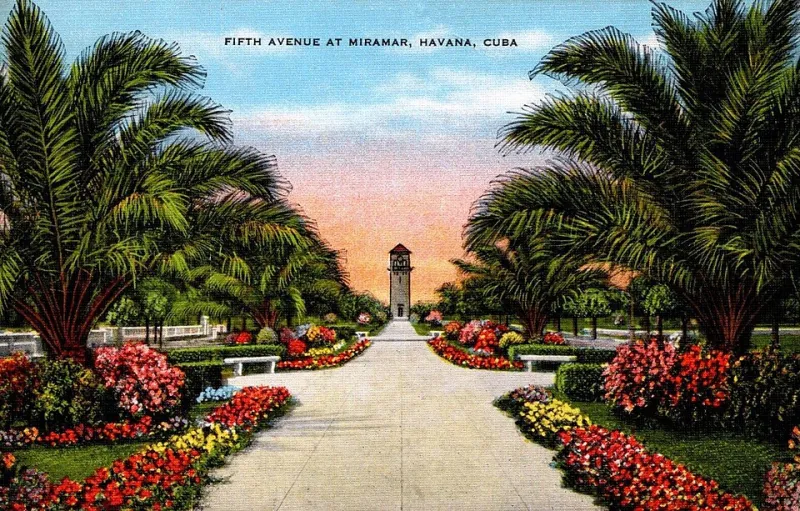
The physical fabric of Havana is itself a study in unresolved tension. Baroque stonework stands beside modernist concrete. A mansion of extraordinary proportions displays a lobby of curated elegance while its upper floors reveal the honest marks of decades and weather. Quinta Avenida — the grand boulevard from which Hotel Quinta Avenida Habana takes its name and its character — is a street that has hosted diplomats, artists, revolutionaries, and dreamers, and the residue of each era remains visible in the architecture, refusing to be edited away.
To build a luxury hotel within this context is not simply a design challenge. It is a philosophical position.
The choice made here — and it is a conscious, deliberate choice — is not to impose a hermetic perfection upon the surroundings but to enter into dialogue with them. Curated interiors do not pretend the exterior world does not exist. Exceptional service does not apologize for the city beyond the garden. Instead, both are offered as counterpoints to their context: the more vivid for the contrast, the more meaningful for the tension they hold.
What Contradiction Actually Produces
Psychologists who study memory and experience have long understood that contrast is one of the primary mechanisms by which moments become memorable. An extraordinary meal tastes more extraordinary when it arrives unexpectedly. A view becomes more beautiful when it is framed by something rough or imperfect. The mind registers significance through difference, and difference requires that not everything be equally smooth.
This is precisely what Havana's productive contradictions deliver. When a guest steps from the cool, composed interior of Hotel Quinta Avenida Habana into the living theater of the city — the musicians performing on a corner without any apparent audience, the street vendor whose cart is an improvised masterpiece of ingenuity, the sudden tropical downpour that transforms an ordinary street into something briefly sublime — they are not experiencing a failure of the hotel's hospitality. They are experiencing its highest expression.
The hotel's role, understood correctly, is not to replace the city but to prepare the guest to receive it. The comfort of the room, the excellence of the staff, the quality of the table — these are not ends in themselves. They are the conditions under which genuine encounter becomes possible.
The American Traveler and the Uncontrolled Variable
For American guests accustomed to the frictionless model, this requires a modest but meaningful adjustment of expectation — and, in most cases, the adjustment proves to be one of the most rewarding aspects of the journey.
What visitors frequently report, upon reflection, is that the very elements they anticipated as inconveniences became the memories they returned home carrying most vividly. The evening the power flickered and the hotel staff produced candles with an unhurried grace that transformed an interruption into an atmosphere. The morning the concierge's carefully arranged itinerary was overturned by an impromptu street festival, and the resulting detour led to a private studio, an artist, and a conversation that lasted two hours. The afternoon when the city's infrastructure asserted itself in some small way, and the response — from staff, from neighbors, from the city itself — revealed a resourcefulness and warmth that no five-star property in Miami or Manhattan could manufacture.
These are not accidents. They are, in the deepest sense, the product. The hotel's excellence creates the conditions of trust within which the unexpected becomes an invitation rather than an irritation.
Luxury Reconsidered
There is a growing recognition among the most sophisticated American travelers that the pursuit of seamless comfort, taken to its logical extreme, produces a kind of experiential poverty. When nothing is left to chance, nothing is left to discovery. When every variable is controlled, the traveler's own capacity for adaptation — for presence, for genuine response — atrophies from disuse.
Havana, and Hotel Quinta Avenida Habana specifically, offers something more demanding and more rewarding: the luxury of genuine encounter. The luxury of a city that has not been curated for your comfort but that reveals itself, generously and on its own terms, to those willing to be present to it. The luxury, ultimately, of being somewhere real.
The crumbling facade and the impeccable interior are not contradictions to be resolved. They are the two notes of a chord, and the chord, when heard properly, is one of the most beautiful sounds in contemporary travel.