Chosen Difficulty: Why America's Wealthiest Travelers Are Deliberately Seeking Destinations That Push Back
There is a particular kind of traveler who has stayed everywhere. The Maldives overwater villa. The Kyoto ryokan with a three-year waitlist. The Swiss mountain lodge where the concierge anticipates your preferences before you have articulated them. These are not people who lack access to comfort. They are people who have grown quietly, profoundly bored by it.
And increasingly, they are arriving in Havana.
What draws them is not nostalgia, nor the fashionable romance of decay that has animated a certain strain of travel writing for decades. What draws them is something more psychologically precise: the recognition that a destination capable of resisting their expectations is, in fact, the rarest luxury remaining on the map.
The Tyranny of the Seamless Experience
The modern luxury travel industry has perfected the art of elimination. Every potential friction point — the uncertain taxi, the untranslated menu, the afternoon with no scheduled activity — has been systematically removed from the high-end itinerary. The result, for a certain category of discerning guest, has been a creeping sense of diminishment. When nothing surprises you, nothing moves you either.
Sociologists and behavioral economists have a term for the psychological state that emerges from excessive comfort: hedonic adaptation. The human mind, regardless of the quality of its surroundings, recalibrates toward neutrality. The extraordinary becomes ordinary with remarkable speed. What once produced genuine pleasure — the butler service, the private transfer, the pillow menu — eventually registers as mere background condition, neither noticed nor appreciated.
The travelers now choosing Havana have, consciously or not, diagnosed this problem in themselves. They are not seeking hardship. They are seeking resistance — the productive friction of a city that operates on its own terms, indifferent to the preferences of even its most distinguished visitors.
What Havana Demands, and Why That Matters
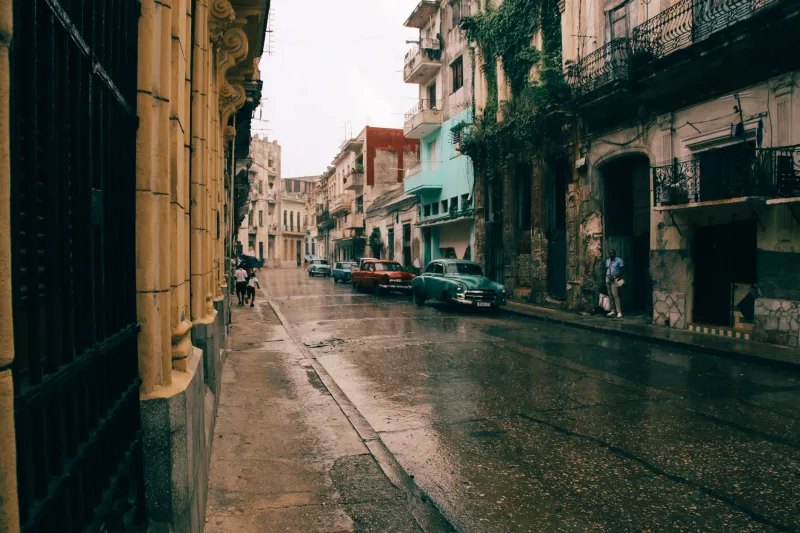
Havana is, by almost any conventional metric, an improbable luxury destination. Internet connectivity remains limited. The rhythm of daily life does not bend to accommodate itineraries. Certain Western conveniences are simply unavailable. A traveler accustomed to instant resolution will find, at various moments, that resolution is not forthcoming.
And yet the guests who return to Hotel Quinta Avenida Habana — and they do return, with a loyalty that speaks to something deeper than habit — describe these very conditions as central to what the experience gave them. Not despite the resistance, but because of it.
The psychological mechanism at work is well-documented, if rarely applied to travel. Effort, when it produces a result, generates a form of satisfaction that effortlessness cannot replicate. The traveler who navigates an unexpected afternoon in Havana's Vedado neighborhood, who stumbles into a private home concert, who negotiates the rhythms of a city that refuses to perform for them — that traveler carries something home that no concierge can arrange in advance.
This is not the language of deprivation tourism. The rooms at Hotel Quinta Avenida Habana are appointed with the care and restraint appropriate to a property of its standing on one of the hemisphere's most storied boulevards. The service is attentive, knowledgeable, and genuinely warm. The distinction is more subtle: the hotel prepares its guests to engage with Havana, rather than insulating them from it.
A New Vocabulary of Wealth
The shift among affluent American travelers reflects something broader than a change in vacation preferences. It represents an evolving definition of what wealth is actually for.
For much of the late twentieth century, luxury was legible. It announced itself through recognizable markers: brand names, thread counts, the number of staff members assigned to a single guest. Status was performed through the visible elimination of inconvenience. The wealthier you were, the less the world could touch you.
That grammar is now being revised, particularly among travelers in their forties and fifties who have accumulated both financial security and a certain weariness with its conventional expressions. For this cohort, the meaningful deployment of resources looks less like insulation and more like access — access to experiences that money alone cannot manufacture, to cities that have not yet been fully translated into the language of international luxury consumption.
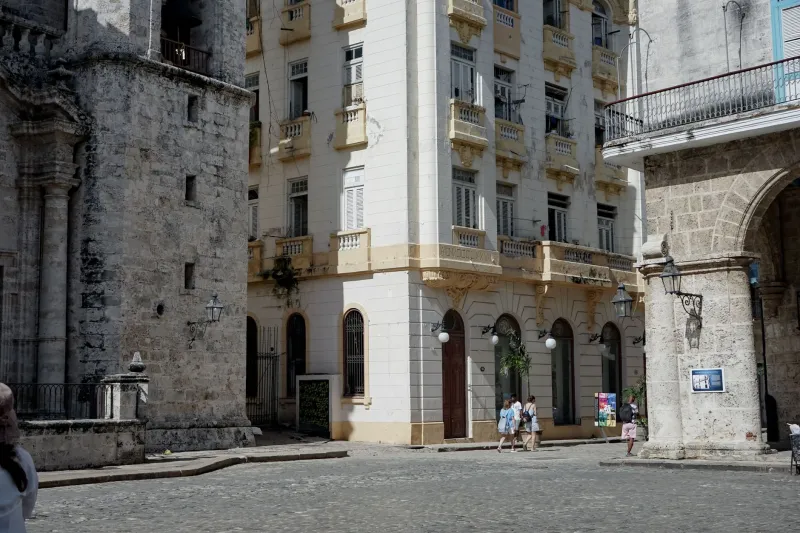
Havana qualifies on both counts. It remains, despite decades of international attention, fundamentally itself. The Malecón does not perform for visitors. The musicians in the doorways of Habana Vieja are not curated entertainment; they are people living their lives in a city where music is simply the ambient condition of existence. The guest who encounters this is encountering something genuine, and that genuineness — increasingly scarce in a world of experiential curation — commands a premium that no rate card can fully capture.
The Role of the Right Address
None of this argues for discomfort as an end in itself. The paradox that Havana's most thoughtful visitors have resolved is the distinction between chosen difficulty and imposed hardship. One is enlivening; the other is merely unpleasant.
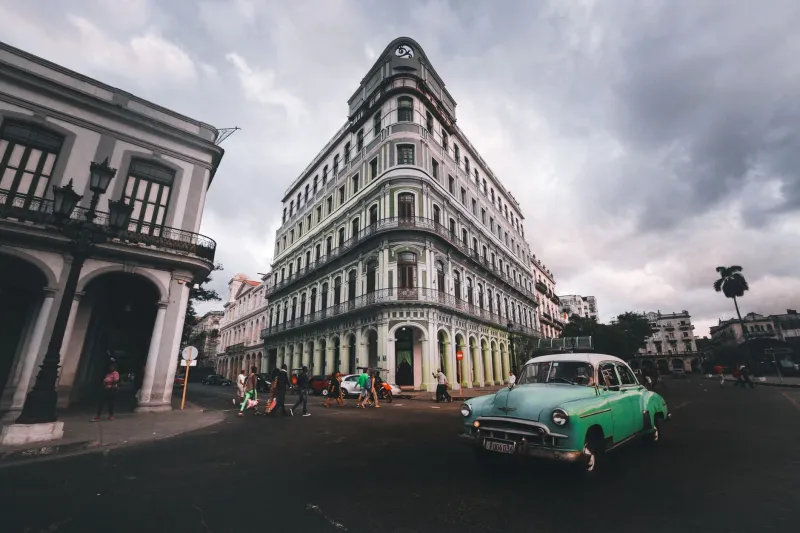
The choice of where to stay in Havana is, in this context, a decision of some consequence. Quinta Avenida — the broad, tree-canopied boulevard that gives this hotel its name — occupies a position in Havana's geography that is both physically removed from the city's most congested quarters and psychologically central to its grandest self-conception. To stay here is to inhabit a version of Havana that has always understood the relationship between dignity and restraint.
From this address, the city is accessible without being overwhelming. The guest can engage on their own terms, retreating when necessary to surroundings that offer genuine repose. This calibration — between immersion and recovery, between engagement and stillness — is precisely what the most experienced travelers require. They do not want to be managed. They want to be supported in managing themselves.
Purpose as the New Premium
The travelers arriving at Hotel Quinta Avenida Habana with the most deliberate intentions are those who have asked, often for the first time in years of luxury travel, what they actually want a journey to do to them. Not what it will provide, but what it will produce — in terms of perspective, memory, and the particular alertness that comes from being somewhere that genuinely surprises you.
Havana answers that question with unusual force. It is a city that has survived on terms the rest of the world did not set for it, and that survival has produced a culture of extraordinary density — in its music, its architecture, its street-level human ingenuity, its relationship to time. A traveler who arrives with genuine curiosity will find more to occupy that curiosity than a month can exhaust.
This is the Havana paradox in its simplest formulation: a destination that gives most generously to those who arrive expecting least, and that rewards the willingness to be changed by what one encounters. For the traveler who has grown tired of being handled, it is, in the most precise sense of the word, a luxury.