Restraint as Architecture: What Havana's Most Prestigious Address Has Always Known About Elegance
A Street That Has Always Set Its Own Terms
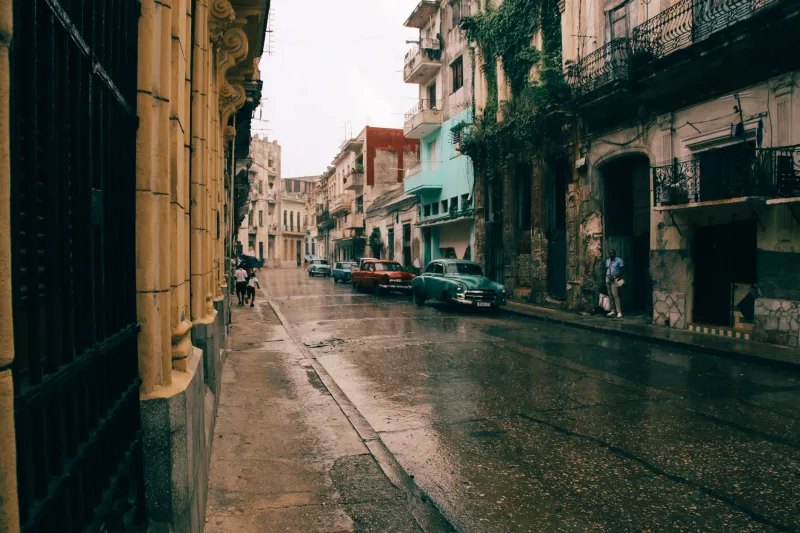
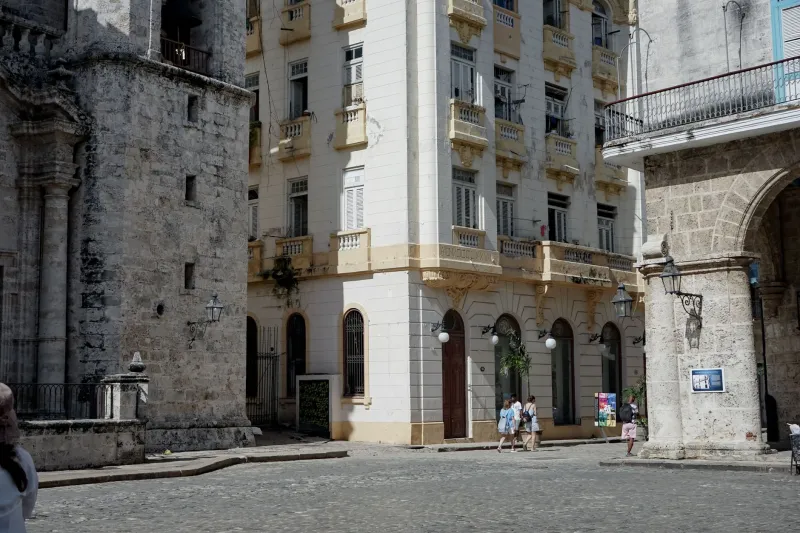
There are avenues in the world that announce themselves loudly — boulevards defined by excess, by spectacle, by the competitive accumulation of grandeur. Quinta Avenida, the tree-canopied spine of Havana's Miramar district, has never been one of them. From the moment its broad median was planted with royal palms and its flanking lanes were lined with the measured proportions of republican-era architecture, this street operated according to a different principle entirely: that true distinction requires no announcement.
For generations, this principle shaped everything from the spacing of columns on a residential facade to the temperature of light admitted through a louvered shutter. It governed the depth of a portico, the weight of a wrought-iron gate, the deliberate understatement of a foyer that opens, unexpectedly, onto a courtyard of breathtaking beauty. What Quinta Avenida codified was not a style in the conventional sense. It was something closer to a disposition — an architectural posture that treated restraint not as limitation but as the highest form of confidence.
Modern luxury hotels operating on or near this avenue are, whether consciously or not, the inheritors of that tradition. And for American travelers who have grown weary of the performative opulence that dominates so many five-star properties elsewhere in the world, what Quinta Avenida offers feels less like a departure and more like an arrival.
The Grammar of Cuban Elegance
To understand the design language of a Quinta Avenida property, it helps to understand what Cuban elegance actually consists of — which is to say, what it conspicuously excludes.
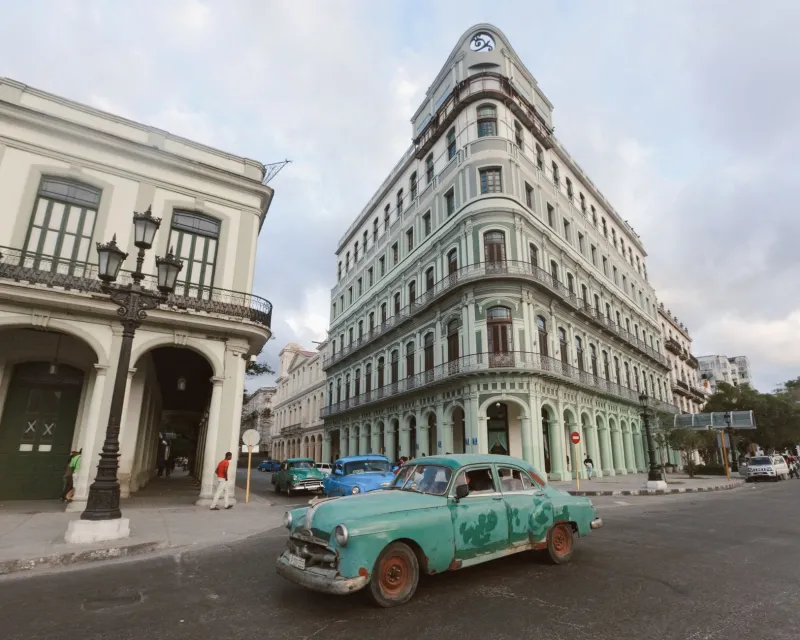
Cuban architectural refinement, particularly as it matured through the late nineteenth and early twentieth centuries, was shaped by a confluence of Spanish colonial precedent, French neoclassical influence, and the particular demands of a tropical climate. The result was a built environment that privileged proportion over ornamentation, airflow over enclosure, and the drama of shadow over the drama of surface. Interiors were not furnished to impress; they were arranged to breathe. Color was used with the precision of a painter who knows that a single well-placed accent carries more weight than an entire wall saturated with pigment.
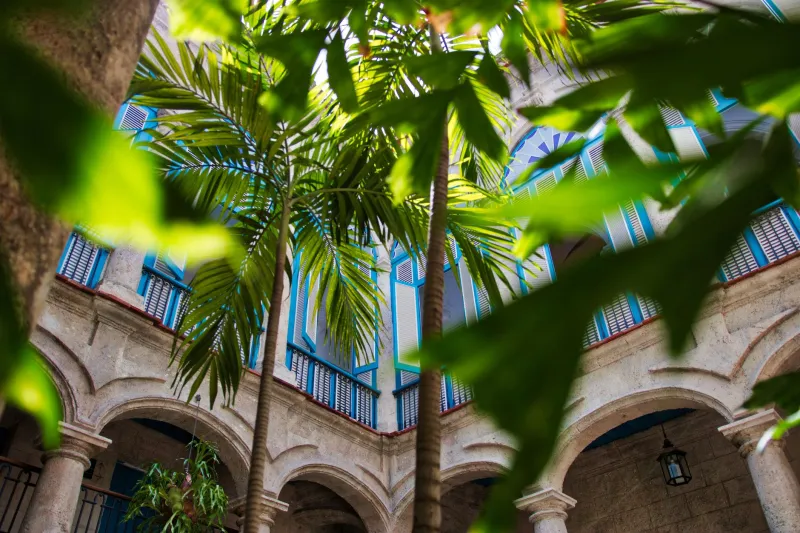
This grammar persists in the finest Havana hotels today. A lobby designed in this tradition will not overwhelm the arriving guest with chandelier light and marble excess. Instead, it will offer a measured sequence of sensations — the coolness of tiled floors underfoot, the geometry of arched doorways framing a garden beyond, the scent of something flowering just outside the line of sight. The guest is drawn inward rather than stopped in their tracks. That distinction matters enormously.
What American Travelers Are Actually Seeking
The American luxury traveler has changed significantly over the past decade. The demographic that once measured a hotel's quality by the number of amenities listed in its brochure is giving way to a more sophisticated guest — one who has stayed in enough five-star properties to recognize when grandeur is genuine and when it is merely expensive.
This traveler is drawn to Havana's Quinta Avenida not despite its restraint but because of it. In a travel landscape saturated with maximalism — rooftop pools designed for social media, lobbies engineered for visual impact rather than human comfort — there is a growing appetite for spaces that seem to have been designed for the person actually inhabiting them, rather than for the photograph that person might later share.
The Fifth Avenue principle speaks directly to this appetite. When a hotel on this avenue places a single orchid on a writing desk rather than a formal floral arrangement, when it selects linens that feel extraordinary without advertising their thread count, when it designs a guest room whose window frames the exact right portion of garden and sky — these are not accidents of budget or oversight. They are decisions that reflect a coherent philosophy, one that places the guest's experience of the space above the space's experience of itself.
Design Decisions That Carry Historical Weight
At Hotel Quinta Avenida Habana, the design choices made throughout the property are legible against this longer history. The relationship between interior and exterior space, for instance, reflects an understanding that in Havana's climate and culture, the boundary between inside and outside has always been more permeable than in colder, more enclosed architectural traditions. A terrace is not an amenity appended to a room; it is a continuation of the room's logic, an extension of the same considered proportions.
Similarly, the material palette — the preference for natural stone, hand-finished plaster, and wood that shows the evidence of its age — aligns with a tradition that understood patina not as deterioration but as depth. A wall that carries the faint impression of decades, a floor whose tiles have been worn to a particular luster by generations of footsteps, communicates something that no amount of fresh renovation can replicate: the sense that a place has been genuinely inhabited, genuinely lived in, genuinely loved.
For the American guest accustomed to the frictionless newness of contemporary hotel design, this quality can be disorienting at first, and then profoundly settling. There is something deeply restful about a space that does not require you to admire it. It simply receives you.
The Etiquette the Avenue Expects
Quinta Avenida has always implied a certain comportment from those who walk or reside along it. This is not snobbery in the conventional sense — Cuban hospitality is famously warm, famously generous, famously indifferent to the pretensions of wealth. But the avenue does carry an expectation of attentiveness, of the kind of presence that notices details and responds to them.
The finest properties here extend this expectation into their service philosophy. Staff who have worked on this avenue for years possess an intuitive understanding of when a guest wishes to be engaged and when they prefer to be left to their own observation. This calibration — the art of being present without being intrusive — is itself a form of elegance, and it mirrors the architecture that surrounds it: purposeful, considered, and quietly confident in its own sufficiency.
For travelers arriving from American cities where service is often either aggressively attentive or conspicuously absent, this register can feel almost uncanny. It is, in the most precise sense of the word, civilized.
An Inheritance Worth Seeking
What Quinta Avenida has always understood, and what its finest hotels continue to demonstrate, is that elegance is not a quantity. It cannot be achieved by adding more of something — more marble, more staff, more amenities, more spectacle. It is achieved, instead, by a quality of attention: to proportion, to material, to the relationship between a space and the human being inhabiting it.
For American travelers prepared to receive that kind of attention, a stay along this avenue offers something genuinely rare in contemporary luxury travel — the experience of a place that has been thinking carefully about hospitality for a very long time, and has arrived at conclusions that no amount of recent investment can simply purchase.