Open to the World, Anchored in Privacy: What Havana's Balcony Culture Teaches America's Most Discerning Travelers
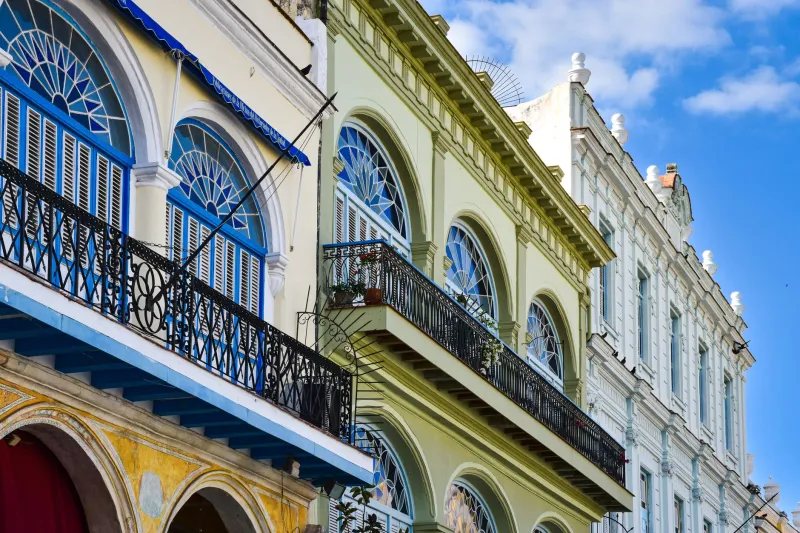
There is a moment that nearly every guest at Hotel Quinta Avenida experiences within the first twenty-four hours of arrival. They step through the tall shuttered doors of their room, feel the warm Caribbean air move across their skin, and find themselves standing at the edge of a wrought-iron balcony overlooking one of Havana's most storied boulevards. Below, the city conducts its ancient and unhurried business. A musician adjusts his hat. A neighbor calls down from a window across the street. A classic American automobile, painted the color of old coral, rounds the corner with ceremonious slowness.
The instinct, for many American visitors, is to retreat — to close the doors and return to the curated interior. But those who resist that impulse discover something that Havana has understood for centuries: the balcony is not a vulnerability. It is, in fact, the most sophisticated form of luxury the city offers.
A Different Grammar of Space
American luxury, broadly speaking, is organized around the principle of removal. The finest hotels in New York, Los Angeles, and Miami compete to offer guests the most complete form of insulation from the surrounding world — soundproofed suites, private elevators, walled terraces, and the implicit promise that nothing uninvited will intrude upon your experience. This is not without merit. For travelers who spend their professional lives in perpetual exposure, the sealed environment of a five-star suite represents genuine relief.
Havana operates on an entirely different spatial grammar. The city's colonial architecture — developed over four centuries of Spanish influence, tropical adaptation, and cultural improvisation — was never designed around the idea of total enclosure. Buildings breathe. Courtyards draw air upward through interior wells. And balconies, those elegant projections of iron and stone that line every significant residential and commercial street, serve as the primary interface between private life and public theater.
To live well in Havana, historically, has meant learning to inhabit that threshold with grace. The balcony is where the private citizen becomes, briefly and willingly, a participant in the city's collective life — without relinquishing the dignity of their own domain.
The Paradox of Meaningful Exclusivity
Among the more thoughtful segment of America's luxury travel market, a quiet but significant shift has been underway for some years. The most discerning high-net-worth travelers — those who have stayed at the finest properties on every inhabited continent — are increasingly articulating a dissatisfaction that no additional thread count or private butler can resolve. The experience of total isolation, however impeccably executed, has begun to feel less like luxury and more like absence.
What these travelers are reaching toward, though many struggle to name it precisely, is a quality of engagement that exclusivity alone cannot manufacture. They want to feel genuinely present in the places they visit, connected to something authentic and irreproducible, without sacrificing the comfort and refinement that their resources make possible.
Havana's balcony culture offers a remarkably elegant answer to this paradox. The balcony does not ask you to abandon your privacy. It asks you, instead, to redefine it — to understand that genuine luxury is not the elimination of the world beyond your door, but the cultivation of a relationship with that world entirely on your own terms.
What the Architecture Already Knows
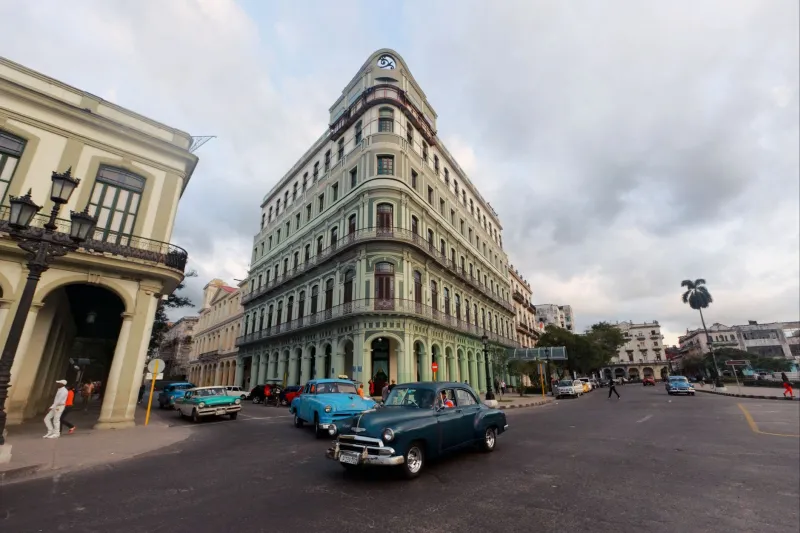
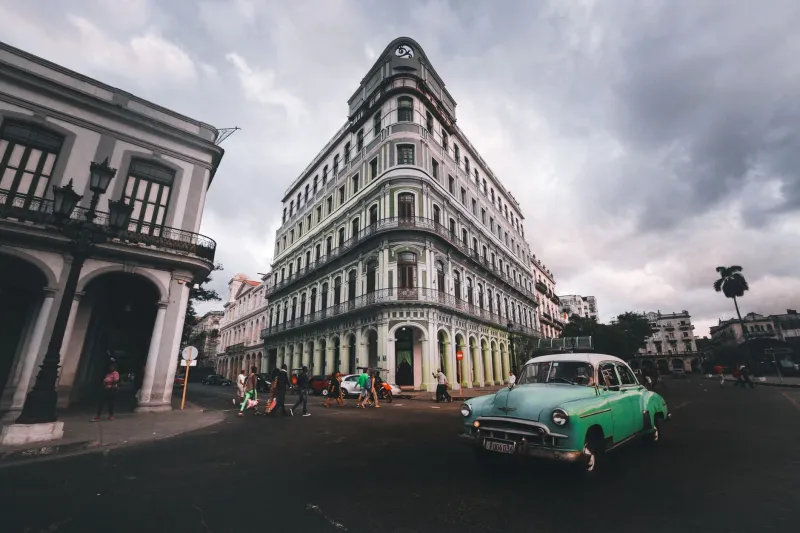
Hotel Quinta Avenida was designed — or rather, it evolved — with this philosophy embedded in its very structure. The property's position along the Miramar district's grandest boulevard means that its balconies and open-air spaces face one of Havana's most architecturally distinguished streetscapes. Guests do not look out upon an anonymous urban panorama. They look out upon a living composition of neoclassical facades, royal palms, and the particular quality of Caribbean afternoon light that painters have been chasing for generations.
This is not accidental. The great residential addresses of Miramar were conceived by their architects and patrons to participate in the grandeur of the avenue — to contribute to it, and to draw from it in equal measure. A suite at Hotel Quinta Avenida is, in this sense, a seat within a larger performance that the city has been staging for well over a century. The guest who steps onto the balcony is not interrupting their luxury experience. They are completing it.
Learning a New Language of Presence
For American travelers making this transition — from the hermetic luxury of isolation to the more nuanced luxury of calibrated engagement — the adjustment is rarely instantaneous. It requires a degree of deliberate openness that runs counter to habits developed over years of high-end travel.
The hotel's staff, many of whom have spent their lives navigating the particular social choreography of Havana's street culture, are quietly invaluable in this process. They understand, instinctively, when a guest is ready to be drawn out and when they need the sanctuary of the interior. They can arrange a balcony breakfast timed to the morning light and the rhythms of the boulevard below, or a late evening aperitif as the avenue settles into its nightly ritual of conversation and music. These are not amenities in the conventional sense. They are invitations into a more sophisticated mode of being present.
The Return Home
Travelers who have genuinely absorbed Havana's balcony philosophy tend to describe its effects in terms that extend well beyond the trip itself. Several guests have spoken of returning to their homes in Manhattan, San Francisco, or Houston with a changed relationship to the spaces where private life meets the world outside — a greater willingness to open a window, sit on a terrace, or engage with the immediate environment rather than retreating perpetually behind glass and controlled air.
This is, perhaps, the most durable form of value that a travel experience can deliver: not a memory of a place visited, but a recalibration of how one inhabits every place thereafter. Havana, in its characteristically unhurried and unapologetic way, has been offering this education to those willing to receive it for generations.
The balcony at Hotel Quinta Avenida Habana is simply the most elegant classroom in which to begin.
An Invitation, Not an Intrusion
For the American traveler who has spent years perfecting the art of luxury as insulation, Havana proposes a more demanding and ultimately more rewarding ambition. The city does not offer you the world at a safe distance. It offers you a place within it — curated, dignified, and entirely your own — from which the full richness of Cuban life becomes not a distraction from your experience, but its very substance.
To stand on a balcony above Quinta Avenida as the evening air moves through the palms is to understand, perhaps for the first time, that the finest luxury was never about what could be kept out. It was always about what could be let in, and on whose terms.
Hotel Quinta Avenida Habana extends that invitation. The shuttered doors are yours to open.