The Unfinished Room: How Havana's Finest Hotels Have Turned Imperfection Into a Design Manifesto
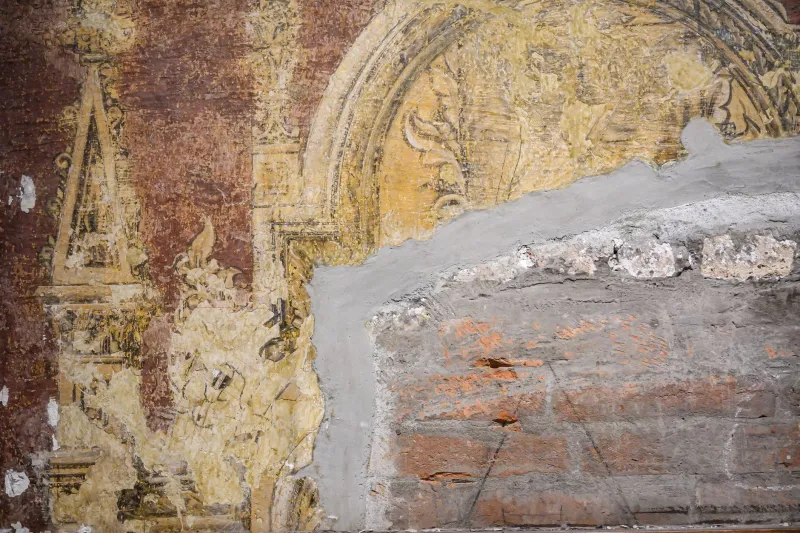
There is a particular moment that nearly every first-time guest at a Havana luxury property experiences — a pause in the doorway, a slight recalibration of expectation. The corridor is immaculate. The linens are pressed with military precision. And yet, just above the antique console table, a section of plaster reveals the warm ochre of a previous century's pigment, left deliberately exposed. No one has forgotten to paint it. No renovation budget ran short. It is, in the fullest sense of the word, intentional.
This is the restoration paradox at the heart of Havana's most sophisticated hospitality: the idea that a space is not finished when its imperfections are erased, but when they are honestly acknowledged.
Perfection as a Western Luxury Construct
For decades, the dominant language of American luxury hospitality has been one of seamless completeness. Marble floors without variation. Walls without memory. Surfaces that betray no evidence of the lives lived against them. The implicit promise of a five-star hotel in New York, Los Angeles, or Miami has long been a kind of temporal suspension — a space so thoroughly renewed that history itself seems to have been polished away.
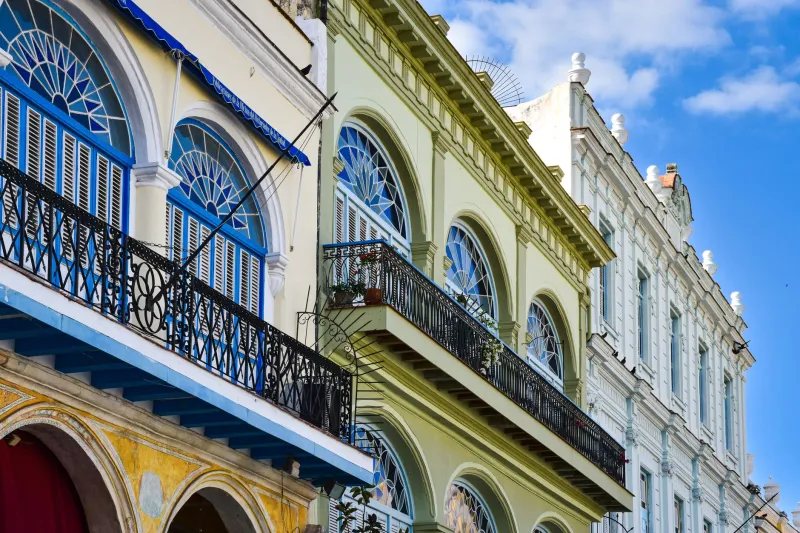
Havana operates from an entirely different premise. The city's built environment carries centuries of layered occupation: Spanish colonial foundations, Beaux-Arts ambitions, mid-century modernist interventions, and the long, slow patina of the decades that followed. To strip all of that away in the name of renovation would not be restoration — it would be erasure. And Havana's most distinguished properties have come to understand this distinction with remarkable clarity.
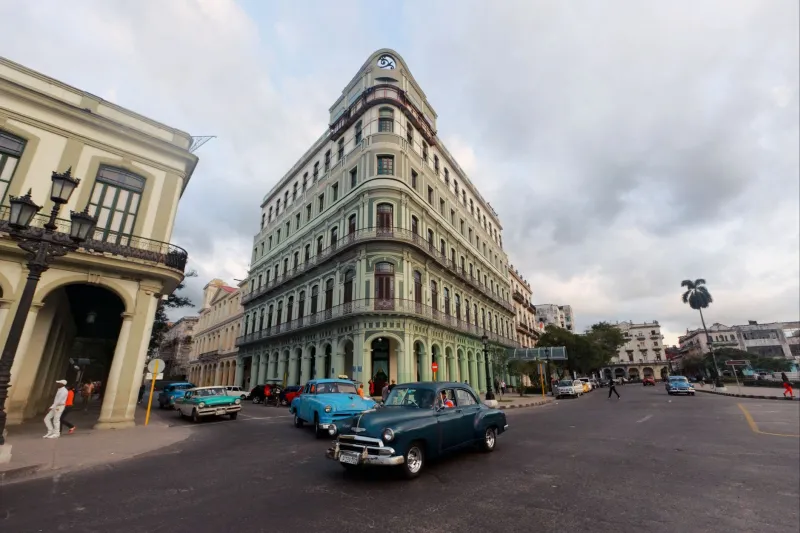
At Hotel Quinta Avenida Habana, situated along the grand, tree-canopied boulevard that gives the property its name, this philosophy is embedded in the very bones of the building. The approach taken here is one of honest preservation — honoring what the structure has witnessed rather than concealing it behind a uniform veneer of the new.
The Vocabulary of Wear
What does deliberate imperfection actually look like in practice? It is worth distinguishing it from what it is not. This is emphatically not deferred maintenance, not budgetary compromise, not the cheerful rusticity of a countryside inn. The spaces in question are rigorously maintained, thoughtfully curated, and appointed with genuine care. The difference lies in what is chosen to remain.
A section of original hydraulic tile, its geometric pattern worn softer by a century of footsteps, is preserved rather than replaced with a faithful reproduction. A ceiling beam, darkened by time and tropical humidity, is cleaned and stabilized but not repainted to a brightness it never historically possessed. A wrought-iron balustrade, bent imperceptibly by decades of use, is kept in service because its slight irregularity tells a truer story than any foundry-fresh replacement could.
These are not accidents. They are editorial decisions — choices made by architects, designers, and property stewards who understand that authenticity cannot be manufactured, only protected.
Why American Travelers Are Responding
It would be easy to assume that travelers accustomed to the highest standards of American luxury would find this philosophy jarring. The evidence suggests precisely the opposite. Among the guests who return to Havana's finest properties with the greatest frequency, there is a consistent observation: the rooms feel inhabited rather than staged. They feel like somewhere, rather than the careful simulation of somewhere.
This distinction matters more than it might initially appear. American luxury travelers in 2024 are, on the whole, a more critically sophisticated cohort than their predecessors. They have stayed in enough flawlessly appointed hotel rooms to recognize that flawlessness, taken to its logical extreme, produces a kind of sensory anonymity. The suite in Singapore and the suite in Chicago begin to rhyme with one another. The experience becomes interchangeable.
Havana refuses interchangeability. A wall that carries the ghost of a previous color, a doorframe worn smooth by generations of hands, a courtyard whose paving stones have settled into their own quiet geometry — these things cannot be replicated anywhere else, because they are the product of this specific place and its specific passage through time. For a traveler who has genuinely seen the world, that specificity is among the rarest commodities available.
The Design Intelligence Behind Restraint
There is a meaningful difference between a space that is unfinished and a space that has been thoughtfully left as it is. Havana's best properties navigate this distinction through what might be called a philosophy of selective completion. Structural integrity is never compromised. Comfort is never sacrificed. But within those parameters, the instinct to smooth every edge and cover every scar is consciously resisted.
This requires a particular kind of design intelligence — one that can look at a deteriorating fresco fragment and see not a problem to be solved but a document to be preserved. It requires the confidence to present guests with something genuinely old in a culture that frequently equates newness with quality. And it requires an institutional commitment to the idea that a hotel's purpose is not to insulate guests from place, but to immerse them more fully within it.
At Hotel Quinta Avenida Habana, this commitment is expressed in the way the property's colonial-era architectural details are integrated into contemporary guest experiences rather than treated as obstacles to modernization. The result is a space that functions at the highest level of hospitality while remaining unmistakably, irreducibly Cuban.
What the Patina Actually Communicates
Perhaps the most compelling argument for this approach is philosophical rather than aesthetic. A room that has been restored to a condition of absolute newness communicates, implicitly, that its history was not worth keeping. A room that preserves the honest evidence of its own past communicates something far more interesting: that what happened here mattered, that the people who passed through left something worth remembering, and that the present guest is joining a continuum rather than arriving at a blank slate.
For travelers who have spent considerable time and resources seeking experiences of genuine depth, this is not a minor distinction. It is, in many ways, the entire point.
Havana has never been a city that erases itself. Its contradictions, its layers, its unresolved tensions between past and present — these are not problems awaiting a solution. They are the city's most honest self-portrait. Its finest hotels, in choosing to reflect rather than resolve those qualities, offer guests something that no amount of Italian marble or bespoke millwork can replicate: the rare luxury of being somewhere absolutely real.
The unfinished room, it turns out, may be the most complete experience available to the modern traveler.