The Slow Build: What an Extended Stay in Havana Teaches Entrepreneurs About Creating Work That Endures
Silicon Valley celebrates the pivot. Wall Street rewards the quarter. The startup ecosystem has elevated speed into a virtue so absolute that patience has come to feel almost embarrassing — a confession of insufficient ambition. Against that backdrop, Havana arrives like a counterargument rendered in coral stone and salt air.
For the growing number of American entrepreneurs, architects, designers, and creative directors who are choosing extended stays over rushed itineraries, the Cuban capital is offering something no accelerator program or executive retreat has managed to replicate: an immersive education in the art of building things that last.
At Hotel Quinta Avenida Habana, where the broad, tree-lined boulevard of Miramar sets a tone of considered grandeur, guests who stay for weeks rather than days begin to notice a shift in their own thinking. The city does not accommodate urgency. It rewards attention.
The Curriculum No Business School Offers
Havana's relationship with scarcity is, by now, well documented. What is less frequently examined is what that scarcity has produced: a culture of extraordinary ingenuity, where craftsmen, mechanics, musicians, and cooks have spent generations solving problems with whatever materials the moment provides. The resolver — the Cuban art of finding a way — is not merely a survival mechanism. It is a philosophy of creation.
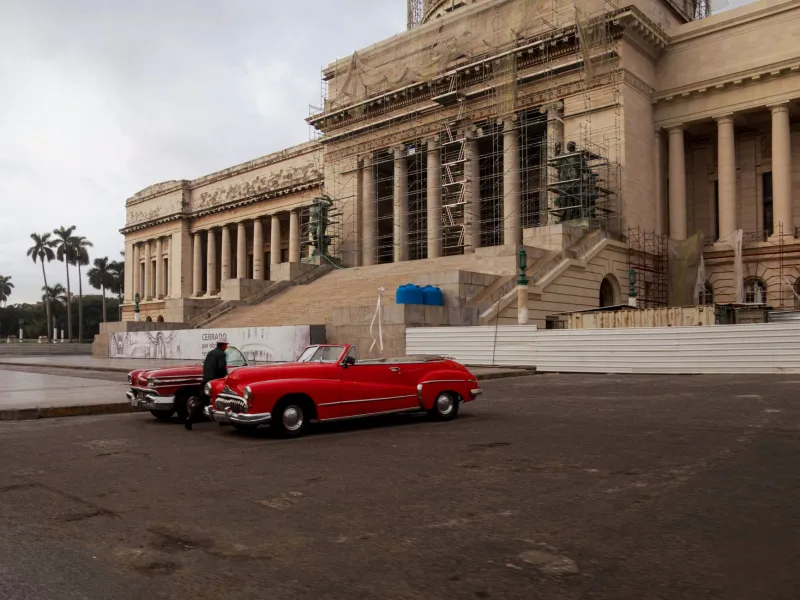
For the entrepreneur accustomed to throwing capital at obstacles, watching a Havana craftsman restore a 1950s Buick with fabricated parts and inherited knowledge is genuinely disorienting. The man working in that garage did not have the luxury of ordering components overnight. He had to understand the machine deeply enough to reimagine it. The result, invariably, is something that runs — and often something that runs beautifully.
That lesson translates directly to the boardroom, the design studio, and the workshop. Constraint, properly understood, is not the enemy of excellence. It is frequently its precondition.
What the Boulevard Itself Teaches
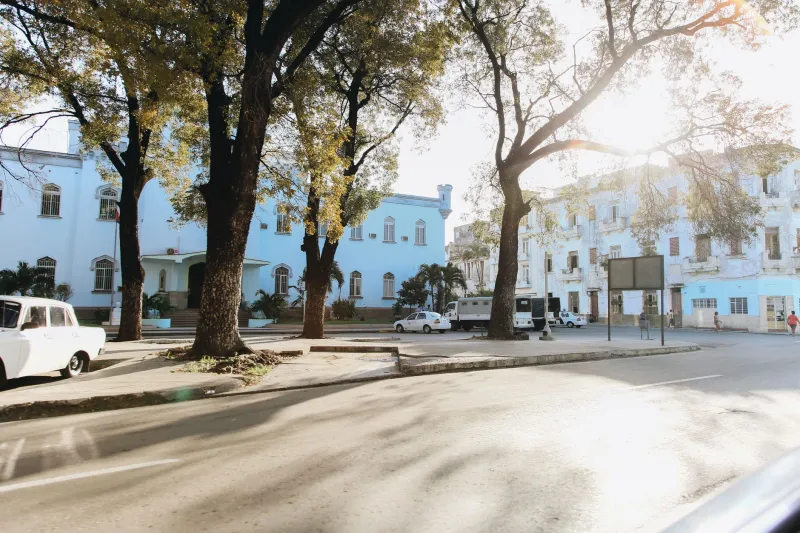
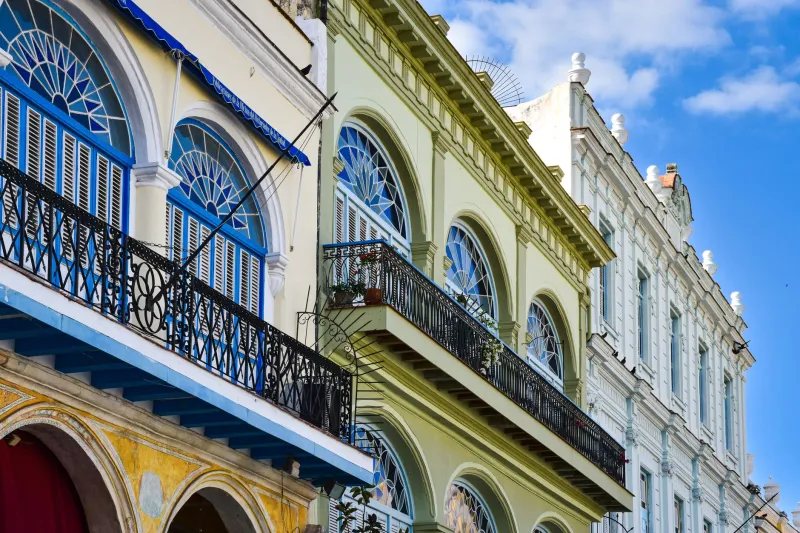
Quinta Avenida — Fifth Avenue, as it translates — was conceived as a statement of civic ambition. Wide enough to breathe, lined with royal palms and mid-century architecture that still commands respect, it was built to last because the people who built it believed that the things they created deserved permanence.
Guests who walk that boulevard in the early morning, before the city fully stirs, often describe a quality of intentionality in the physical environment that feels absent from most American cities. The buildings were not assembled for a five-year horizon. The proportions were not calculated by algorithm. There is a human stubbornness in the craftsmanship — a refusal to accept that anything worth making should be made carelessly.
Hotel Quinta Avenida Habana sits within that tradition. The property's architecture and interior sensibility reflect a commitment to materials and forms that age with dignity rather than obsolescence. For guests whose professional lives are consumed by questions of legacy and durability, simply inhabiting that space over an extended period begins to recalibrate the imagination.
The Discipline of the Long View
One of the more unexpected revelations that extended-stay guests report is a changed relationship with time itself. Havana does not rush. Meetings begin when the relevant parties have arrived. Meals unfold at their own pace. Conversations are allowed to reach their natural conclusions rather than being truncated by the next scheduled obligation.
This is not inefficiency. It is, in fact, a form of discipline — one that American professional culture has largely abandoned in its pursuit of throughput. The creative professional who spends six weeks working from the terrace of a Miramar hotel, conducting calls in the morning and walking the Malecón at dusk, frequently discovers that their thinking has deepened in ways that no productivity system ever achieved.
The ideas that emerge from genuine leisure — from the kind of unstructured reflection that Havana almost compels — tend to be more durable than those generated under deadline pressure. They have had time to be tested against themselves.
Learning From the Masters of Improvisation
Havana's musicians are, perhaps, the city's most eloquent teachers on the subject of creative endurance. The son, the bolero, the jazz that spills from open doorways in Centro Habana — these are not museum pieces. They are living traditions, continuously reinvented by practitioners who understand their roots well enough to depart from them with authority.
The lesson for the creative professional is precise: mastery precedes meaningful innovation. The Havana musician who plays something genuinely new does so because they have spent years playing what came before. The shortcut — the disruption without foundation — produces novelty, not depth.
Guests who engage with Havana's cultural life during an extended stay at Hotel Quinta Avenida Habana — attending performances, visiting studios, spending time with working artists — consistently describe a renewed respect for the unglamorous early stages of any creative endeavor. The hours that do not produce visible output. The drafts that go nowhere. The practice that precedes the performance.
The Architecture of a Considered Life
There is a particular type of American traveler for whom Havana becomes, unexpectedly, a mirror. They arrive with the habits of acceleration — the checked phone, the compressed itinerary, the inability to be fully present in any single moment — and the city gradually dismantles those habits with a patience that is almost affectionate.
By the third week of an extended stay, something tends to change. The morning walk becomes less purposeful and more observant. The notebook fills with ideas rather than tasks. The questions that felt urgent in New York or San Francisco begin to reveal themselves as merely loud.
What Havana offers, in the end, is not a lesson about Cuba. It is a lesson about the conditions under which meaningful work becomes possible. Slowness. Constraint. Deep attention. The willingness to build something that will outlast the person who built it.
Returning With Something Worth Keeping
The guests who leave Hotel Quinta Avenida Habana after an extended stay do not return home unchanged. They carry with them a recalibrated sense of what constitutes value — in a business, in a design, in a life. They have been in the presence of a city that has survived, adapted, and continued to produce beauty under conditions that would have defeated lesser imaginations.
That is not a small thing to bring back to a startup, a studio, or a creative practice.
Havana does not offer a formula. It offers something more useful: a demonstration that the most enduring things are built slowly, with full attention, by people who have made peace with the long arc of creation. For the entrepreneur or creative professional willing to receive that instruction, there is no classroom quite like it — and no address from which to receive it quite like Quinta Avenida.