The Last Untouched City: Why America's Most Accomplished Travelers Are Booking Havana Before the Moment Passes
There is a particular kind of traveler who has already been everywhere. They have walked the medinas of Marrakech before the boutique hotels arrived. They were in Luang Prabang before the airport expanded. They remember Lisbon before it became a backdrop for digital nomads. These are people who have learned, often painfully, that the world's most compelling places carry an expiration date — and that arriving too late means arriving to a simulacrum of what once made a destination worth the journey.
These travelers are now looking at Havana.
Not with the feverish excitement of the uninitiated, but with the measured, experienced gaze of those who recognize a threshold moment when they encounter one. And in growing numbers, they are choosing Hotel Quinta Avenida Habana as their base of operations — not merely because of its address on one of the capital's most storied boulevards, but because it represents the kind of considered luxury that aligns with the gravity of what they have come to witness.
When FOMO Becomes Something Worthier
Fear of missing out has long been the engine of superficial tourism — the race to photograph a landmark before the next flight home. But something more substantive is at work among the guests arriving at Quinta Avenida today. The urgency that brings them to Havana is less about social currency and more about personal reckoning.
One repeat guest, a retired federal judge from Washington, D.C., described his third visit to the hotel in five years this way: "The first time I came, I was curious. The second time, I was in love with the city. This time, I came because I'm old enough to know that places like this don't stay this way. I wanted to be here while I could still say I'd seen it whole."
That sentiment — seeing something whole — recurs with remarkable consistency among the hotel's long-term guests. It is not nostalgia for a Cuba they never knew. It is something more honest: the desire to encounter a city that has not yet been curated for their convenience, packaged for their comfort, or diluted for their expectations.
Havana, uniquely among the world's great capitals, still offers that encounter. The question, for those paying attention, is how much longer it will.
The Substance Beneath the Urgency
What separates the thoughtful pilgrim from the anxious tourist is the quality of attention they bring. The guests who return to Hotel Quinta Avenida Habana season after season are not racing through Havana's neighborhoods with a checklist. They are sitting with it — in the long afternoons on the hotel's terrace, in the unhurried conversations with local musicians who pass through the lobby, in the deliberate walks down Quinta Avenida's broad, tree-canopied length at dusk.
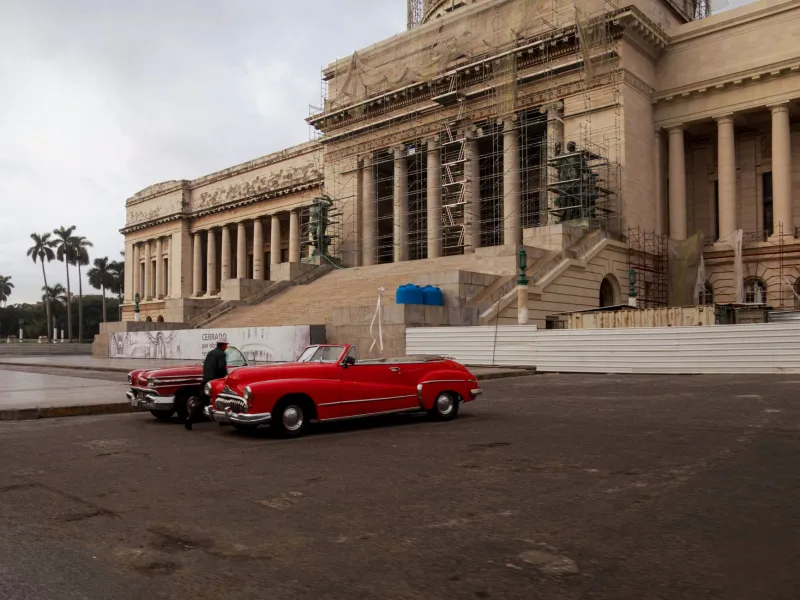
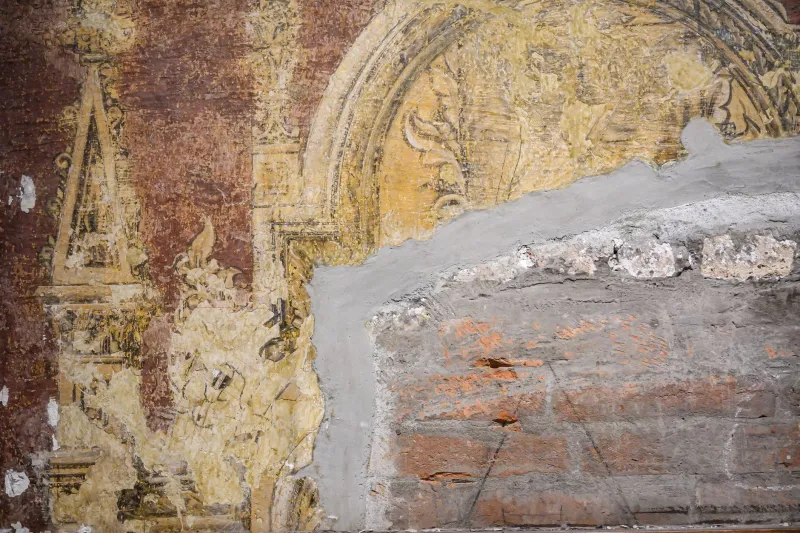
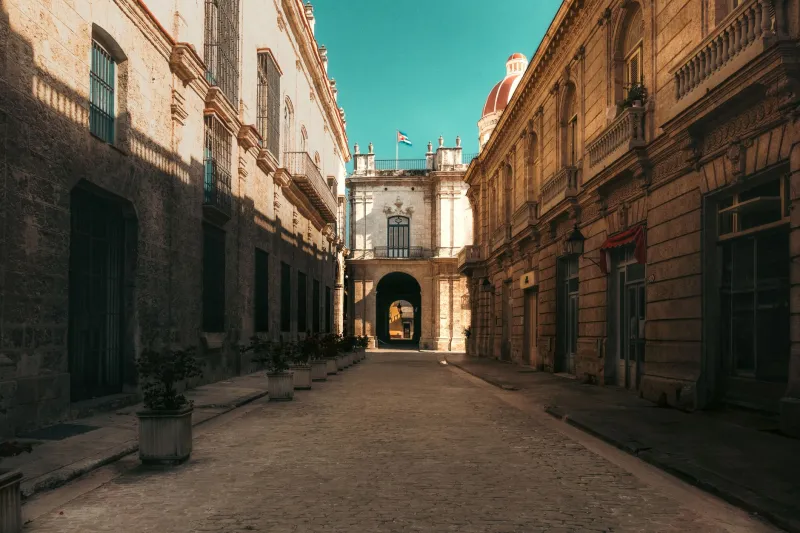
Havana rewards this pace in ways that few cities can. Its architecture is not a backdrop; it is a text. The layered facades of Vedado — where mid-century modernism collides with Beaux-Arts ambition and Revolutionary-era pragmatism — constitute a visual history that no museum could replicate. The city's social rhythms, its street-corner debates and evening promenades, its music that emerges not from speakers but from open windows, speak to a civic life that consumer culture has not yet colonized.
For the accomplished American traveler — the one who has built something, led something, or simply lived long enough to value depth over novelty — this texture is the point. It is not an inconvenience to be managed. It is the reason for the journey.
Choosing the Right Address for a Consequential Visit
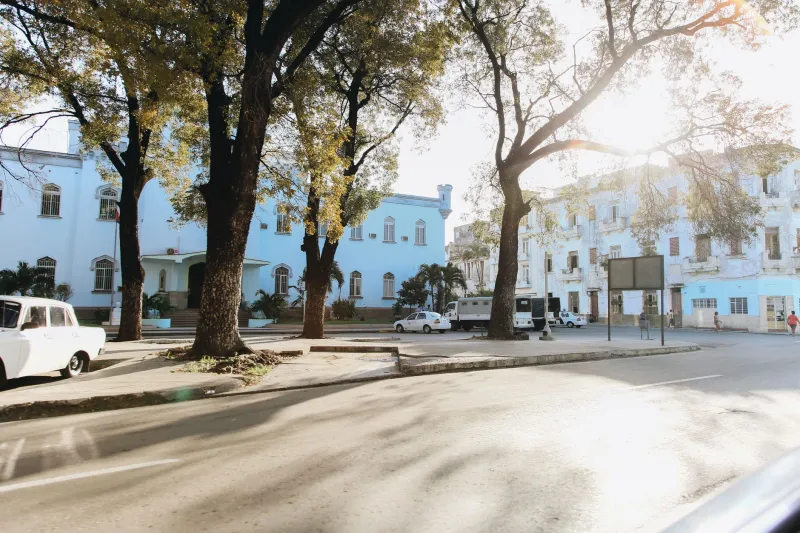
Where one stays in Havana is not a trivial decision, particularly for a visit weighted with the significance that many guests now bring to the city. Hotel Quinta Avenida Habana occupies a position on the capital's most distinguished residential boulevard — a wide, divided avenue lined with royal palms that was, for much of the twentieth century, the address of diplomats, intellectuals, and the city's most prominent families.
To stay here is to inhabit a piece of Havana's civic memory rather than observe it from a distance. The hotel's architecture does not impose itself upon the boulevard; it belongs to it. Guests who take their morning coffee on the terrace are not consuming an experience designed for them. They are participating in a neighborhood that has its own continuity, its own rhythms, its own claims on the day.
This distinction matters enormously to the travelers who seek it out. A private equity partner from New York who has stayed at the hotel multiple times put it plainly: "I've stayed at beautiful hotels all over the world that feel like they've been dropped into their location. This one feels like it grew there. That's a different experience entirely."
The Quiet Calculus of Now
The geopolitical landscape governing American travel to Cuba has shifted more than once in the past decade, and seasoned observers expect it to shift again. Regulatory frameworks that permit travel today may not persist indefinitely. Infrastructure that currently preserves Havana's character will not remain static as investment flows change. The musicians, the artisans, the private restaurateurs who constitute the city's cultural fabric are navigating their own uncertainties.
None of this is cause for alarm. But it is cause for decision.
The travelers arriving at Hotel Quinta Avenida Habana with particular intentionality this year are those who have done the calculus and concluded that waiting is itself a choice — one they are no longer willing to make. They are not catastrophizing about Havana's future. They are simply acknowledging, with the clarity that experience brings, that the present configuration of this city is not permanent, and that the present moment is therefore precious.
This is not the panic of the uninformed. It is the wisdom of those who have watched other threshold moments pass and carry the mild, lasting regret of having arrived a season too late.
A Pilgrimage With Permanence
The word pilgrimage implies a journey made in recognition of something sacred. It is not too strong a word for what the most reflective guests describe when they speak of their time in Havana. The city asks something of its visitors — attention, patience, a willingness to be disoriented and then reoriented. Those who offer that engagement in return receive something that no resort, however impeccably appointed, can manufacture: the sensation of having been genuinely somewhere.
Hotel Quinta Avenida Habana exists to make that encounter possible at the highest level of comfort and cultural engagement. Its location, its character, and its staff's deep familiarity with the city's less visible dimensions position it as the natural home for the traveler who understands what is at stake.
Havana is still here. Still whole, still complex, still generous to those who approach it with the seriousness it deserves. The question each traveler must answer for themselves is simply this: how long will you wait before you come?