What the Courtyard Keeps: Reading the Hidden Histories of Quinta Avenida's Gardens and Forgotten Spaces
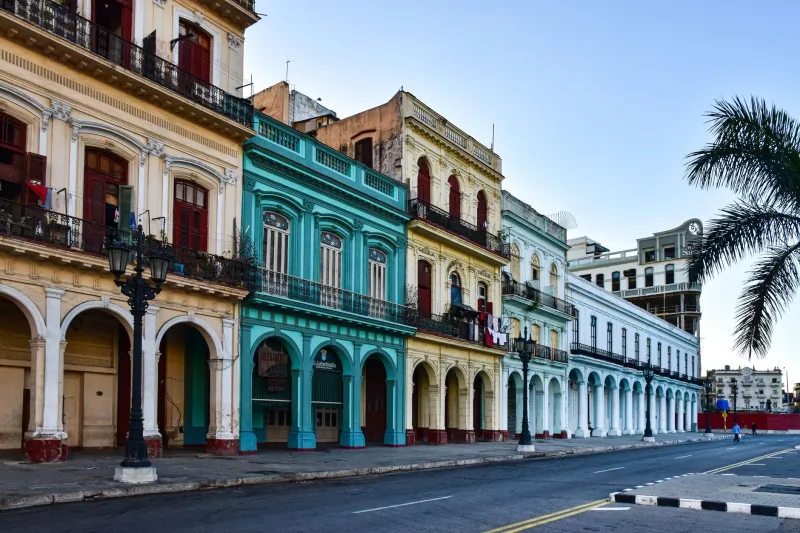
History, in most of the world, is housed in archives. It is catalogued, labeled, and accessed through glass. In Havana, history is structural. It lives in the proportions of a doorway, in the particular curve of an iron railing, in the way a fountain basin catches afternoon light at an angle that was calculated, by someone long dead, to produce exactly that effect. The city is its own archive, and its most eloquent documents are written in coral stone and tropical hardwood.
The gardens and courtyards of Hotel Quinta Avenida Habana are among the most articulate of these documents — spaces that have absorbed more than a century of human experience and that continue, for those guests attentive enough to notice, to release that experience slowly, like a fragrance that strengthens as the day cools.
The Grammar of the Cuban Courtyard
To understand what these spaces hold, it helps first to understand what they were built to do.
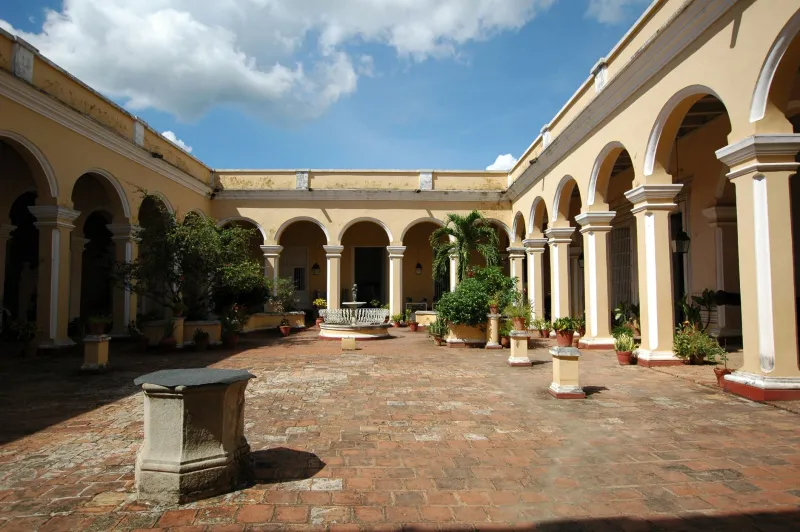
The enclosed courtyard — the patio, in the Spanish colonial tradition that shaped Havana's residential architecture — was never merely decorative. It was functional in the deepest sense: a climate management system, a social theater, a private world nested within the public one. The thick masonry walls that define these spaces were designed to absorb heat during the day and release it slowly through the night, creating a microclimate of relative coolness in a city that the Caribbean sun presses upon with considerable insistence.
But the courtyard was also a stage for the performance of domestic life at its most refined. The families who commissioned and inhabited the great houses of Miramar — the district in which Hotel Quinta Avenida Habana stands — were among the most prosperous and culturally sophisticated in the Western Hemisphere during the first half of the twentieth century. They built with ambition. Their courtyards were not retreats from the world but concentrated expressions of everything they valued: proportion, permanence, beauty as a form of moral seriousness.
Fountains as Memory
Water features in the historic courtyards of Havana's finest properties are not ornamental afterthoughts. They are central to the architecture's meaning, and they carry specific cultural weight that American visitors, arriving from a tradition in which fountains are primarily aesthetic, may initially underestimate.
In the Spanish colonial tradition, the courtyard fountain represented the civilizing of nature — the transformation of wild water into something ordered, rhythmic, and beautiful. It was also, practically, the acoustic heart of the domestic space, its sound providing both privacy (conversations near a fountain are less easily overheard) and a constant auditory anchor that made the courtyard feel inhabited even when no one was present.
The fountains that remain on the grounds of Hotel Quinta Avenida Habana have been maintained and, where necessary, restored with care for their original character. To sit beside one of these basins in the early evening, when the light has gone golden and the city's ambient noise has softened, is to occupy the same sensory space that the property's original inhabitants occupied — to hear what they heard, to feel the same cooling of the air, to be subject to the same gentle insistence that the present moment deserves attention.
The Plants That Outlasted Everything
One of the more quietly remarkable aspects of Havana's historic gardens is the botanical continuity they represent. Certain plants — mature ceiba trees, sprawling bougainvillea trained against stone walls over decades, the particular variety of jasmine that perfumes Miramar's evenings — are not recent plantings. They predate the revolution, predate the political transformations that reshaped every other aspect of Cuban life, and continue to grow with a serene indifference to historical discontinuity.
This botanical persistence is not incidental. It is, in a city where so much has been interrupted and so much has changed, a form of testimony. The ceiba that shades a corner of the hotel's garden was rooted in that ground when the families who built these spaces were still in residence. It witnessed their daily lives in a way that no photograph or document can quite replicate. It is, in the most literal sense, a living witness.
American guests who spend time in these gardens and who know enough history to recognize what they are looking at report an experience that is difficult to categorize. It is not precisely melancholy, though it contains elements of that. It is closer to what the Portuguese call saudade — a longing for something that was beautiful and is now irretrievably past, combined with gratitude that traces of it remain.
The Stories That Gardens Hold
The oral histories associated with Havana's great residential properties are fragmentary and, in many cases, deliberately obscured. Families dispersed; records were lost or destroyed; the social world that these houses once anchored was dismantled so thoroughly that reconstructing it requires patient accumulation of small details.
But fragments survive, and the hotel's staff — many of them deeply versed in the history of the Miramar district — can offer guests access to these fragments in ways that enrich the physical experience of the spaces enormously. The corner of the garden where a particular family hosted their Sunday gatherings. The tiled pathway whose pattern was commissioned from an artisan whose workshop no longer exists. The view from a specific window that was reportedly a favorite of a resident whose name has passed out of common memory but whose taste, expressed in the proportions of that window and the garden it frames, endures.
These stories do not require verification to be valuable. They are the connective tissue between architecture and human life, and they transform the experience of moving through these spaces from aesthetic appreciation into something more personal and more demanding.
The Philosophical Weight of Beauty Built for a Vanished World
There is a question that Havana's historic properties quietly pose to every serious visitor, and the gardens of Hotel Quinta Avenida Habana pose it with particular force: what does it mean to inhabit a space built by a world that no longer exists?
This is not a uniquely Cuban question. Americans encounter it in the antebellum architecture of the South, in the Gilded Age mansions of Newport, in any beautiful building whose beauty was funded by conditions we would not now endorse. But Havana poses the question with unusual clarity, because the discontinuity here is so sharp and so recent, and because the spaces themselves are so extraordinarily well preserved.
The answer, if there is one, seems to lie in the quality of attention brought to these spaces. To move through them carelessly — to treat them as picturesque backdrops for photographs rather than as inhabited documents of human experience — is to miss what they are offering. To slow down, to sit with the discomfort of their complexity, to allow the beauty and the weight of their history to coexist without resolving into easy sentiment — this is the harder and more rewarding engagement.
The courtyard will not explain itself. It will simply continue to hold what it has always held, waiting for the guest who arrives with enough stillness to receive it.