A Boulevard Built for Greatness: The Untold History of Quinta Avenida and What It Still Demands of Its Guests
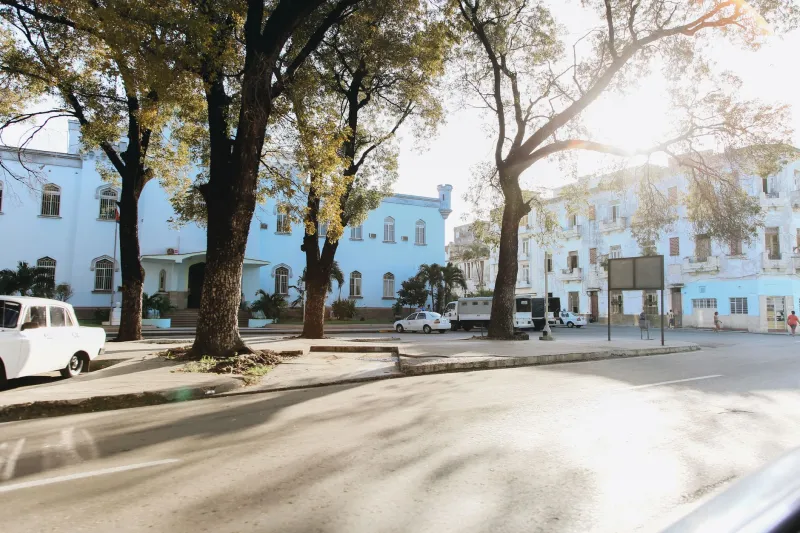
There is a particular quality of light on Quinta Avenida in the early morning — the kind that filters through royal palms and settles on coral stone facades with the unhurried confidence of something that has witnessed everything and chosen, deliberately, to remain. Most visitors who arrive at Hotel Quinta Avenida Habana notice this light on their first morning. Fewer understand that it has been falling on this boulevard for well over a century, illuminating the ambitions, contradictions, and extraordinary resilience of a city that has never once agreed to be ordinary.
To stay on Quinta Avenida is not simply to occupy a desirable address. It is to enter into a conversation with history — one that began long before the revolution, long before the embargo, and long before Havana became the object of fascination it remains for American travelers today.
The Avenue That Announced a Nation
When Cuban urban planners and their Beaux-Arts-trained architects laid out the Miramar district in the early twentieth century, Quinta Avenida — literally, Fifth Avenue — was conceived as a conscious counterpoint to the crowded, colonial intimacy of Old Havana. Where the historic center offered narrow streets and the accumulated weight of Spanish colonial rule, Miramar proposed something altogether different: width, light, and the forward-looking confidence of a young republic that had only recently emerged from centuries of imperial governance.
The avenue's design borrowed liberally from the grand European boulevard tradition — the broad median planted with laurel and palm, the generous setbacks that gave each mansion room to breathe, the deliberate visual rhythm of architectural styles that ranged from neoclassical restraint to full-throated Art Deco exuberance. The message was unmistakable. This was a street built not merely for transit, but for the performance of prosperity.
By the 1920s and 1930s, Quinta Avenida had become the preferred address of Cuba's most powerful families, foreign diplomats, and the American business interests that had woven themselves deeply into the island's economic fabric. The mansions that lined it were not simply homes. They were statements — each facade a carefully calibrated argument about taste, ambition, and the particular kind of social authority that only architecture can confer.
The Golden Decade and Its Complicated Inheritance
The 1950s brought Quinta Avenida to perhaps its most concentrated moment of glamour. Havana in that decade occupied a peculiar position in the American imagination — simultaneously foreign and familiar, sophisticated and transgressive, a place where the rules that governed life in New York or Miami seemed to apply only selectively. American visitors arrived in considerable numbers, drawn by the casinos, the nightclubs, the rum, and the music, but also by something harder to name: a sense that Havana was a city operating at a frequency slightly above the ordinary.
Along Quinta Avenida, this energy expressed itself in architecture of genuine ambition. Mid-century modernism arrived on the boulevard with the same confidence it was demonstrating in Palm Springs and São Paulo — clean horizontal lines, generous glazing, the studied integration of interior and exterior that the tropical climate so readily permitted. These buildings were not imitations of international trends. They were contributions to them, designed by Cuban architects who were in active dialogue with the broader currents of twentieth-century design.
What this golden decade also produced, inevitably, was the kind of inequality that makes gilded eras unstable. The very magnificence of Quinta Avenida was inseparable from the social arrangements that financed it. When 1959 arrived and those arrangements were fundamentally restructured, the boulevard did not disappear. It transformed — and that transformation is, in many respects, the most interesting chapter of its history.
Resilience as an Architectural Principle
What distinguishes Quinta Avenida from comparable grand boulevards in other cities is precisely what happened after its original social context dissolved. In many places, the departure of the class that built such streets results in rapid deterioration — the mansions subdivided beyond recognition, the gardens surrendered to encroachment, the architectural coherence shattered. On Quinta Avenida, something different occurred.
The boulevard's buildings were repurposed rather than abandoned. Embassies moved into the former mansions of the departed elite, bringing with them the maintenance imperatives of diplomatic protocol. Cultural institutions occupied others. The physical fabric of the avenue, protected in part by its very grandeur, survived in a condition that remains remarkable by the standards of any city that has passed through the political turbulence Havana experienced.
This survival was not passive. It required the ongoing attention of architects, craftspeople, and administrators who understood that what they were preserving was not simply a collection of buildings but a particular argument about what a city could be. The coral stone walls, the wrought iron balustrades, the mosaic tile floors that appear in the finest addresses along the avenue — these were maintained not as museum pieces but as living infrastructure, inhabited and purposeful.
For the contemporary traveler, this history carries a specific implication. The luxury available on Quinta Avenida today is not the manufactured luxury of a resort that has been engineered from scratch to produce comfort. It is something older and more demanding: the luxury of a place that has survived, that carries its own memory, and that asks its guests to be equal to its complexity.
What the Boulevard Requires of the Modern Guest
American visitors arriving at Hotel Quinta Avenida Habana frequently report a quality of experience that they find difficult to articulate precisely. The accommodations are refined, the service attentive, the location genuinely extraordinary. But the satisfaction they describe goes beyond the standard calculus of amenities and service ratios. It has something to do with the weight of the place — the sense that the boulevard on which they are staying has earned its distinction through processes more consequential than marketing.
This is what Quinta Avenida's history ultimately offers the discerning traveler: a recalibration of what luxury is actually for. The finest addresses in the world have always been distinguished not merely by their physical appointments but by their capacity to situate the guest within a larger story. To stay on a boulevard that has witnessed colonial ambition, republican confidence, revolutionary transformation, and quiet architectural persistence is to be reminded that the most valuable experiences are those that enlarge the traveler's sense of what is possible.
The light on the avenue in the early morning is the same light that fell on the original builders, on the diplomats who followed, on the craftspeople who maintained what others might have surrendered. Staying here means inheriting, briefly, their vantage point — and discovering that the view from Quinta Avenida has always been worth the effort of arriving.