Concrete, Glass, and Ambition: Finding Havana's Mid-Century Modernism
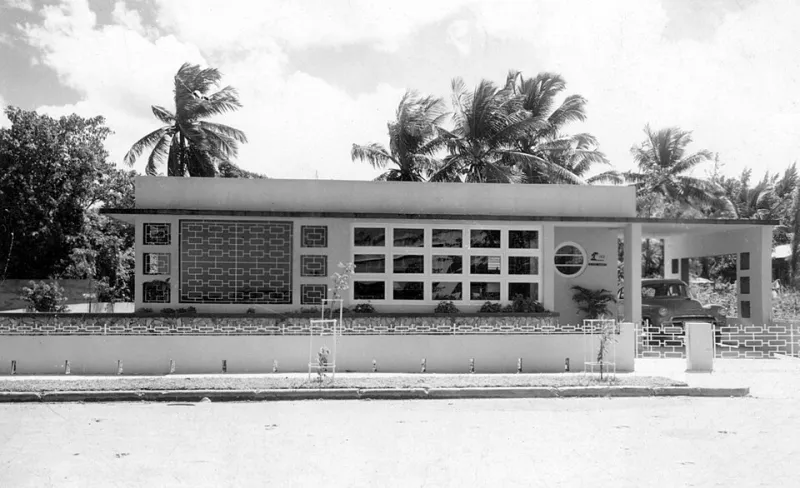
Photo: P. Hughes, CC BY-SA 4.0, via Wikimedia Commons
Ask a visitor to describe Havana's architecture and you will hear about colonnades, balconies, and pastel plaster. All true, and all incomplete. Between the late 1940s and 1958, Havana built a body of modernist work that rivaled anything in the Americas for ambition, and that has never received the attention it deserves. Walking it is one of the few genuinely under-subscribed pleasures left in a city that is otherwise well photographed.
The Style That Arrived by Way of Sugar
The mid-century building boom was financed by sugar, and it was driven by a professional class that had studied in the United States and Europe and returned with strong opinions. Cuban architects of the period were not provincial copyists. They worked in the language of international modernism but adapted it to a tropical climate with real intelligence: deep brise-soleil screens, cross-ventilation, shaded terraces, and a frank enjoyment of concrete as a finished surface rather than a substrate.
That confidence is what makes the work distinctive. The buildings are not apologetic. They were designed by people who believed Havana was becoming a major capital and built accordingly.
Vedado, Built for the Automobile
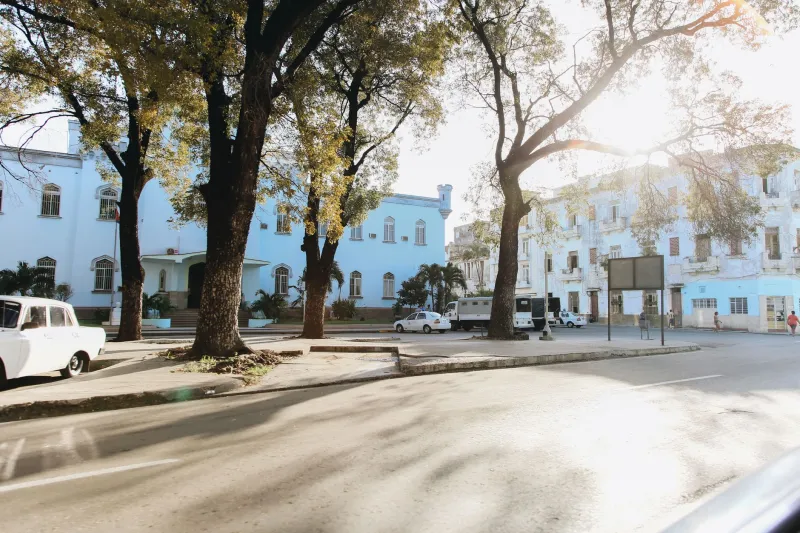
Vedado is the district to walk, and walking is the wrong verb for parts of it. The neighborhood's mid-century layer was planned around the car — wide avenues, generous setbacks, driveways, and apartment towers with garages beneath them. This was an optimistic urbanism, and its assumptions did not survive 1959 intact. Today the driveways hold 1950s American sedans kept alive by ingenuity, which produces one of the most photographed juxtapositions in the hemisphere.
Five Buildings Worth a Detour
The FOCSA Building. Completed in 1956 and standing thirty-nine stories above the Vedado grid, the FOCSA remains the tallest residential structure in the city. Its shape is unmistakably of its moment, and the view from the upper floors — a rooftop restaurant and bar occupy the top of the building — remains the best orientation a design-minded visitor can get.
The Habana Libre. Opened in 1958 as the Habana Hilton, this collaboration between American and Cuban architects is a study in confident hotel modernism: a slab punctuated by a patterned screen, raised on pilotis, oriented for views. Its lobby retains a monumental quality that no renovation has quite erased.
The Arcos de Cristal at the Tropicana. Max Borges Jr.'s 1952 shell structure for the cabaret's main performance space is a structural poem — a series of thin concrete arches that curve across the room without visible support. It is architecture as theater, and it still works.
The Edificio del Seguro Médico. Antonio Quintana's 1958 apartment block in Nuevo Vedado applies a brightly tiled, almost painterly facade to a rational plan. It is the clearest demonstration in Havana that modernist buildings could be both rigorous and joyful.
The Radiocentro complex. A mixed-use block that anticipated the live-work-play formula by half a century, with broadcast facilities, retail, and performance space integrated into a single urban gesture. Its detailing rewards a slow pass on foot.
Reading a Lobby
If you have time for only one interior, choose a lobby rather than a facade. Cuban modernist interiors used terrazzo, tropical hardwood, and sculptural staircases with real fluency, and several remain largely intact in buildings now used for other purposes. Ask politely at the desk. Permission is frequently granted, and a few minutes in a good lobby — cool, dim, and beautifully proportioned — will teach you more about the period than an hour of photography outside.
What the Modernists Understood About Light
Havana's mid-century architects designed for glare, not for postcard views, and the difference is visible. Where a European modernist facade might be flat glass, the Cuban version is filtered, screened, and deeply recessed. The result is a set of buildings that perform well in the tropics and photograph poorly at noon — which may be why they have been so consistently overlooked by visitors who arrive with the wrong expectations.
Seeing It Responsibly
These are working buildings, not monuments. Residents live in them, and several are in serious need of repair. Keep to public streets and lobbies, do not photograph through windows, and consider hiring a licensed guide whose research supports the institutions doing preservation work. The most useful thing a design-literate visitor can do is treat the buildings as occupied buildings rather than as ruins.
The View from Quinta Avenida
Miramar holds its own mid-century layer, much of it residential and much of it hidden behind garden walls — villas designed for shade and privacy in the same decades, and a handful of larger buildings that carry the period's optimism into a leafy setting. From the terraces of Hotel Quinta Avenida Habana, the two Habanas are visible at once: the colonial city to the east and this confident twentieth-century one around you.
That double exposure is the argument. Havana is not a single historical moment preserved for visitors, but a stack of them, and the mid-century layer is the one still waiting for its audience. See it now, on foot, while the streets around it remain quiet.