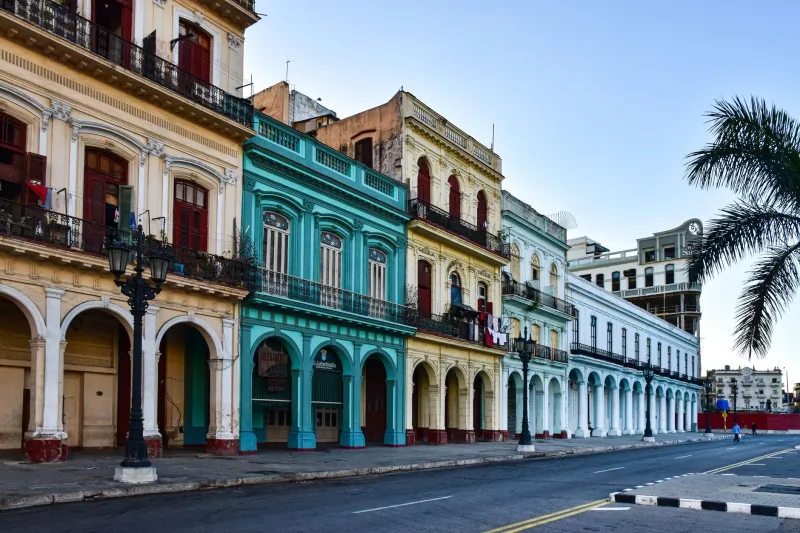
The Conversations That Matter: How Havana's Residents Are Rewriting the Rules of Meaningful Travel
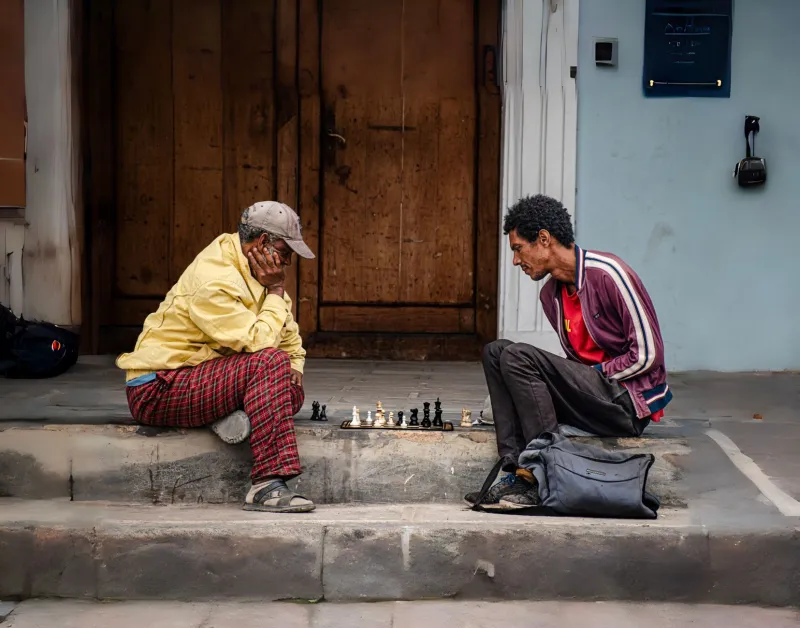
The thread count was impeccable. The tasting menu was extraordinary. The view from the terrace was, by any reasonable standard, among the finest the traveler had ever encountered. And yet, when she returned to her home in Boston and her colleagues asked what she remembered most about Havana, she did not mention any of these things.
What she mentioned was a conversation.
It had happened on a Tuesday afternoon, in a ceramicist's studio in Vedado that her hotel had helped her locate. The artist — a man in his early sixties who had studied in Prague in the 1980s and returned to Havana with a sensibility that sat somewhere between Central European restraint and Caribbean exuberance — had spent two hours explaining how the color of the Caribbean light had forced him to abandon everything he had learned about glaze chemistry. The conversation had moved, as good conversations do, through art and then through politics and then through the particular grief of watching a city you love change faster than you can document it, and then through something lighter — his granddaughter's insistence on learning to skateboard in the studio courtyard — before arriving at a silence that felt, remarkably, like an arrival rather than an ending.
She had not expected this. She had expected, in the way that experienced travelers learn to expect things, a pleasant studio visit. She had received something that reorganized her understanding of what it means to be present in a place.
The Inadequacy of Consumption as a Travel Model
American luxury travel has, for the better part of three decades, organized itself around a fundamentally acquisitive logic. The traveler arrives. The traveler receives. The traveler departs with photographs, a tan, a collection of memories that can be arranged in an Instagram grid or a dinner party narrative. The local population functions, in this model, as a backdrop — colorful, occasionally interactive, but fundamentally peripheral to the traveler's experience of herself.
Havana resists this model with a particular thoroughness. The city's residents — among the most educated, most culturally sophisticated, and most articulate in the hemisphere — have not organized themselves around the tourist's needs. They are conducting their own lives, with their own priorities, their own intellectual preoccupations, and their own considered opinions about the visitors who arrive expecting to consume their city without genuinely engaging with it.
The traveler who arrives in Havana with a consumption-first orientation will have a pleasant time. The traveler who arrives with genuine curiosity will have something considerably rarer: a conversation.
What the Restaurateur Said
Mariela has run her private restaurant — a paladar in a converted ground-floor apartment in Miramar, three blocks from Quinta Avenida — for eleven years. She learned to cook from her mother, who learned from her mother, who developed the family's particular approach to ropa vieja during a period when ingredients were scarce enough that creativity was not optional but essential.
When a guest from the hotel asked her, over the third course of a dinner that had already lasted two hours, whether she thought of herself as a chef, she paused for a long moment.
"I think of myself as someone who remembers," she said. "The food is memory. Every dish I serve is my grandmother telling me something she didn't have time to say in words."
The guest — a food writer from New York who had spent twenty years reviewing restaurants — said later that it was the most precise description of what cooking can be that she had ever heard. She had eaten at three-Michelin-star establishments on four continents. She had never had a conversation at any of them that approached this one in substance.
The ropa vieja was also exceptional. But that was almost beside the point.
What the Historian Knows
Roberto has spent forty years studying the built environment of Havana — its construction, its deterioration, and what he calls "the heroism of maintenance under impossible conditions." He teaches at the University of Havana and walks the city's streets with the particular attention of someone who can read a waterline stain or a patched column capital the way a physician reads a diagnostic image.
A group of guests from the hotel — architects and developers, as it happened, attending a conference in the capital — asked whether they might accompany him on one of his regular walks. He agreed, with the condition that they ask questions only when they had first formed an observation of their own.
What followed was three hours in which a group of American professionals, accustomed to narrating their own expertise, were systematically taught to see. Roberto stopped them in front of a building on Línea Street in Vedado and asked what they noticed. They offered observations about proportion, about the surviving ironwork, about the paint layers visible where a section of plaster had fallen. He listened, added nothing, and then said: "Now look at the neighbor. Now look at the gap between them. That gap is where a building stood for eighty years and then didn't. What does the gap tell you about the neighborhood?"
The conversation that developed from that single question lasted the rest of the afternoon and continued, over rum, at a bar that Roberto had been visiting since his student days. By the time the group returned to the hotel, two of them had canceled their flights home and extended their stays by four days.
What the Musician Understands About Listening
Ysabel plays piano in a way that suggests she has been listening to the city her entire life and translating what she hears into music. She performs occasionally at cultural centers in Centro Habana, though she is not, by temperament, a performer. She is a composer, and she works in a register that sits between jazz and classical and something that has no name in either tradition.
A guest who encountered her at a cultural event — a gathering that the hotel had quietly facilitated, in the way that the best hotels facilitate things, without making the facilitation visible — asked her how she decided what to compose next.
"I wait until I hear something that doesn't resolve," she said. "Havana is full of things that don't resolve. A conversation that ends before it finishes. A building that was never completed. A song that everyone knows but no one agrees on the words to. I take the unresolved thing and I try to give it somewhere to go."
The guest — a composer himself, working in a completely different tradition — sat with this for a moment. Then he asked if they could meet again before he left. They met three more times. He returned to the United States with, he said, a completely different understanding of what his own work was for.
The Standard That Cannot Be Purchased
Hotel Quinta Avenida Habana can offer its guests many things: the comfort of an elegant room on one of the capital's finest boulevards, the attentiveness of a staff that understands the specific needs of the discerning American traveler, the stability of a well-run property from which the city's complexity can be explored without anxiety.
What the hotel cannot offer — what no hotel can offer — is the conversation itself. That requires the traveler to bring something to the exchange: genuine curiosity, the willingness to listen without agenda, the patience to allow an encounter to develop at its own pace rather than the pace of a scheduled activity.
The guests who leave Havana most transformed are not the ones who saw the most sights or ate at the most acclaimed tables. They are the ones who understood, somewhere between the ceramicist's studio and the historian's walk and the musician's late-night explanation of unresolved things, that the city had been offering them a conversation all along. They simply had to be willing to participate.
That willingness is, in the end, the most sophisticated form of luxury the modern traveler can practice. Havana has been waiting to reward it for years.