Havana as Text: A Discerning Visitor's Guide to Reading the City's Hidden Language
The traveler who arrives in Havana expecting a straightforward city will be disoriented almost immediately. Not because the city is difficult to navigate — it is, in geographic terms, quite legible — but because its most significant meanings operate below the surface of what is immediately visible. Havana communicates in a language that is simultaneously architectural, social, historical, and deeply personal. Learning to read it is the work of a serious visitor. And it is work that pays extraordinary dividends.
Guests of Hotel Quinta Avenida Habana occupy one of the city's most eloquent addresses. The boulevard itself is a sentence worth parsing carefully before venturing further. Understanding what it means — and how it relates to the other dialects spoken by Havana's neighborhoods — is the first step toward a genuinely sophisticated engagement with the capital.
The Architecture Speaks First
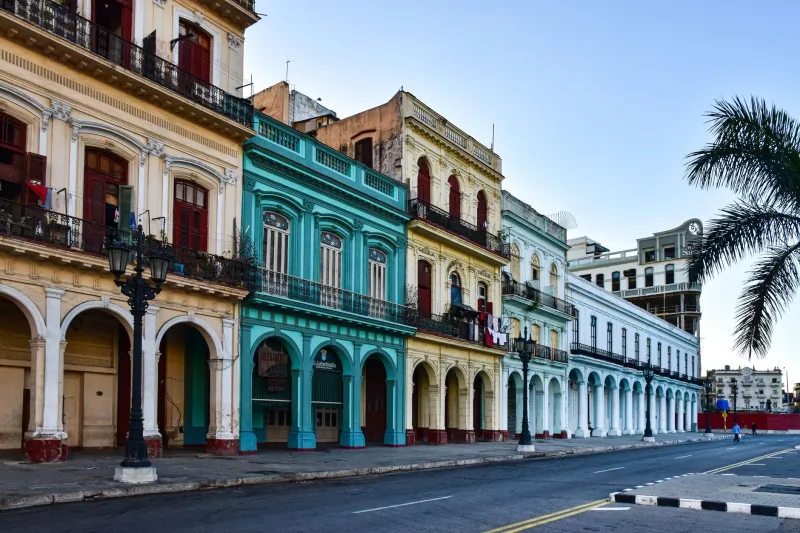
Havana's built environment is not merely decorative. It is a compressed archive of the city's successive ambitions, disruptions, and improvisations. The traveler who trains herself to read façades will find, within a single afternoon's walk, evidence of Spanish colonial administration, Beaux-Arts aspiration, Art Deco confidence, mid-century modernism, and the particular aesthetic of scarcity that followed 1959.
The key is to look at buildings in layers rather than as unified objects. A Vedado mansion from 1920 may present a Neoclassical face to the street while concealing an interior courtyard that dates to an earlier structure entirely. The paint colors applied over the past sixty years may have been dictated by material availability rather than aesthetic preference, producing chromatic combinations that a designer working freely would never have chosen — and that are, precisely for that reason, unlike anything produced anywhere else.
Look for the waterline stains on ground-floor columns: they mark the high-water reach of hurricanes past and tell you something about the relationship between this neighborhood and the sea. Look for the iron balcony railings — the most ornate ones predate the Revolution and indicate where the city's professional class once lived. Look for the improvised additions to rooftops: water tanks, aerials, informal structures built by families navigating housing pressures. These are not eyesores. They are annotations in the city's ongoing autobiography.
Neighborhood Hierarchies and What They Reveal
Havana is not one city. It is a federation of distinct communities, each with its own social register, its own relationship to the tourist economy, and its own conception of what constitutes a proper way to live.
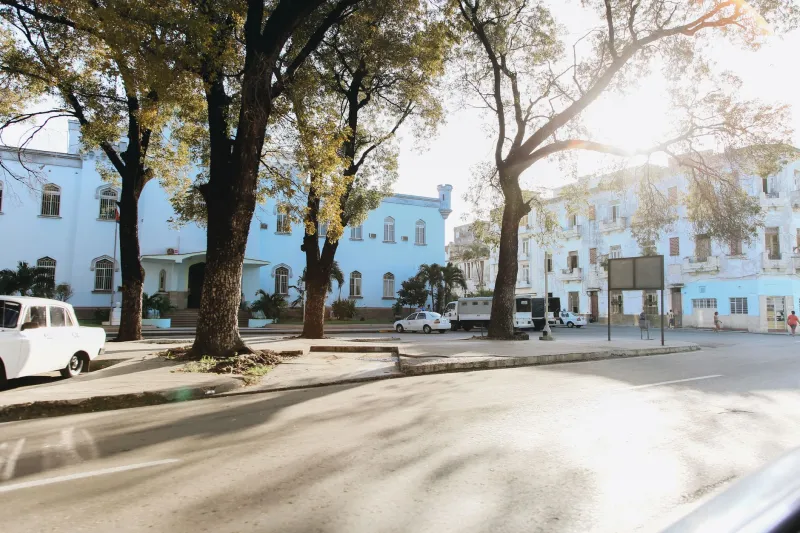
Miramar, where Quinta Avenida runs its full, tree-lined length, carries the memory of republican-era prosperity. The wide lots, the setback houses, the surviving gardens — these signal a neighborhood that was built by people with space to spare and time to cultivate it. Today, Miramar houses embassies, international businesses, and some of the city's most significant private restaurants. It is cosmopolitan in a specifically Cuban way: worldly without being touristy, connected without being commodified.
Centro Habana operates on entirely different terms. Here, the density is extraordinary — families in apartments that were subdivided generations ago, businesses occupying the ground floors of residential buildings, the social life of the street conducted with an intensity that Miramar's generous sidewalks never quite produce. The visitor who spends a morning in Centro Habana and an afternoon in Vedado will encounter two versions of Havana that illuminate each other by contrast.
Vedado, the intellectual and artistic neighborhood that developed in the early twentieth century, speaks yet another dialect. Its grid of tree-shaded streets contains the University of Havana, the major theaters, the film institute, and the private homes of many of the city's most accomplished residents. The energy here is quieter than Centro but more concentrated. Conversations in Vedado cafés tend to run longer and range further.
The Social Codes of the Street
Havana's street life operates according to protocols that are invisible to the uninitiated but perfectly clear to anyone who has spent time learning to observe. Several are worth understanding before you venture beyond the hotel.
The pitusa — the informal economic network through which goods, services, and information circulate outside official channels — is not visible as a system but is legible in its individual transactions. The man selling avocados from a bicycle, the woman who appears at the same corner every morning with homemade sweets, the informal car service that operates through word of mouth: these are not signs of poverty but of a sophisticated parallel economy that has operated for decades. Engaging with it respectfully — purchasing from it rather than around it — signals a level of cultural literacy that Havanans recognize and appreciate.
Eye contact and greeting carry specific weight. In Havana, acknowledging a stranger with a buenas — a simple, abbreviated good morning or good afternoon — is not a tourist affectation but a genuine social obligation. The traveler who walks through a residential block without greeting anyone is not being discreet. She is being rude. The correction is simple and immediately rewarding: a brief, genuine acknowledgment of the people whose neighborhood you are passing through opens more doors than any guidebook recommendation.
Reading the Music
Havana's musical landscape is as socially coded as its architecture. The son that drifts from a casa particular in the late afternoon is a different statement than the salsa performed for tourists in Old Havana's main plaza. The difference is not one of quality but of audience and intention — and the discerning visitor learns to locate herself in relation to both.
Seek out the rehearsal rather than the performance. Many of Havana's most accomplished musicians practice in community centers, church halls, and the back rooms of cultural institutions that are technically open to the public but never appear in itineraries. A hotel concierge with genuine local knowledge — rather than a list of approved vendors — can point you toward the rehearsal schedule of a neighborhood conjunto that has been playing together for twenty years. The experience of sitting in a folding chair while musicians work through an arrangement, stopping and restarting, debating a transition, laughing at a missed entrance, is worth more than any ticketed performance.
What the Light Tells You
Finally, attend to Havana's light as a social indicator rather than merely a photographic opportunity. The city's rhythms are organized around it in ways that have nothing to do with business hours. The hours between two and four in the afternoon, when the Caribbean sun reaches its most insistent, represent a genuine social pause — not a tourist-industry siesta but a genuine withdrawal from public life. The streets empty. The conversations move indoors. The city breathes differently.
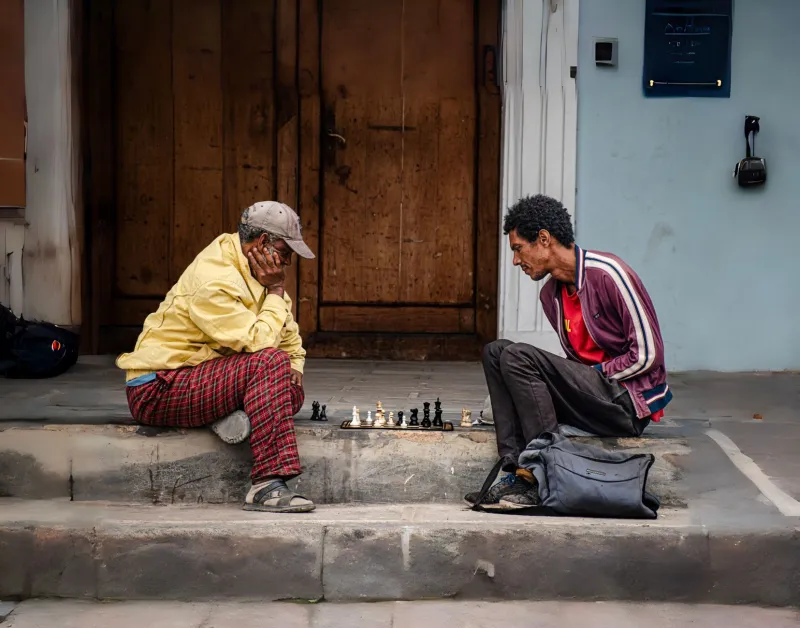
Then, as the light begins to soften toward five o'clock, Havana reconvenes. The Malecón fills. The domino tables appear. The evening's social negotiations begin. The traveler who has rested through the afternoon and arrives at the waterfront in the long golden hour before sunset will find a city that is entirely at ease with itself — and entirely willing to include her in that ease.
This is the Havana that patient attention reveals. Not the Havana of the tourist circuit, but the city that has always existed beneath it, conducting its complex, beautiful life in a language that rewards every traveler willing to learn its grammar.